
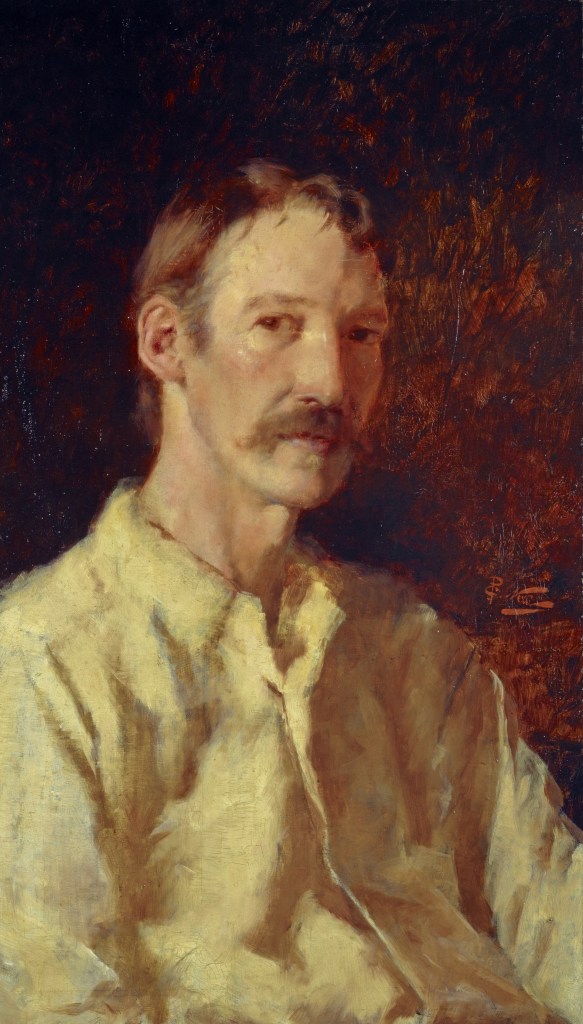
I love Edinburgh, the capital city of Scotland, for a variety of reasons and one of them is that it’s where Robert Louis Stevenson, one of my favourite writers, was born and grew up.
Luckily, I live close to Edinburgh and can visit as often as I like. Edinburgh is extremely popular with tourists, especially in the summer months and particularly in August when the Edinburgh festivals are on. These are both a blessing and a curse for the people of Edinburgh. The tourist dollars are certainly a welcome source of revenue for local businesses but the sheer number of visitors can present problems for those who live and work in the city. But summertime is when Edinburgh truly comes alive. That’s when the streets are full of entertainers, and when all the varied and wonderful shows at the Fringe take place. That’s when the attractions, such as the Castle and the Holyrood Palace, are teeming with curious visitors from all over the world. It’s not only the various festivals and attractions that draw people to Edinburgh, of course. Perhaps more important is the history of the place. Walking around Edinburgh’s Old Town is an experience few visitors will ever forget. Full of mediaeval streets and Reformation-era buildings, the Old Town has been home to many famous figures such as John Knox, the leader of the Scottish Reformation; Sir Walter Scott, the great historical novelist; and David Hume, the Scottish Enlightenment philosopher.
The Royal Mile in the heart of the Old Town is a remarkable series of streets that run from Edinburgh Castle at the top down to the Palace of Holyroodhouse at the bottom. Both the Castle and the Palace have been homes to Kings and Queens such as Mary, Queen of Scots and King Charles I. Today the Castle is both a tourist attraction and the Regimental Headquarters of the Royal Regiment of Scotland. Holyrood Palace is both a tourist attraction and the official residence of the British monarch in Scotland.
It was in this historic Scottish city that Robert Louis Stevenson, the author of Treasure Island, Kidnapped, and The Strange Case of Dr Jekyll and Mr Hyde, was born on 13th November 1850. Stevenson was born at 8 Howard Place to Thomas and Margaret Isabella Stevenson. Thomas Stevenson was a leading civil engineer who designed over 30 lighthouses in and around Scotland. The couple christened their son Robert Lewis Balfour Stevenson but everyone called him Lewis. When he was around the age of eighteen, RLS changed the spelling of “Lewis” to “Louis”. When he was around twenty-three, he dropped the “Balfour” altogether. As he’s known to the wider world as Robert Louis Stevenson, I’ll use that name or variations on it for the purposes of this post.
In addition to the homes listed in the rest of this post, Robert Louis Stevenson spent many of his boyhood summers at his grandfather’s house in Colinton, a quiet village in the southwest of Edinburgh. Lewis Balfour, his grandfather, was a minister with the Church of Scotland and his Manse had a large garden, which Stevenson loved playing in with his cousins. Sadly, his grandfather died when Stevenson was nine years old. In 1867, Stevenson’s parents leased a large, beautiful cottage in Swanston for summer use and retained the lease for 14 years. This cottage became as important to Stevenson as his grandfather’s Manse had been in earlier years.

 The Literary Tourist
CONGRATULATIONS: A wonderfully crafted narrative accopanied by high calibre sensitive photography.
LikeLiked by 1 person
Thank you, Rex!
LikeLike