
Plaques, Memorials and Portraits
There are a number of plaques and memorials in Edinburgh commemorating Robert Louis Stevenson’s association with various places in the city. I’ve gathered them here for easy reference:
Canonmills School
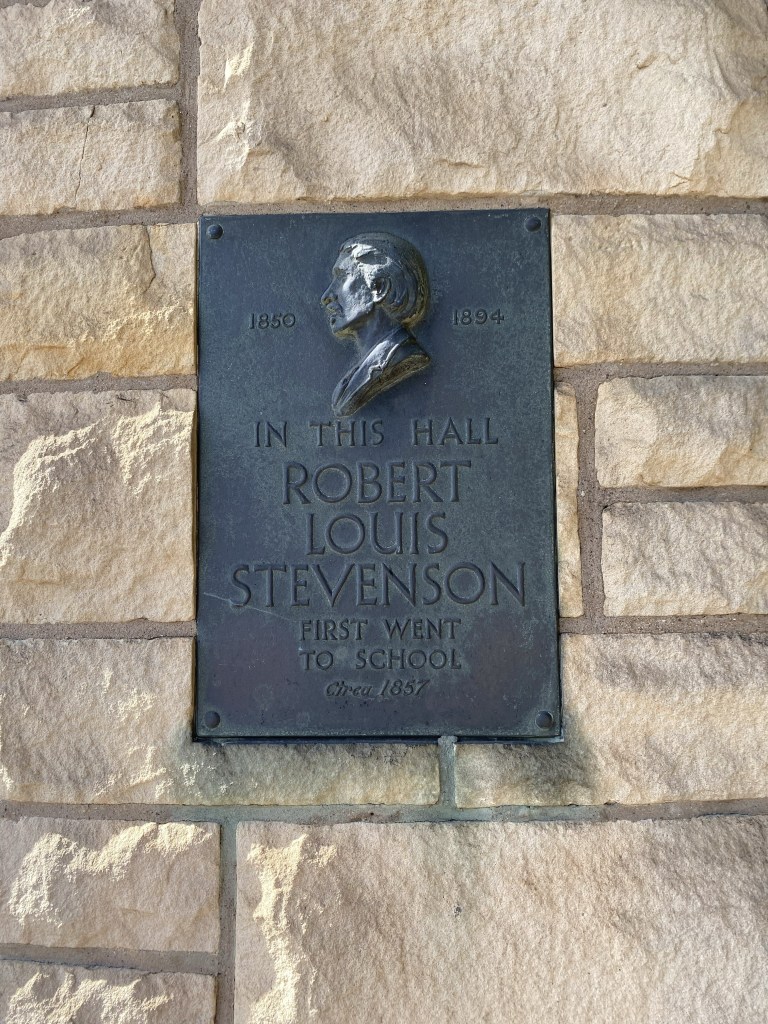
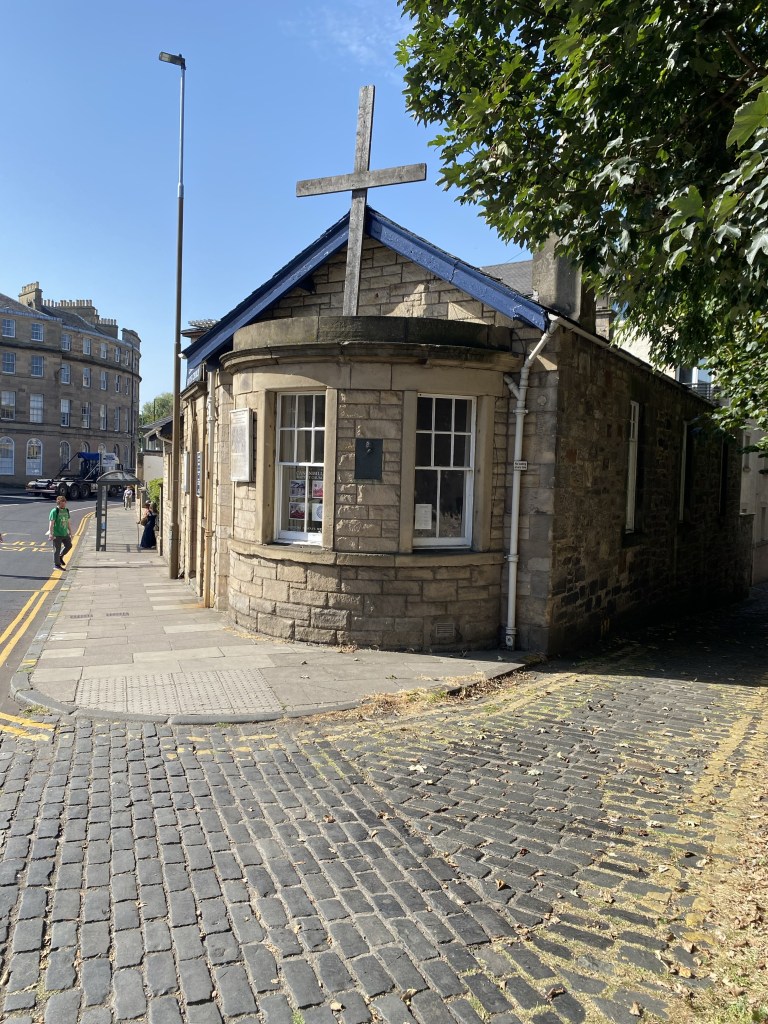
This was the first school Robert Louis Stevenson attended. He lived in Inverleith Terrace at the time. The building is now Canonmills Baptist Church. The plaque says:
1850 1894 IN THIS HALL ROBERT LOUIS STEVENSON FIRST WENT TO SCHOOL Circa 1857
8 Howard Place
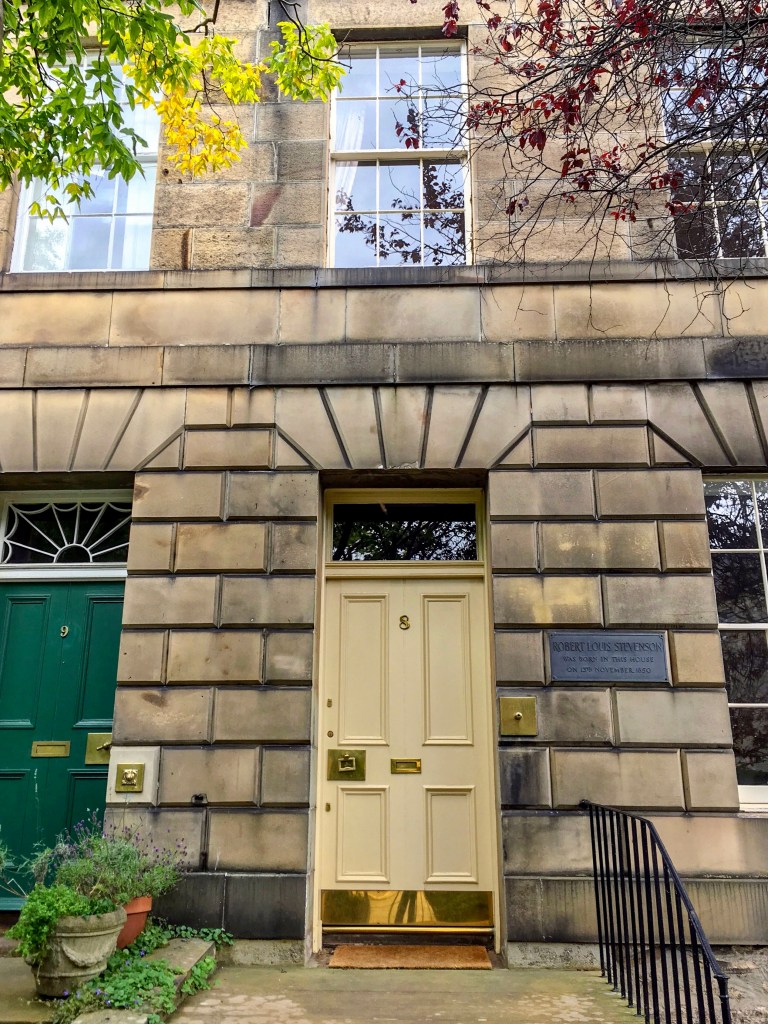
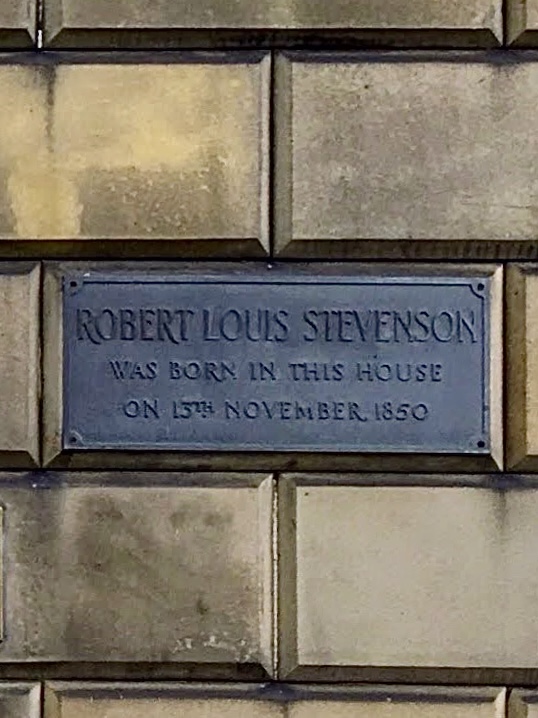
This, of course, is where Robert Louis Stevenson was born in 1850. For variety, this is an older photo of the house, from 2021. The plaque on the wall says simply:
ROBERT LOUS STEVENSON WAS BORN IN THIS HOUSE ON 13TH NOVEMBER 1850
17 Heriot Row
The plaque on the wall at 17 Heriot Row says:
The Home of
ROBERT LOUIS STEVENSON
1857 – 1880
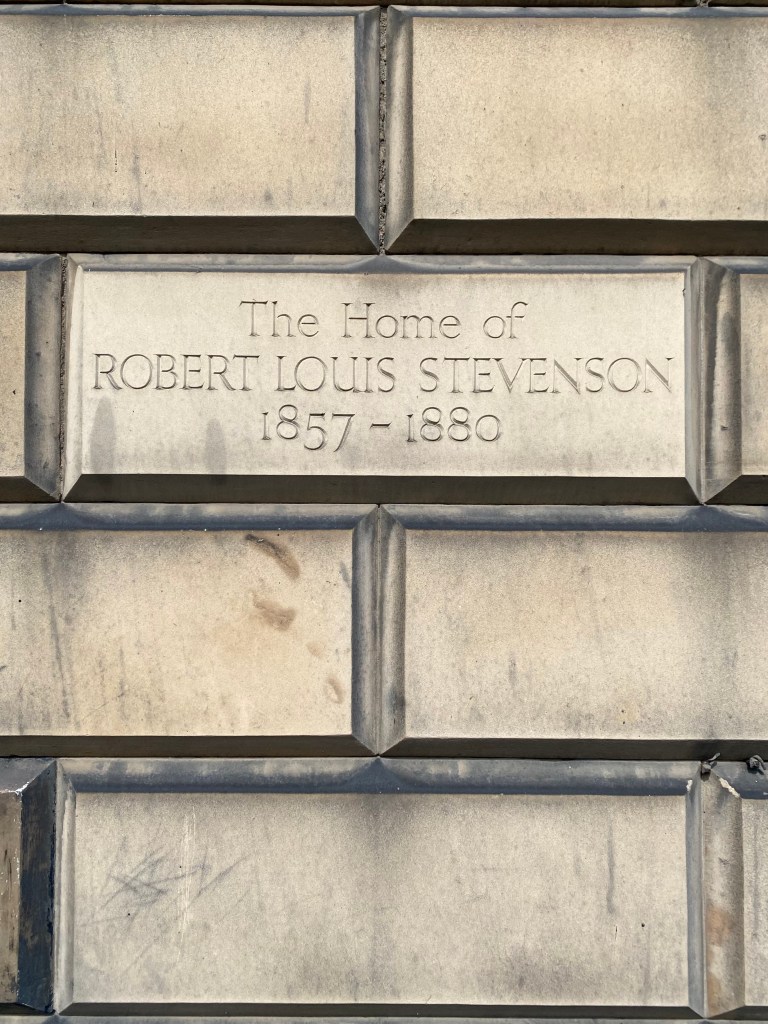
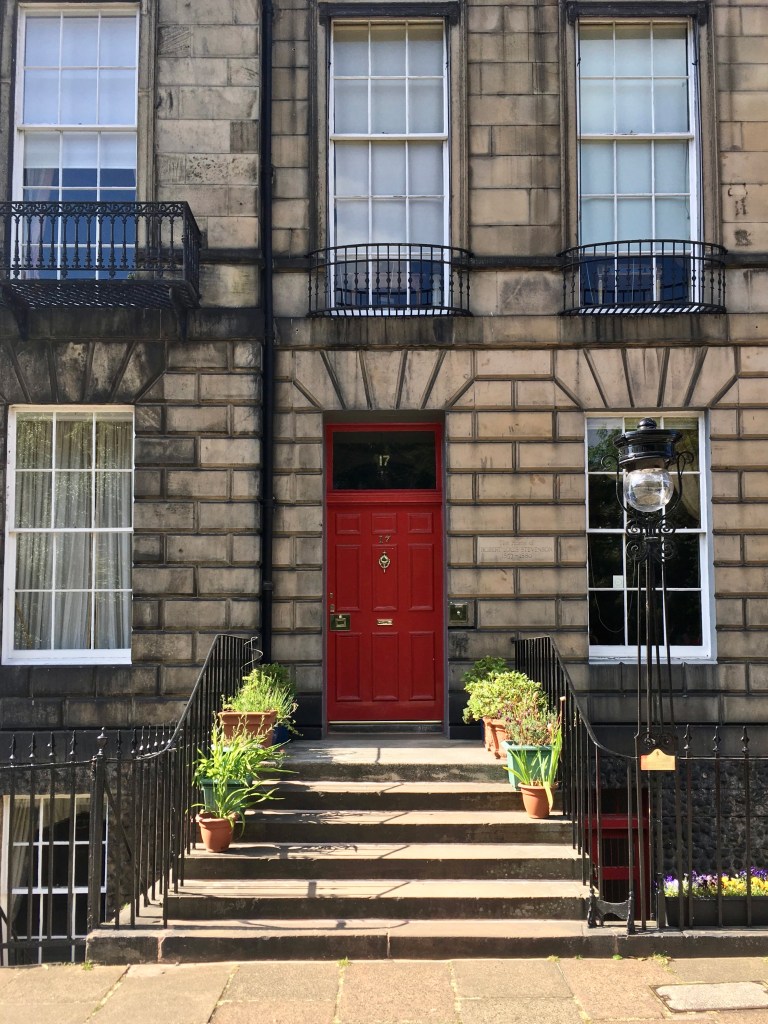
Heriot Row is, of course, where Robert Louis Stevenson lived longest in Edinburgh.
Edinburgh University, 7 George Square
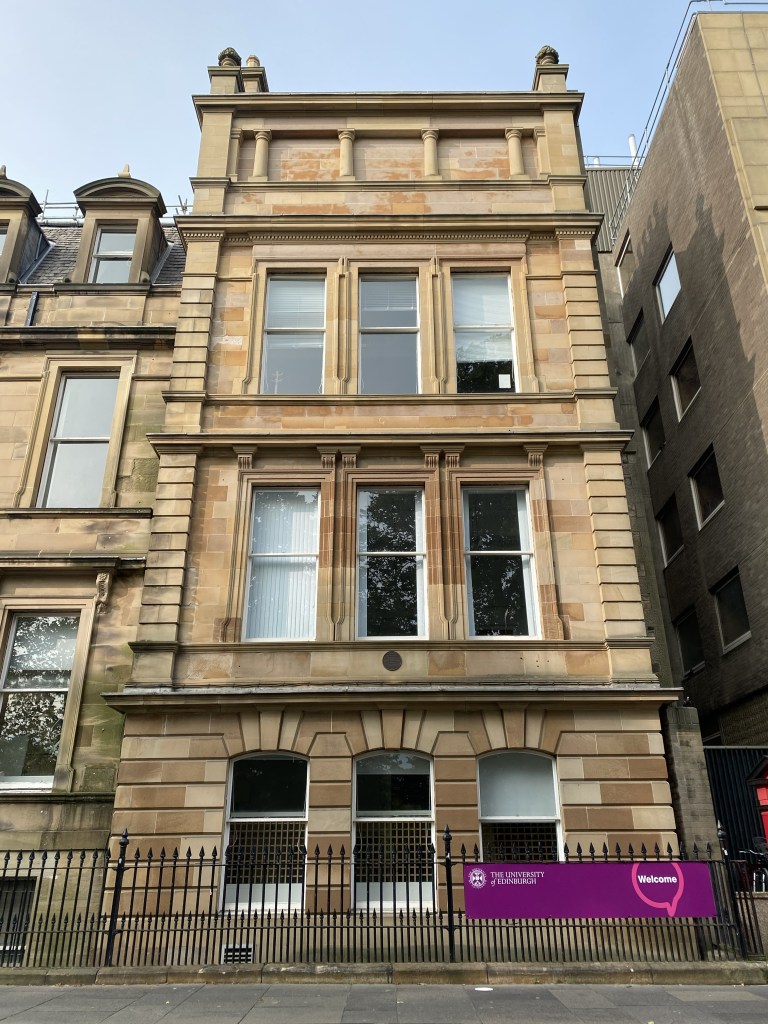
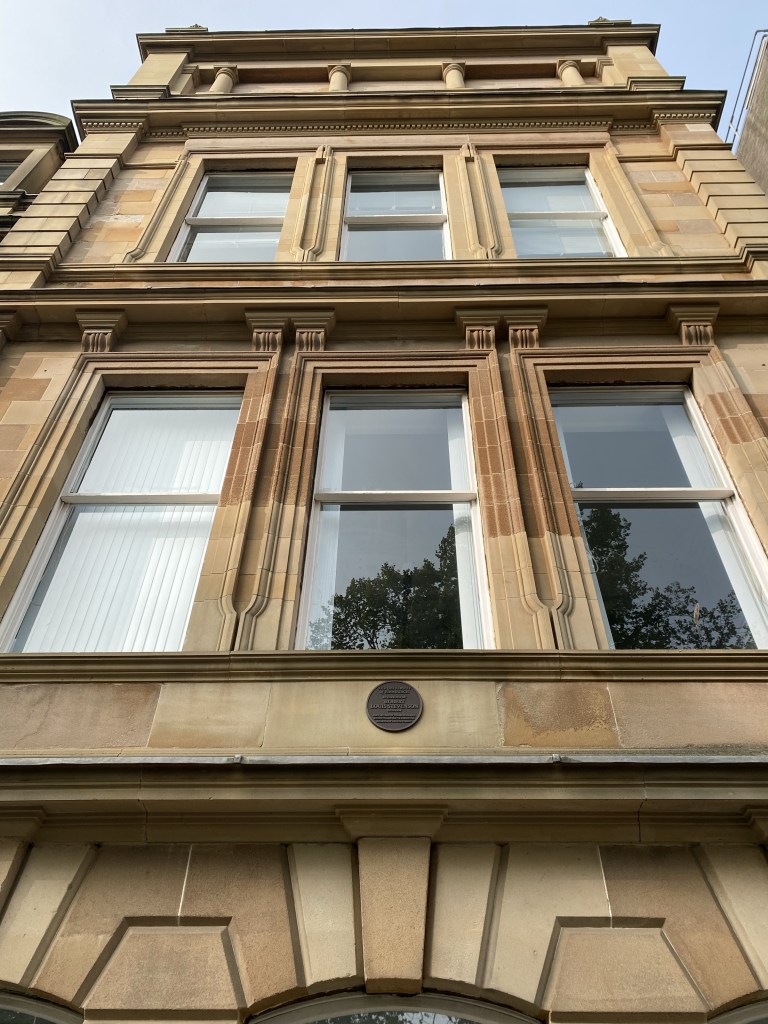
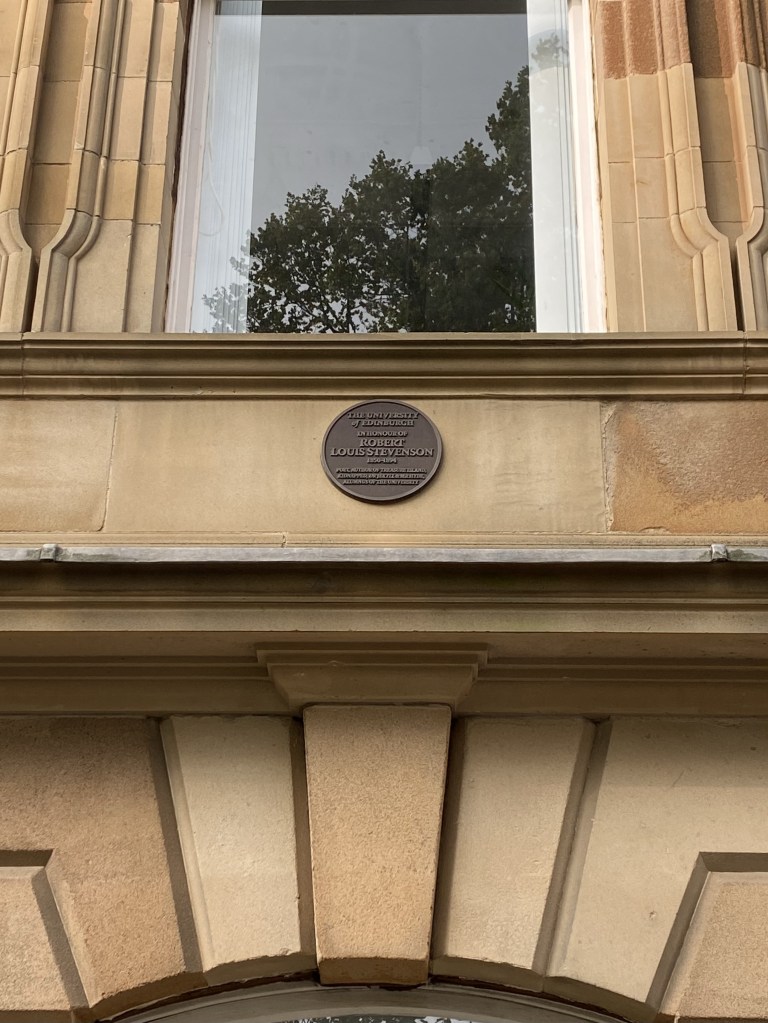
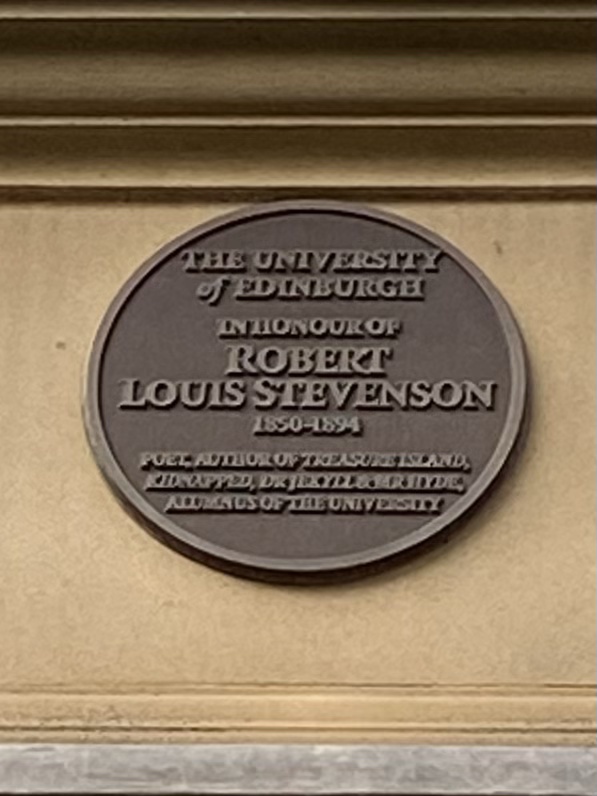
Plaque on an Edinburgh University building at 7 George Square, honouring Stevenson, who qualified as an advocate at the university. After qualifying, he only attended court once, however – writing is what he really wanted to do.
The plaque says:
‘The University of Edinburgh
In honour of Robert Louis Stevenson
1850-1894
Poet, author of Treasure Island, Kidnapped, Dr Jekyll and Mr Hyde.
Alumnus of the University’
Drummond Street
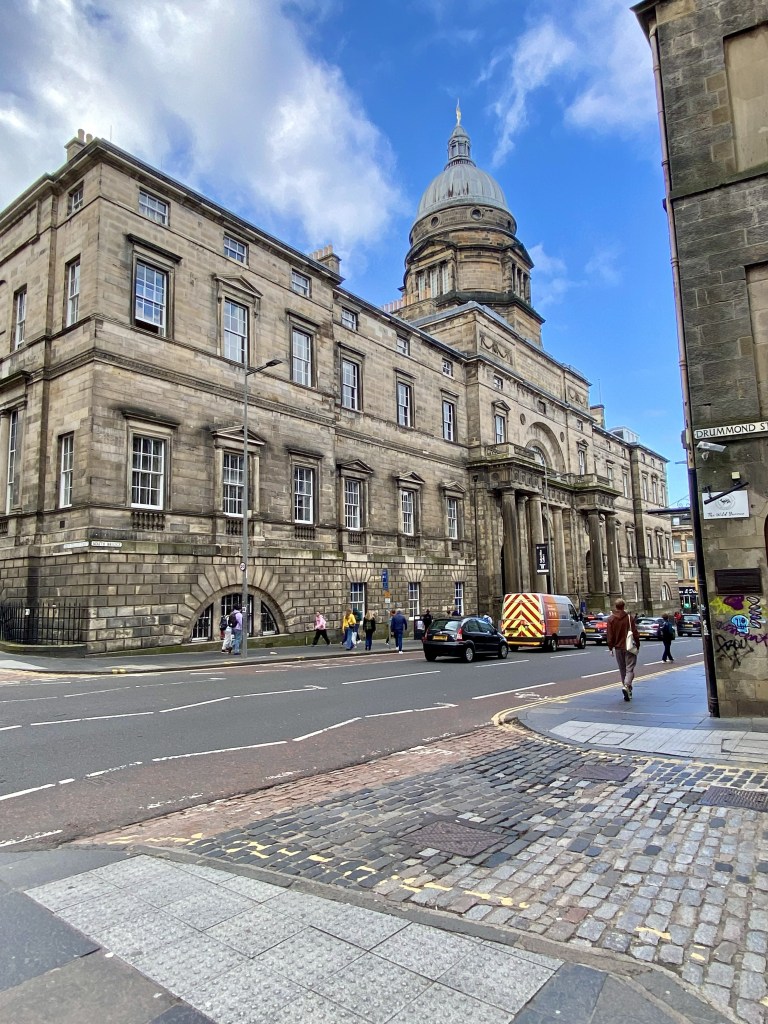
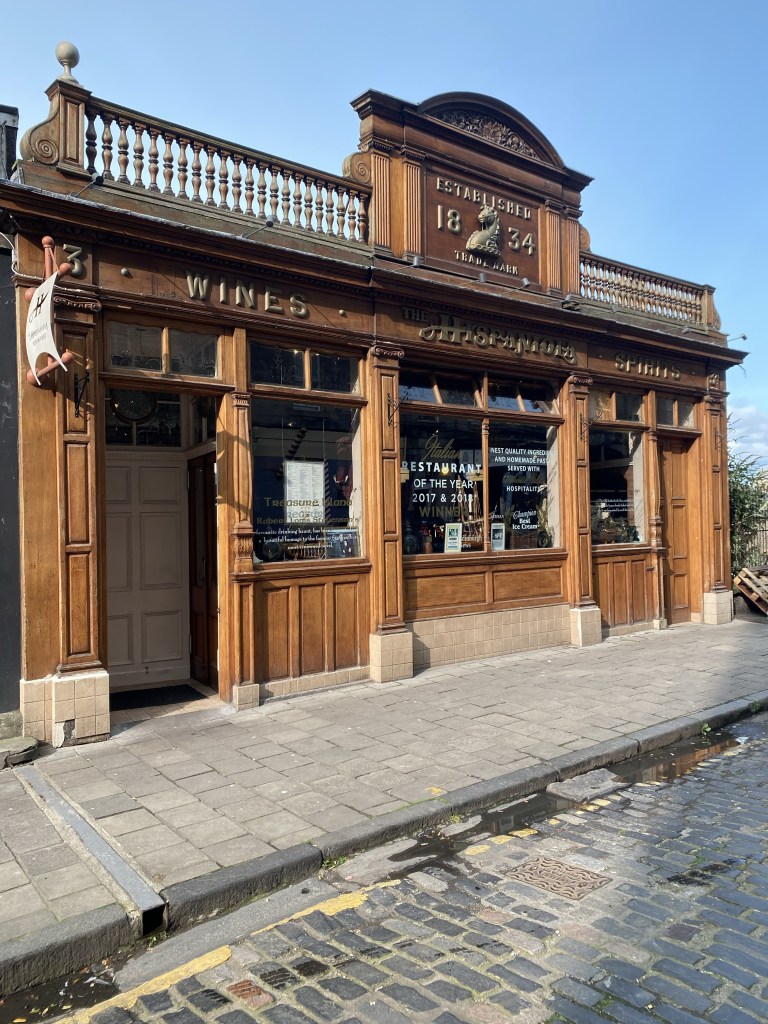
This plaque on Drummond Street is just across from Edinburgh University’s Old College. Farther along Drummond Street is the former Rutherford’s bar that Stevenson mentions in the quote on the plaque – I’ve included a couple of photos of it too.

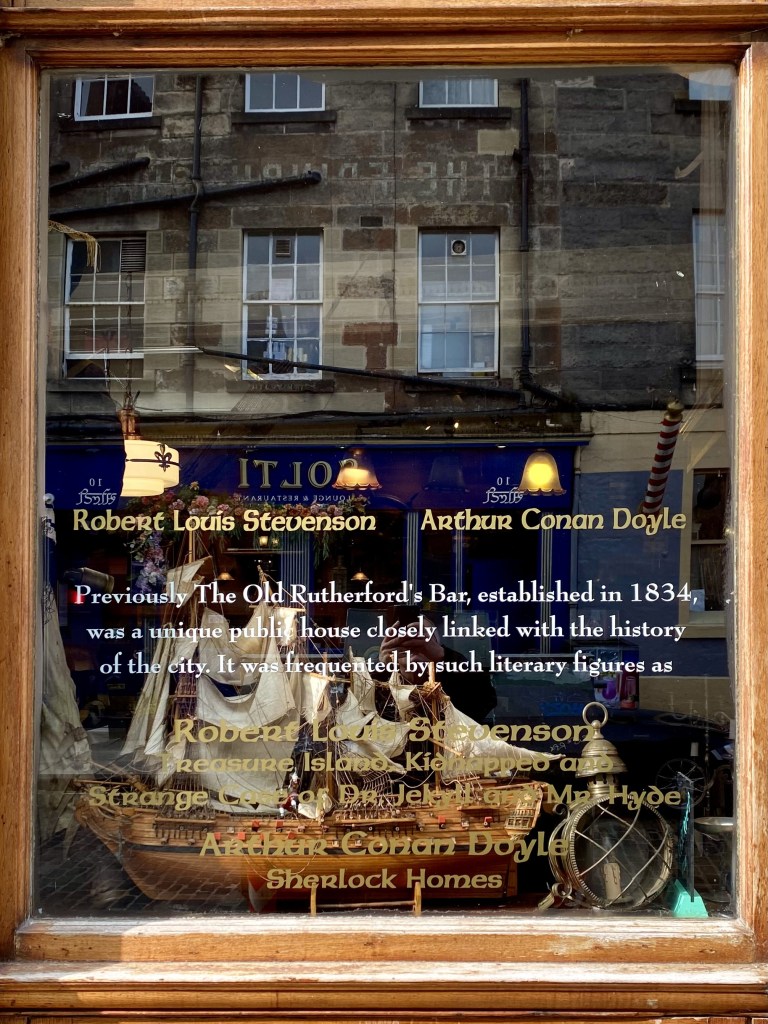
The plaque says:
‘IN MEMORY OF ROBERT LOUIS STEVENSON, 1850-1894, son, and student of Edinburgh.
” and when I remembered all that I hoped and feared as I pickled about Rutherford’s in the rain and the east wind; how I feared I should make a mere shipwreck, and yet timidly hoped not; how I feared I should never have a friend far less a wife, and yet passionately hoped I might; how I hoped (if I did not take to drink) I should possibly write one little book. And then now – what a change! I feel somehow as if I should like the incident set upon a brass plate at the corner of that dreary thoroughfare, for all students to read, poor devils, when their hearts are down.”
- from the South Seas, September 1888
Presented on behalf of all Stevenson lovers …….. September 1995′
I have to say, I think this is a wonderful quote from Stevenson.
Princes Street Gardens Memorial
On the centenary of the publication of A Child’s Garden of Verses, the Robert Louis Stevenson Club in Edinburgh launched an international appeal to raise funds to create a suitable memorial to RLS in Princes Street Gardens, not far from the Ross Fountain.
The memorial was unveiled on 14 July 1989 by Muriel Spark, author of The Prime of Miss Jean Brodie. The simple stone memorial, designed by Scottish poet and artist Ian Hamilton Finlay, is situated among nine silver birch trees, at the end of a path of sixteen flagstones set in the grass. In size, the memorial might seem insignificant compared to the nearby 200-foot-tall monument to one of Scotland’s other great writers, Sir Walter Scott, but I love the Robert Louis Stevenson one a little bit more, precisely because of its modesty.
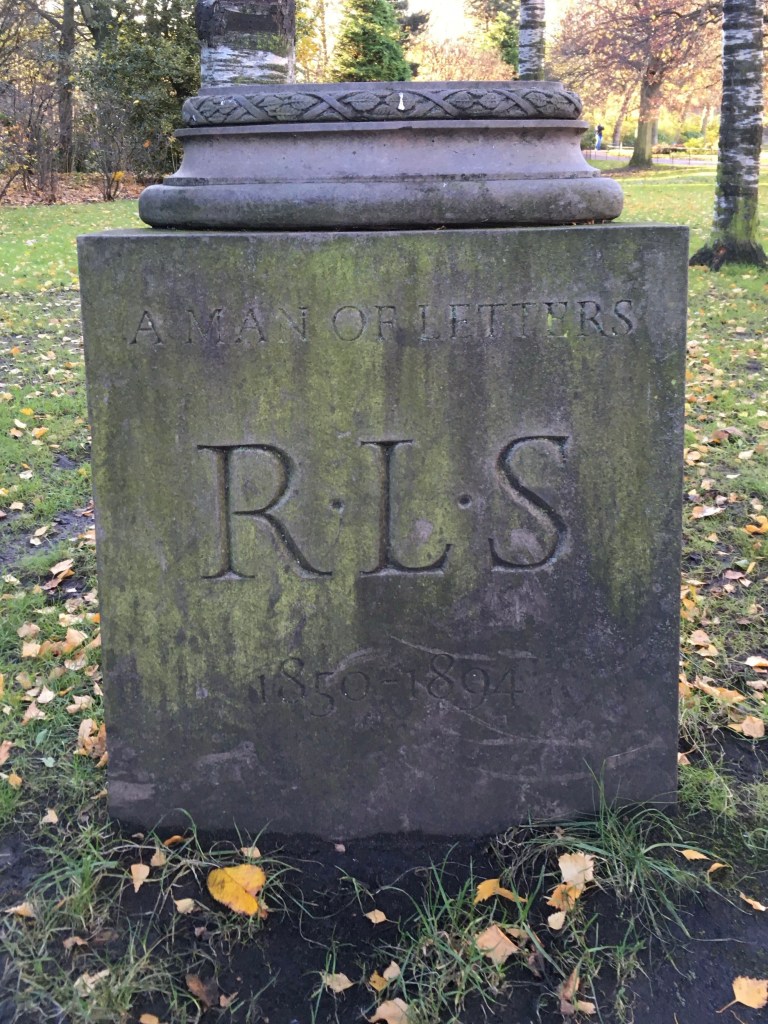
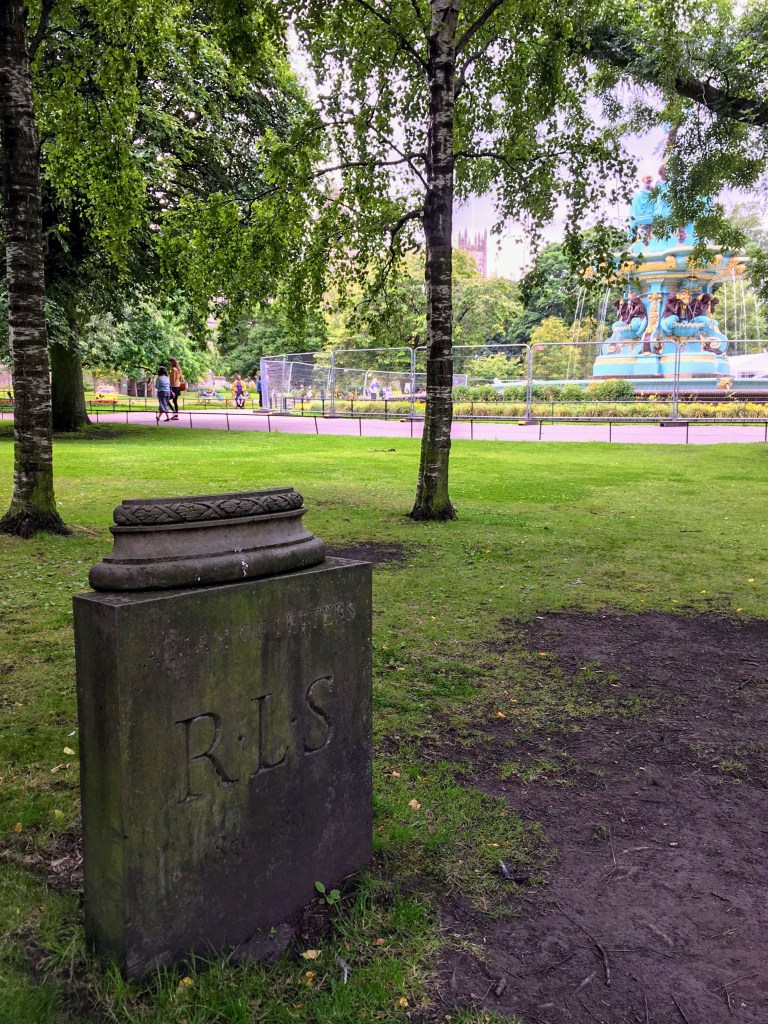
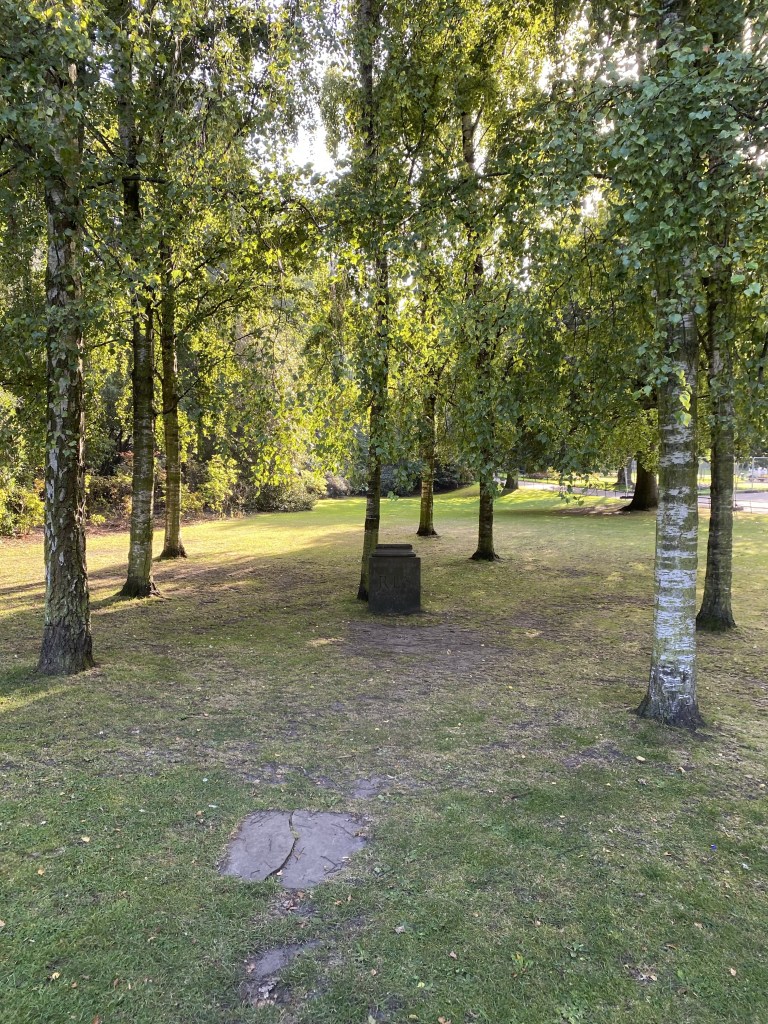
The inscription on the stone reads:
A MAN OF LETTERS
R.L.S.
1850 – 1894
St Giles Cathedral
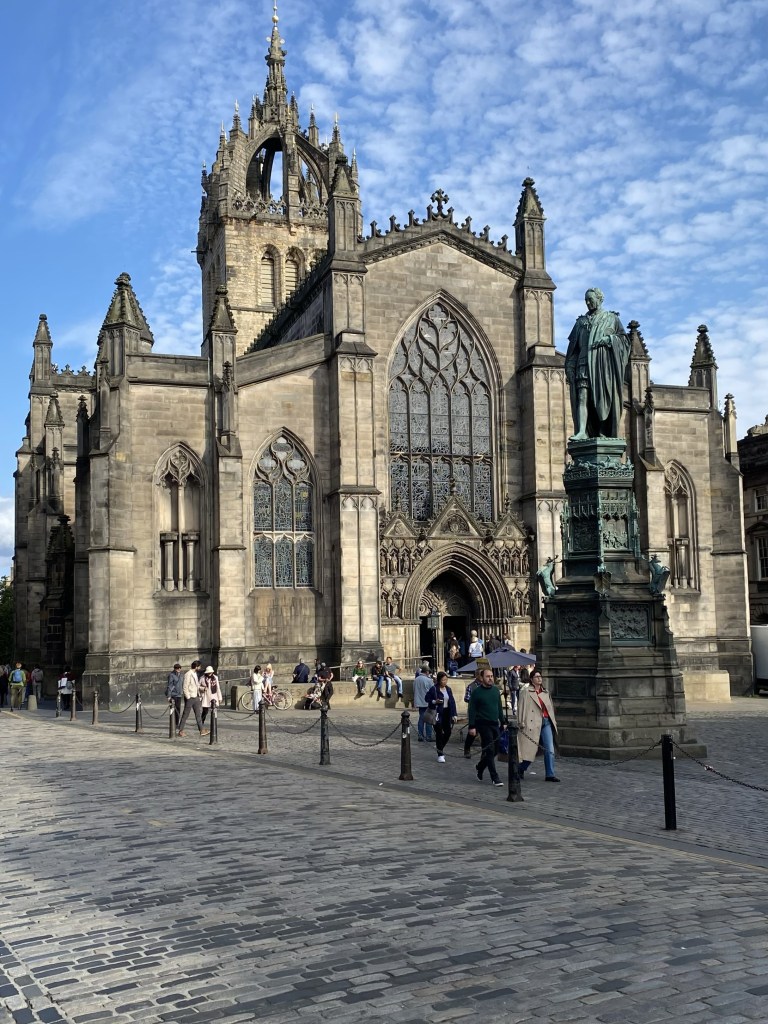
St Giles Cathedral in Edinburgh’s Old Town was founded in 1124 by King David I. It’s been a working church for nine centuries. John Knox, the leader of Scotland’s Reformation and founder of the Presbyterian Church of Scotland, preached here at times between 1559 and his death in 1572.
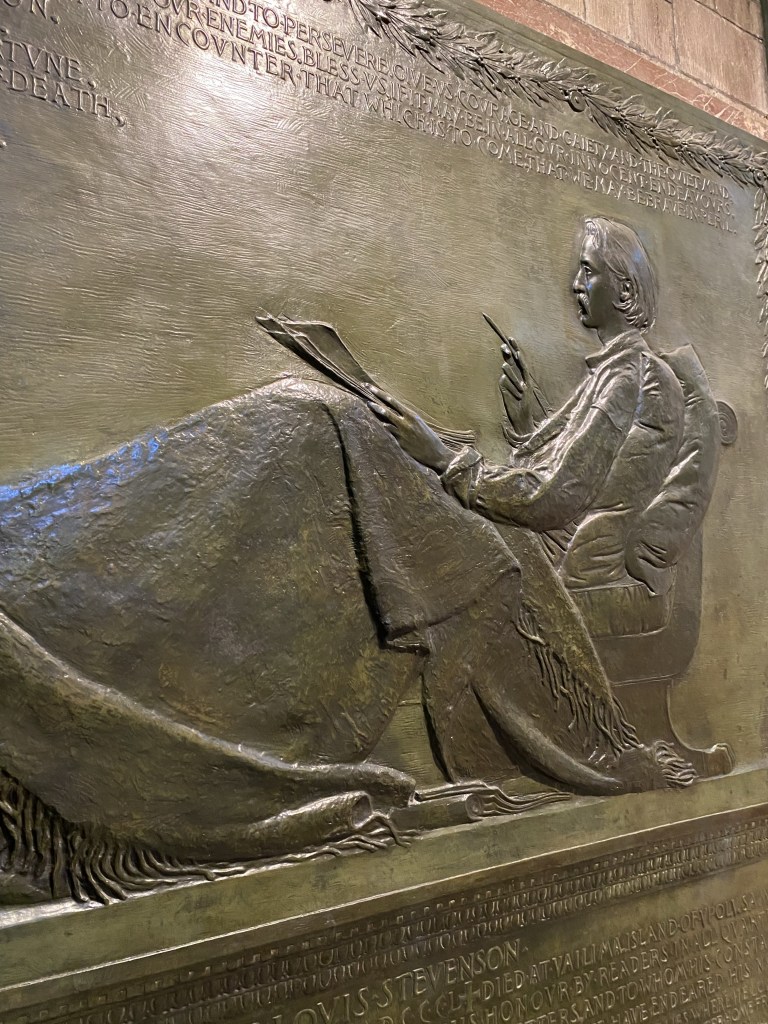
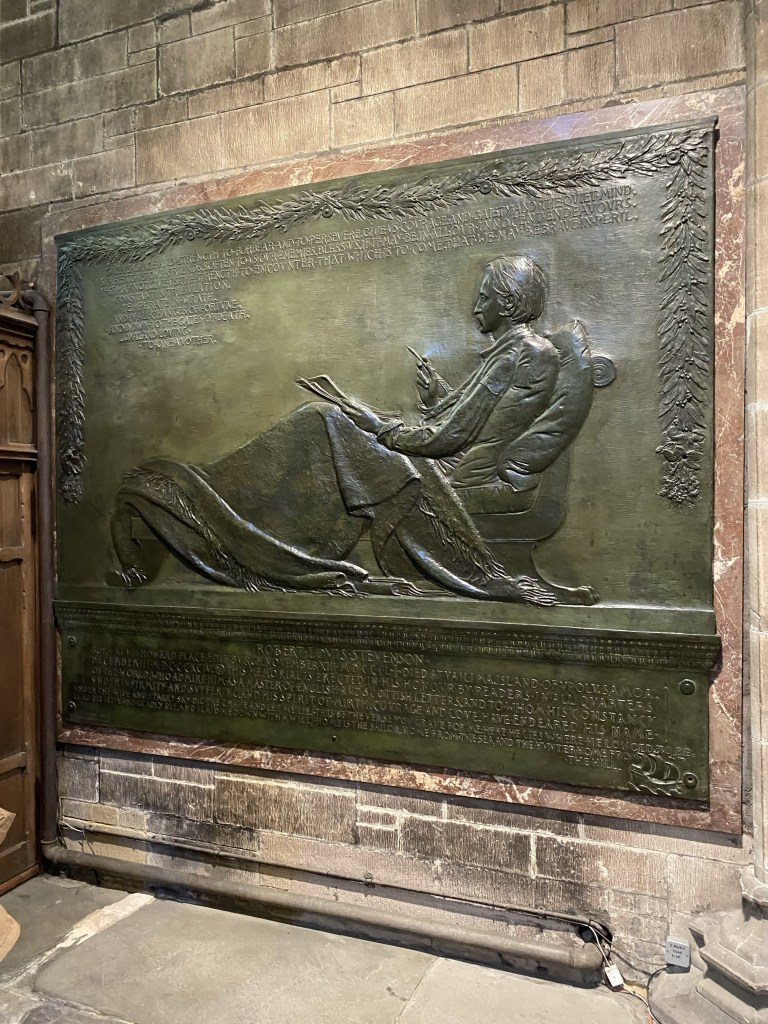
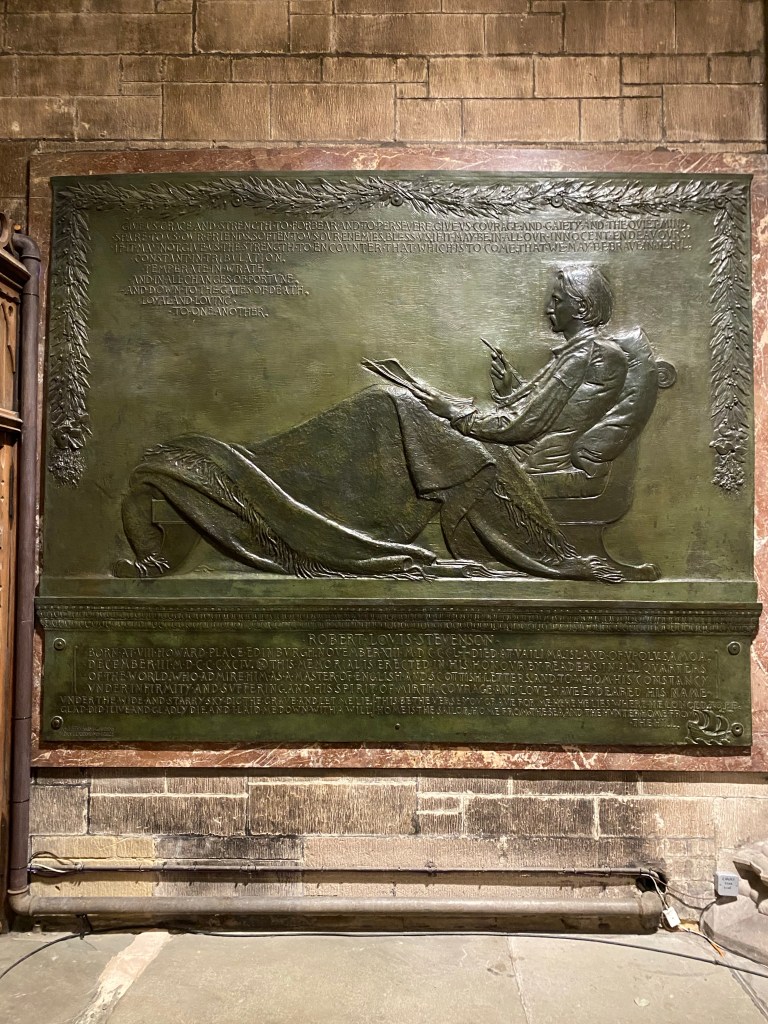
Inside St Giles is a large bronze plaque, which depicts Robert Louis Stevenson sitting up in bed, covered with a blanket and writing. It seems sadly appropriate for someone who was so unwell much of his life. The original version of the plaque had Stevenson holding a cigarette rather than a pen.
It’s easy to walk past this wonderful bronze relief without even noticing it. The plaque is rather dark and the area it’s in isn’t particularly bright. Once you’ve entered the Cathedral and walked past the reception desk, you’ll walk up a ramp which will take you to the Moray Aisle. Turn to your right and look at the wall behind you.
The plaque was created by the famous sculptor, Augustus Saint-Gaudens. The sculptor, who had little interest in literature, was introduced to Stevenson’s New Arabian Nights by a friend, and it had a profound effect on him. In his “Reminiscences”, he recalled: “My introduction to these stories set me aflame as few things in literature.”
A mutual friend of Stevenson and Saint-Gaudens arranged for the two men to meet in the autumn of 1887. Stevenson accepted Saint-Gaudens’ offer to “make his portrait”, which required five sittings of two to three hours each. Once the plaque was completed in 1887, the two men never met again but they did maintain a friendship through the exchange of letters. Stevenson considered the finished relief a “speaking likeness” and referred to Augustus Saint-Gaudens as his “God-like sculptor”.
The original version of the plaque was rectangular but the sculptor later created a circular version, which he considered superior. He was commissioned to create a copy of the original for St Giles Cathedral, and it was completed in 1907, 20 years after Stevenson had modelled for it. Graham Balfour, who was Stevenson’s cousin and who wrote a biography of the writer, considered the work “the most satisfactory of all the portraits of Stevenson”.
Robert Fergusson’s tombstone, Canongate Kirkyard
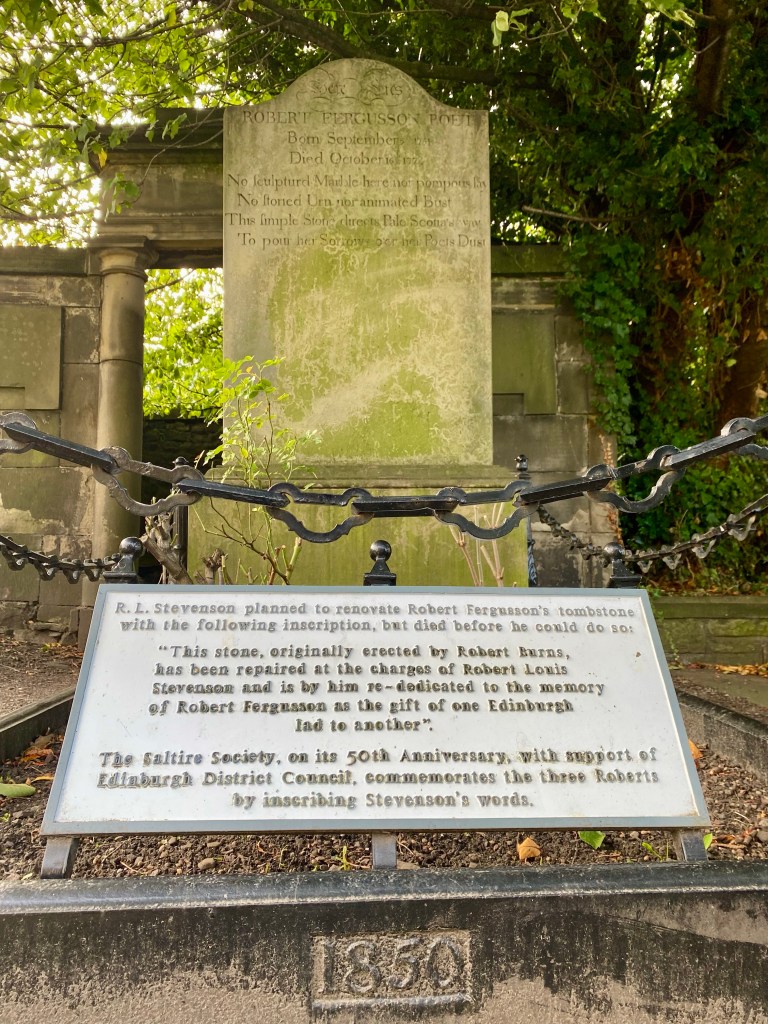
Robert Fergusson was a Scottish poet, born in Edinburgh in 1750, who wrote in both Scottish English and in the Scots language. His poem ‘Auld Reekie’ is now regarded as his masterpiece and is a vivid verse portrait of Edinburgh
Fergusson was an inspiration for Robert Burns, who designed, commissioned and paid for the memorial headstone pictured above, which was erected in 1789. It was of Burns own design and bears an epitaph written by him which says:
‘No sculptur’d marble here, nor pompous lay,
‘No story’d urn nor animated bust;’
This simple stone directs pale
Scotia’s way
To pour her sorrows o’er her
Poet’s dust.’
Robert Louis Stevenson intended to renovate the stone, but died before he could do so. The epitaph that Stevenson planned to add to the stone is recorded on a plaque in front of it. It reads in part:
“This stone, originally erected by Robert Burns, has been repaired at the charges of Robert Louis Stevenson and is by him re-dedicated to the memory of Robert Fergusson as the gift of one Edinburgh lad to another”.
Fergusson’s life ended rather tragically at the age of 24.
Scottish National Portrait Gallery
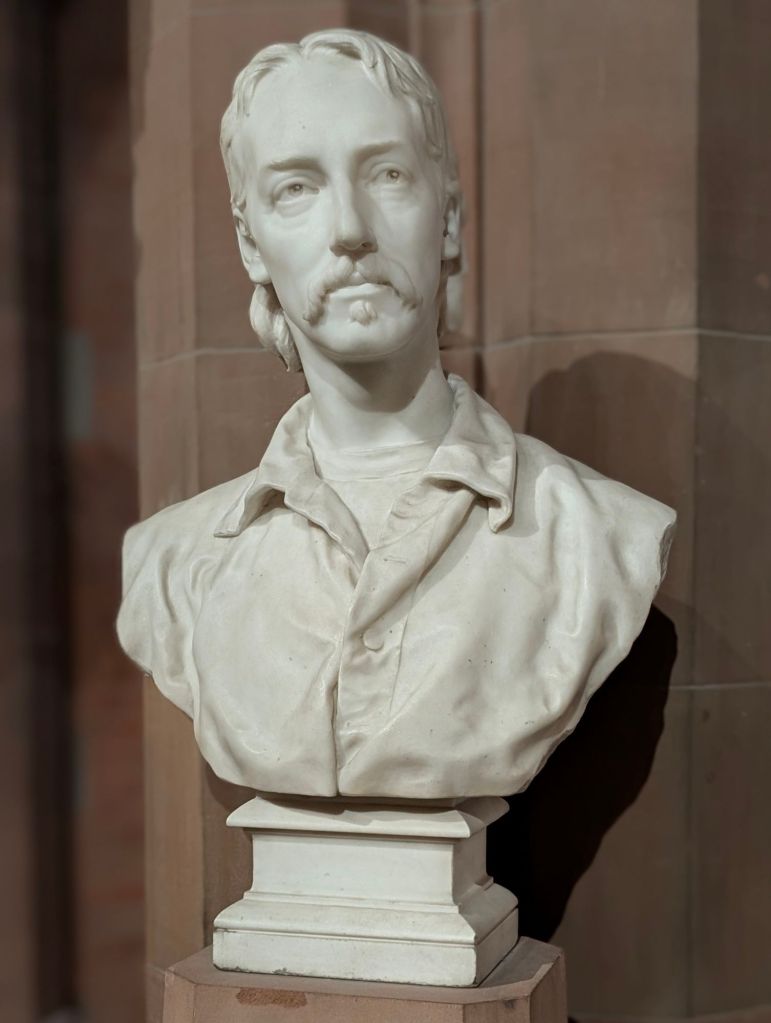
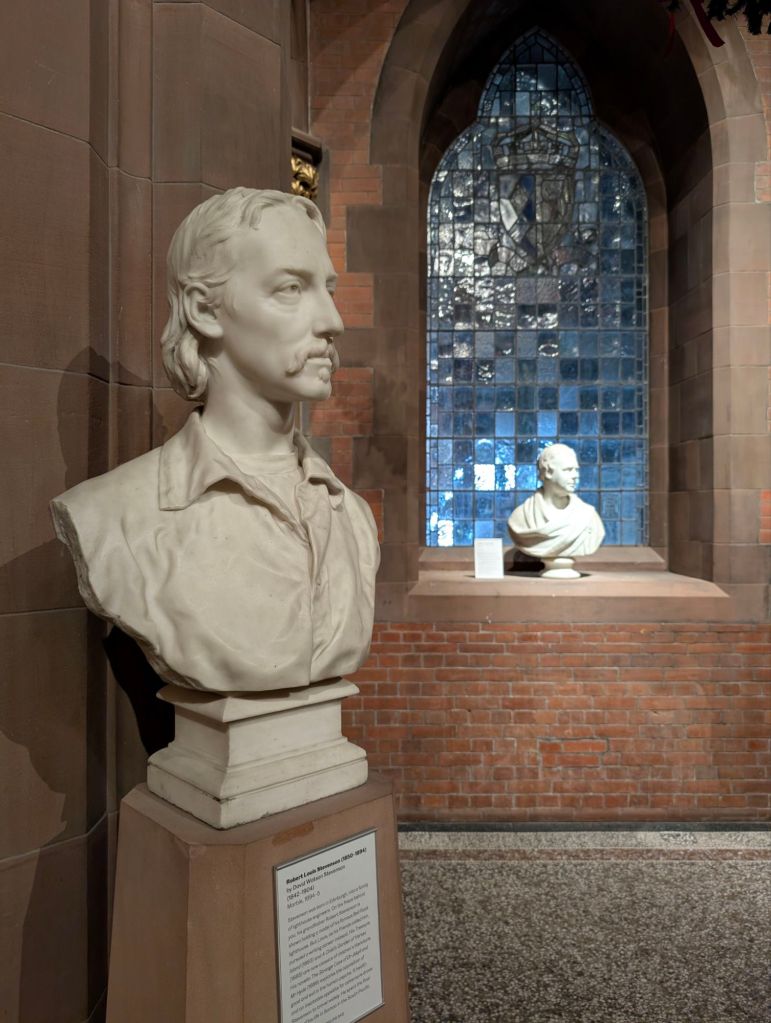
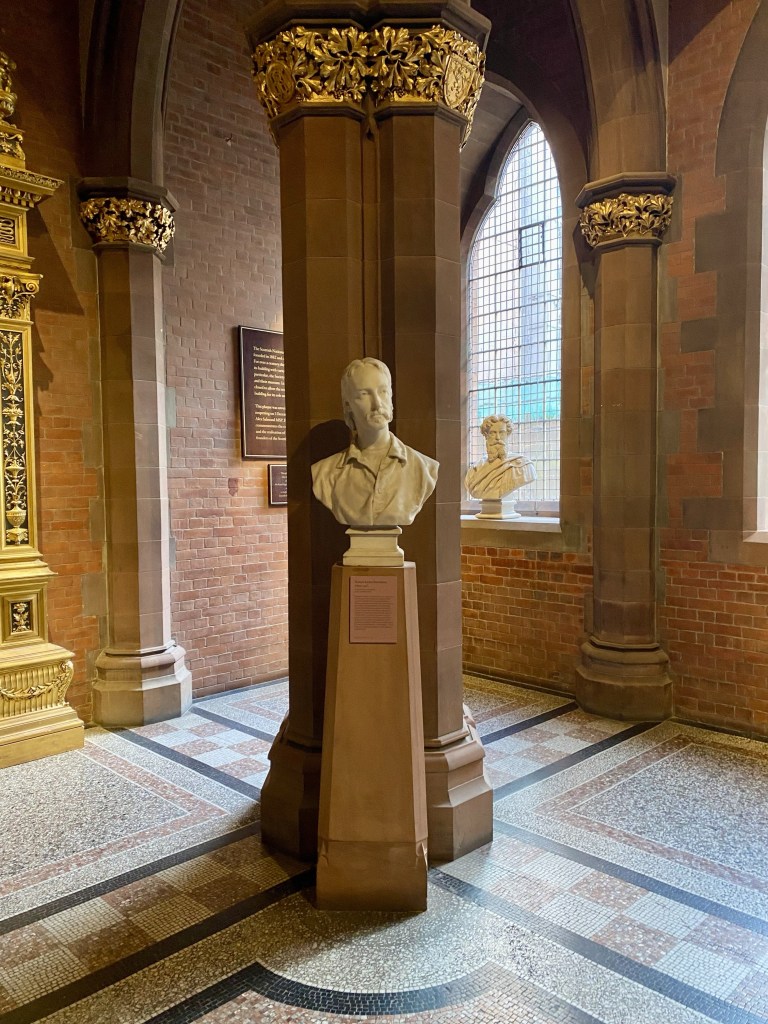
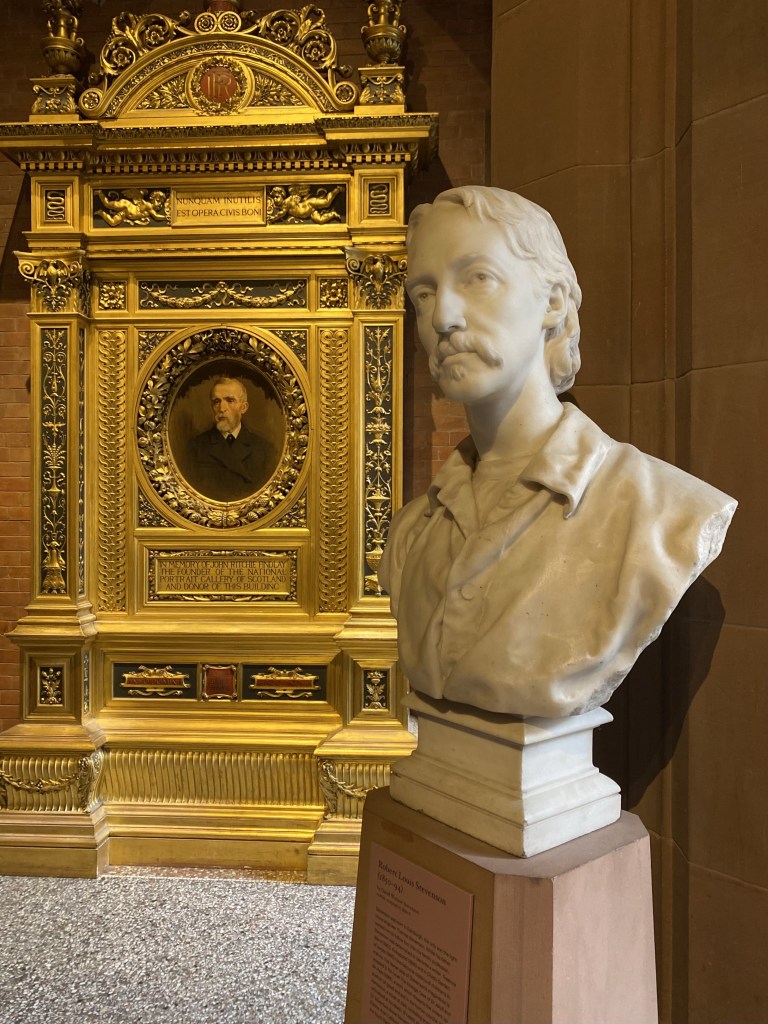
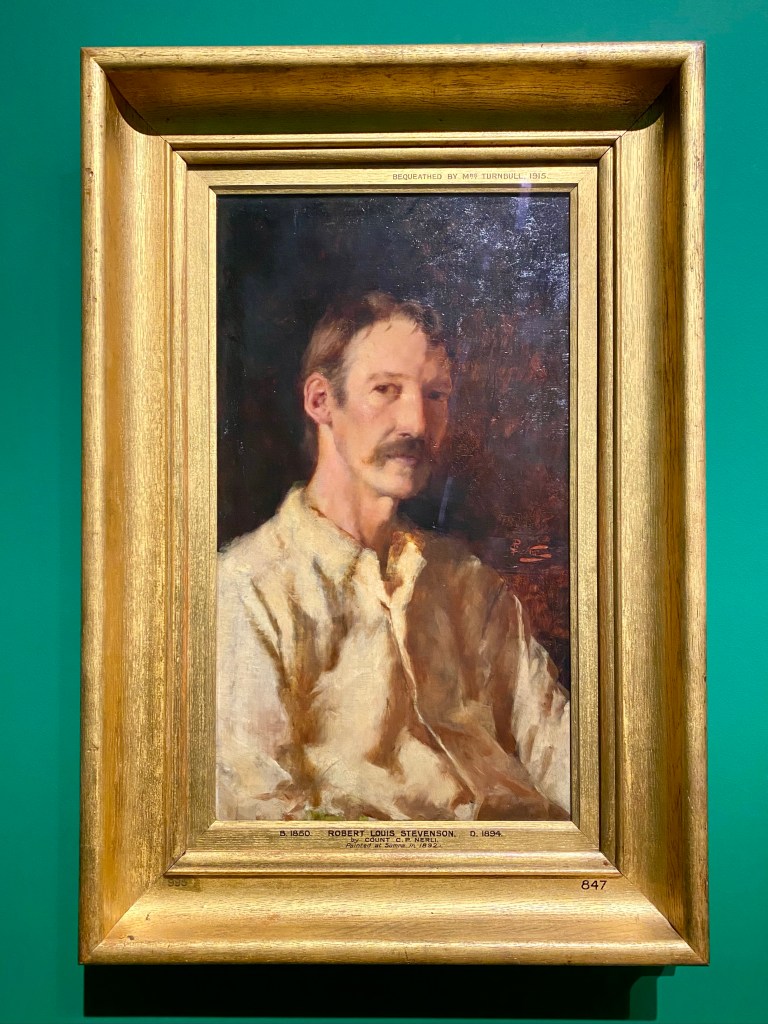
The wonderful Scottish National Portrait Gallery in Edinburgh has a number of sculptures of notable people who have lived in the city, including this one of Robert Louis Stevenson in the Great Hall. The hall also contains busts of writers Sir Walter Scott and Naomi Mitchison and a prominent statue of poet Robert Burns.

 The Literary Tourist
CONGRATULATIONS: A wonderfully crafted narrative accopanied by high calibre sensitive photography.
LikeLiked by 1 person
Thank you, Rex!
LikeLike