
Colinton
Colinton is a beautiful, surprisingly verdant suburb of Edinburgh that still gives the impression of being the village that it was when the young Robert Louis Stevenson visited in the 1850s.
Stevenson’s maternal Grandfather, Lewis Balfour, was the minister at Colinton Parish Church and lived in the adjacent manse. Throughout the first ten years of his life the young Robert Louis Stevenson was a frequent visitor in the holidays and in summertime. Although he found his Grandfather to be a rather rigid and unapproachable man he enjoyed his visits to Colinton Manse and loved playing in the large garden with his many cousins.
This delightful bronze statue of Robert Louis Stevenson as a boy, playing with his dog ‘Coolin’, can be found just outside Colinton Parish Church.
The plaque at the foot of the statue reads:
‘All through my boyhood and youth I was known and pointed out for the pattern of an idler; and yet I was always busy on my own private end, which was to learn to write. I kept always two books in my pocket, one to read, one to write in.”
“Memories and Portraits” Robert Louis Stevenson’
The statue was commissioned by the Colinton Community Conservation Trust and designed by Alan Herriot, one of Scotland’s finest figure sculptors. It cost £34,000 (raised mostly by the local community) and was unveiled on 26th October 2013 by Scottish crime fiction writer, Ian Rankin, who said at the time:
“Without Edinburgh’s split nature Stevenson might never have dreamt up Dr Jekyll and Mr Hyde, and without Dr Jekyll and Mr Hyde I might never have come up with my own alter ego Detective Inspector John Rebus.”


Colinton Parish Church
This is Colinton Parish Church today. The church is located in Dell Road in Colinton, Edinburgh. Robert Louis Stevenson’s grandfather, Dr Lewis Balfour, was a Church of Scotland Minister here between 1824 and his death in 1860. He’s buried alongside his wife, Henrietta, in an open vault on the North side of the church.
A church has stood on this site for around a thousand years but the current building dates from 1908. It incorporates the tower from the older church, which had been built in 1837.
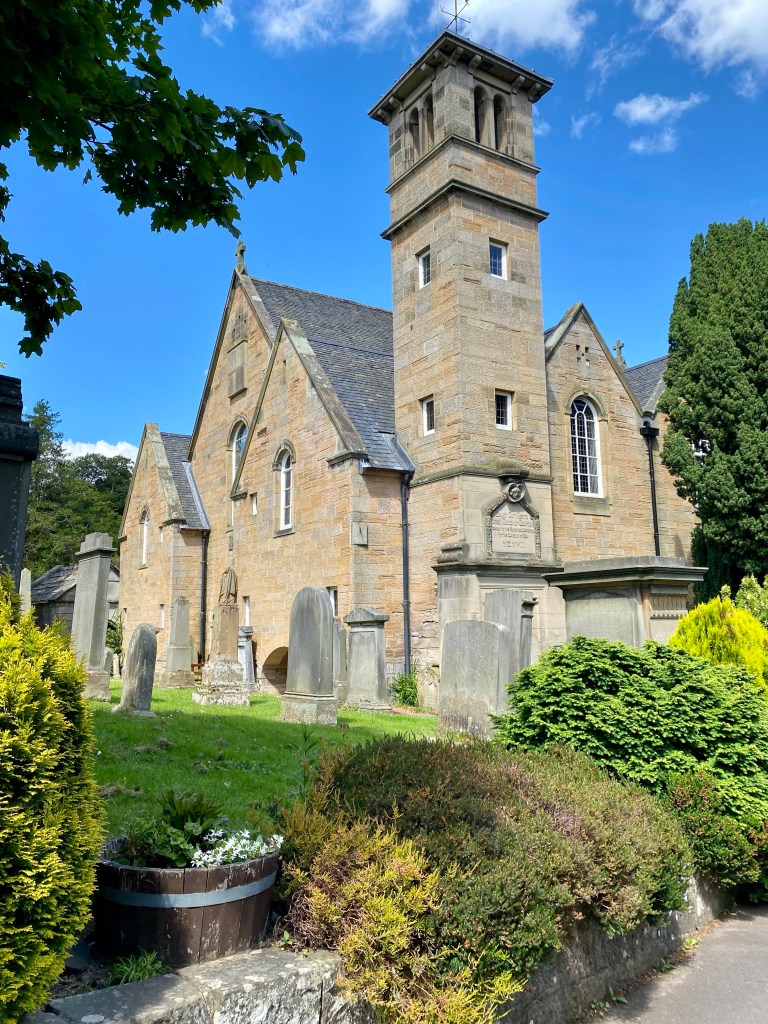
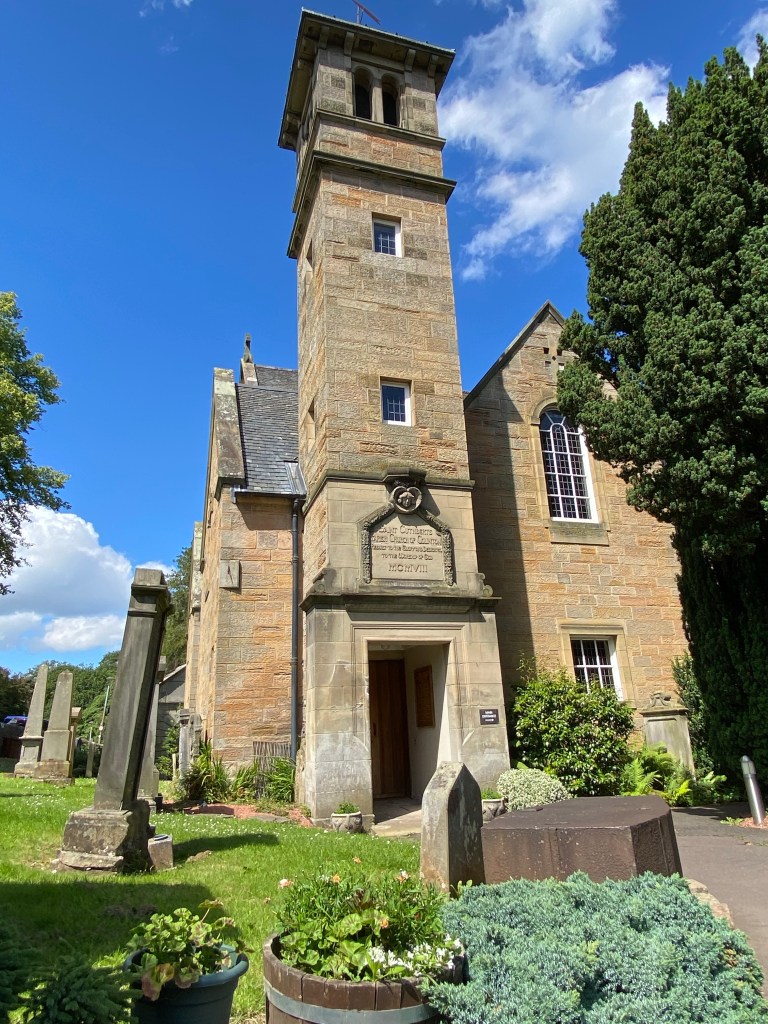
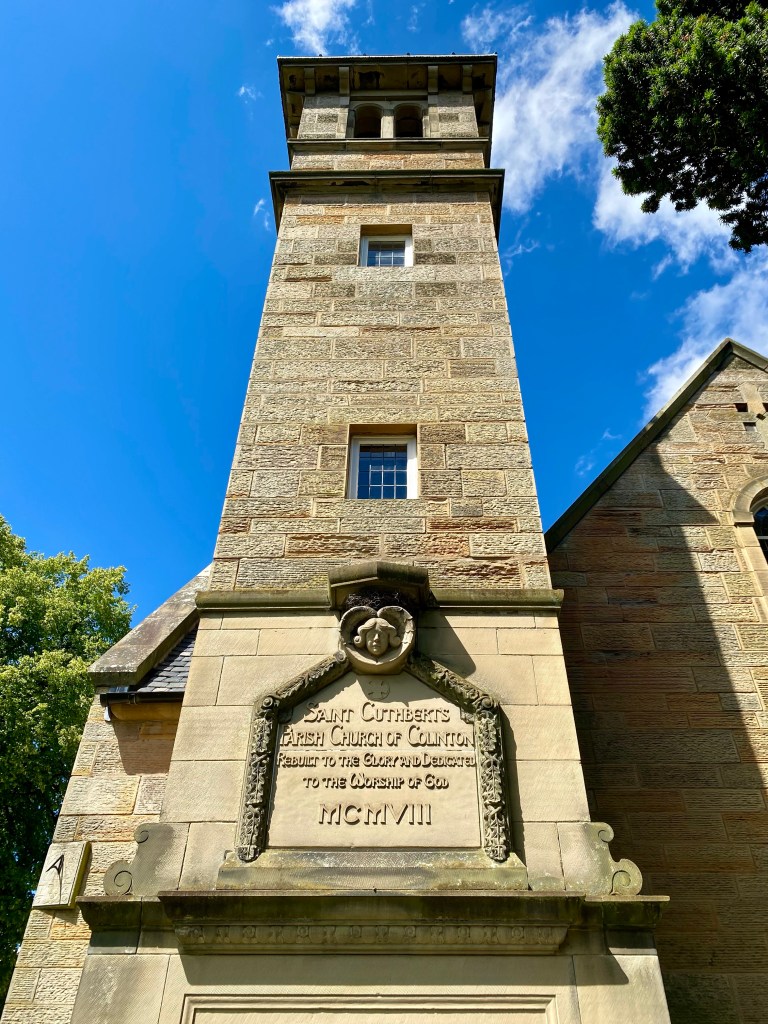
‘SAINT CUTHBERTS
PARISH CHURCH OF COLINTON
REBUILT TO THE GLORY AND DEDICATED TO THE WORSHIP OF GOD
MCMVIII’

Colinton Manse
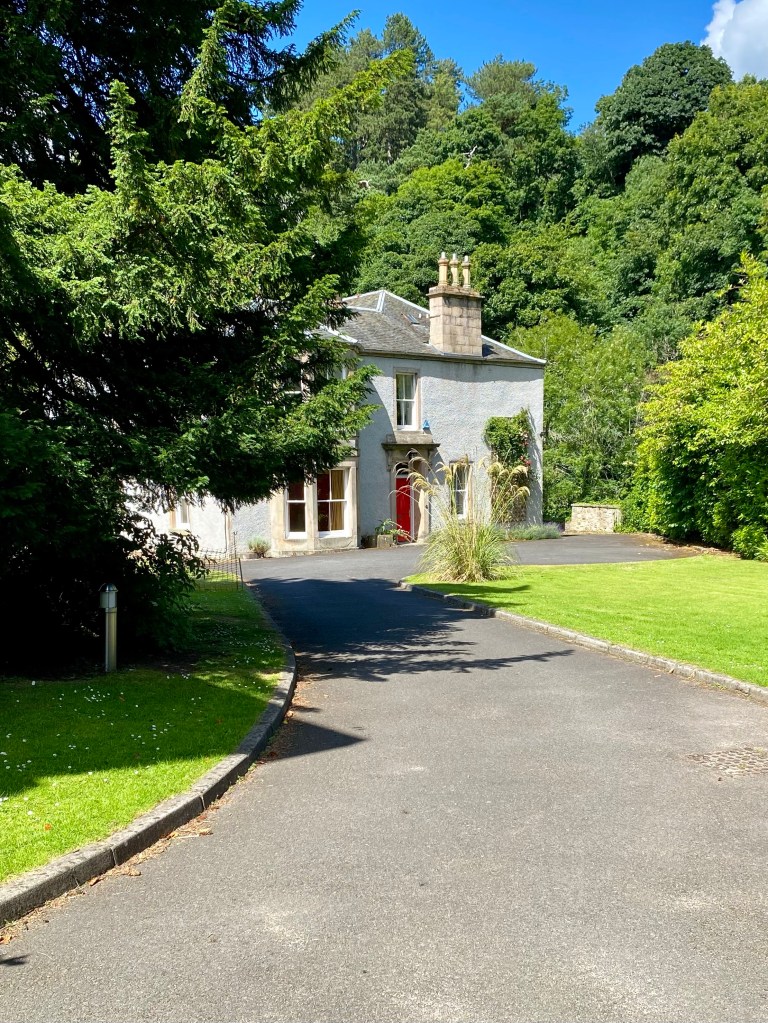
During the first nine years of his life Robert Louis Stevenson often stayed with his grandfather, Dr Lewis Balfour, at Colinton Manse during holidays and in the summertime. The Reverend Balfour was Minister of Colinton Parish church at the time. His young grandson found him a rather forbidding character, unemotional and unapproachable but he still loved his visits here. For one thing, his aunt Jane Balfour, who was motherly, full of good spirits and very kind, also lived at the Manse. Stevenson later recalled:
‘… all the children of the family came home to her to be nursed, to be educated, to be mothered [ … ] there must sometimes have been half a score of us children about the Manse; and all were born a second time from Aunt Jane’s tenderness’. – ‘Reminiscences of Colinton Manse’, MS Yale.
So not only did the young RLS have lots of cousins to play with at the Manse and in its lovely, large garden, he also had his delightful and devoted aunt Jane on call.
Years later Stevenson wrote this about his time in the house, the garden and in the village of Colinton:
‘The sense of sunshine, of green leaves, and of the singing birds, seems never to have been so strong in me as in that place. The deodar upon the lawn, the laurel thickets, the mills, the river, the church bell, the sight of people ploughing, the Indian curiosities with which my uncles had stocked the house, the sharp contrast between this place and the city where I spent the other portion of my time, all these took hold of me, and still remain upon my memory, with a peculiar sparkle and sensuous excitement.’ – Memoirs of Himself by RLS, p.211.
The Swing
When Robert Louis Stevenson was a boy, he used to love playing on a swing attached to this yew tree in the garden of his grandfather’s Manse in Colinton.

When he grew up to become one of Scotland’s most popular authors, Stevenson wrote this poem about the fun times he’d had on the swing and included it in his lovely volume A Child’s Garden of Verses:
‘The Swing
BY ROBERT LOUIS STEVENSON
How do you like to go up in a swing,
Up in the air so blue?
Oh, I do think it the pleasantest thing
Ever a child can do!
Up in the air and over the wall,
Till I can see so wide,
Rivers and trees and cattle and all
Over the countryside—
Till I look down on the garden green,
Down on the roof so brown—
Up in the air I go flying again,
Up in the air and down!’
The grave of Reverend Lewis Balfour and his wife Henrietta
The Reverend Lewis Balfour, grandfather of Robert Louis Stevenson, was Minister at Colinton Parish Church from 1824 until his death in 1860. He is buried in this open vault in the church’s cemetery alongside his wife, Henrietta, who predeceased him by 16 years. The vault was erected by the Reverend’s surviving family in 1861.
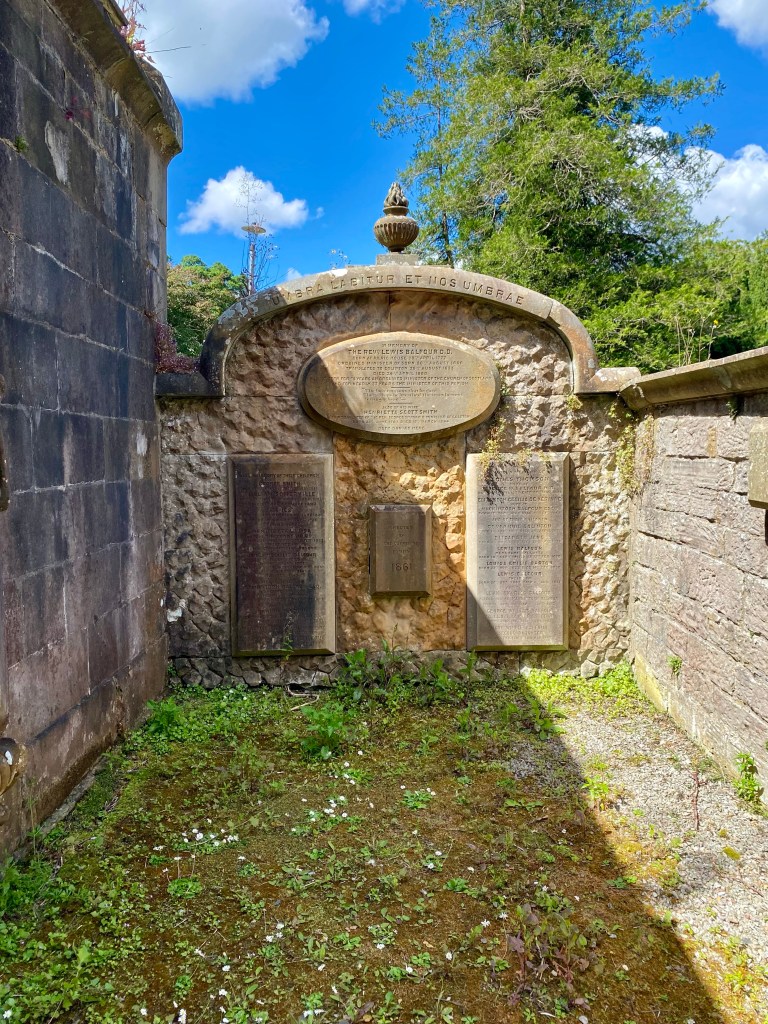


The oval plaque at the top of the vault reads:
‘IN MEMORY OF
THE REVD LEWIS BALFOUR D.D.
BORN AT PILRIG HOUSE 30TH APRIL 1777
ORDAINED MINISTER OF SORN 28TH AUGUST 1806
TRANSLATED TO COLINTON 28TH AUGUST 1823
DIED 24TH APRIL 1860
HAVING BEEN FOR 54 YEARS AN ORDAINED MINISTER OF THE CHURCH OF SCOTLAND
AND FOR NEARLY 37 YEARS THE MINISTER OF THIS PARISH
“The holy cautions that he gave
The prayers he breathed, the tears we wept
Yet linger here”-
ALSO OF HIS WIFE
HENRIETTA SCOTT SMITH
THIRD DAUGHTER OF THE REVD GEORGE SMITH D.D. MINISTER OF GALSTON BORN 24TH JUNE 1787 DIED 13TH MARCH 1844
BOTH BURIED HERE’
Colinton Tunnel
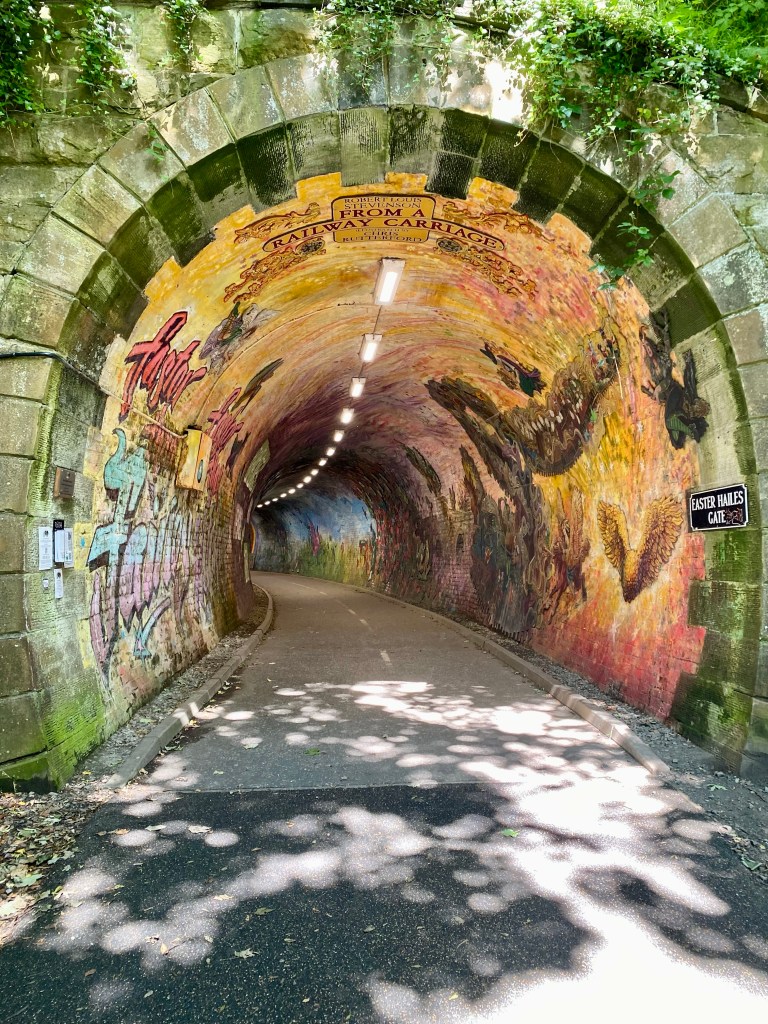
As a boy, Robert Louis Stevenson used to ride the train through this Victorian railway tunnel to visit his grandfather, Dr Lewis Balfour, who was Minister at the nearby Colinton Parish Church.
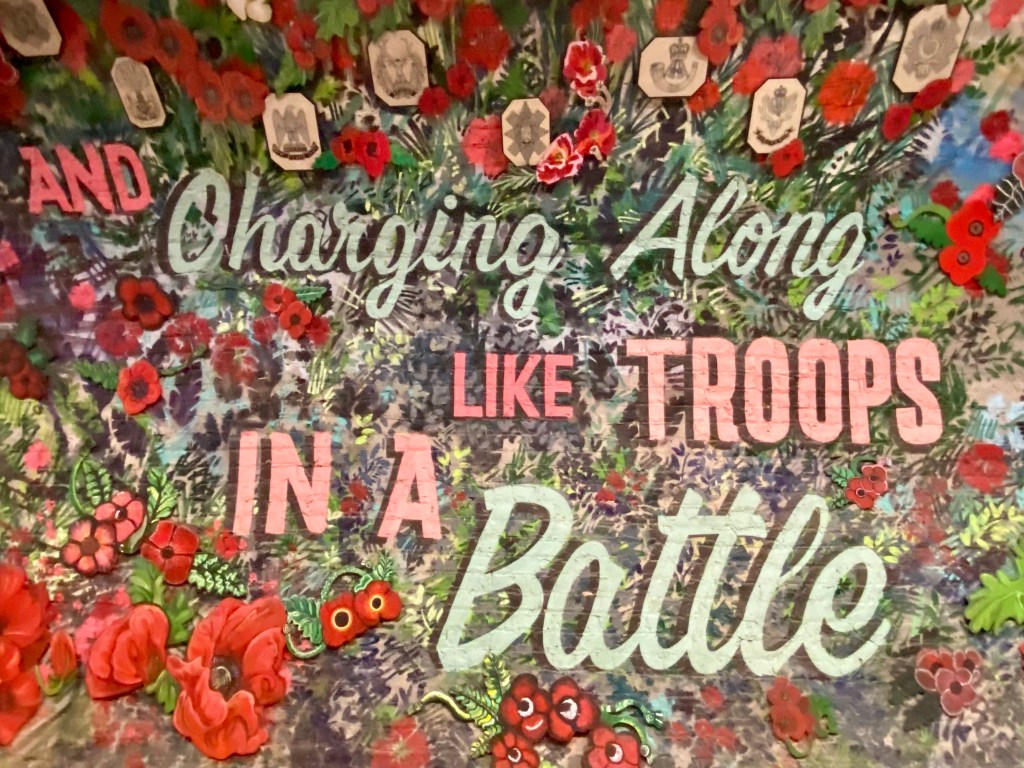
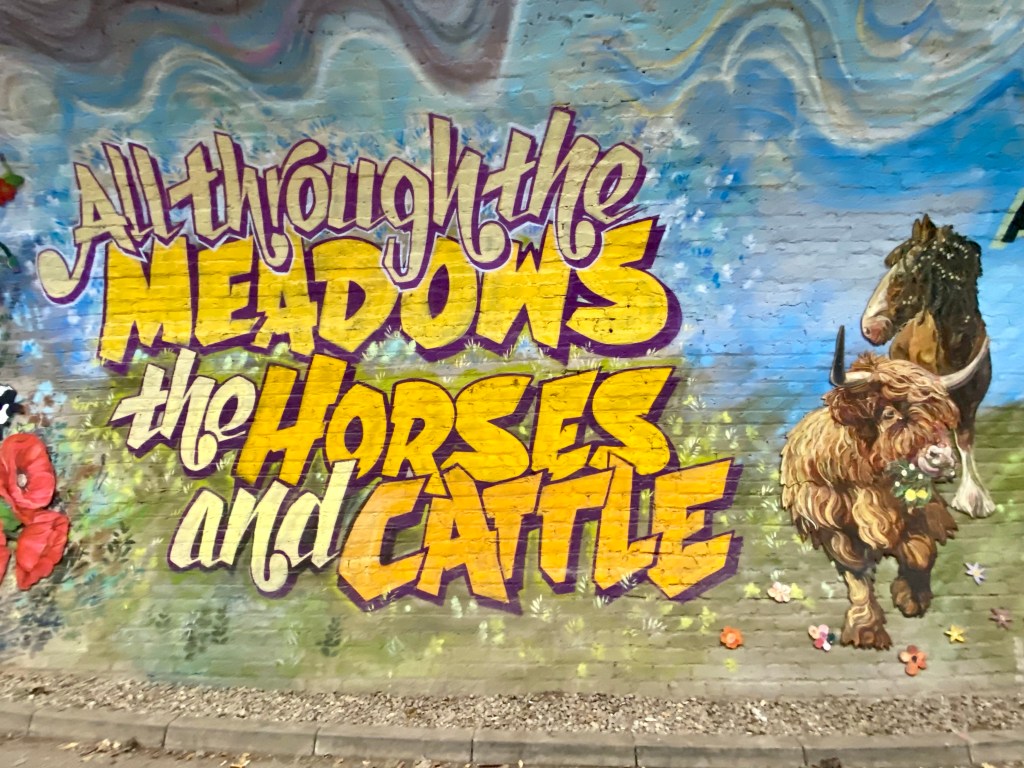
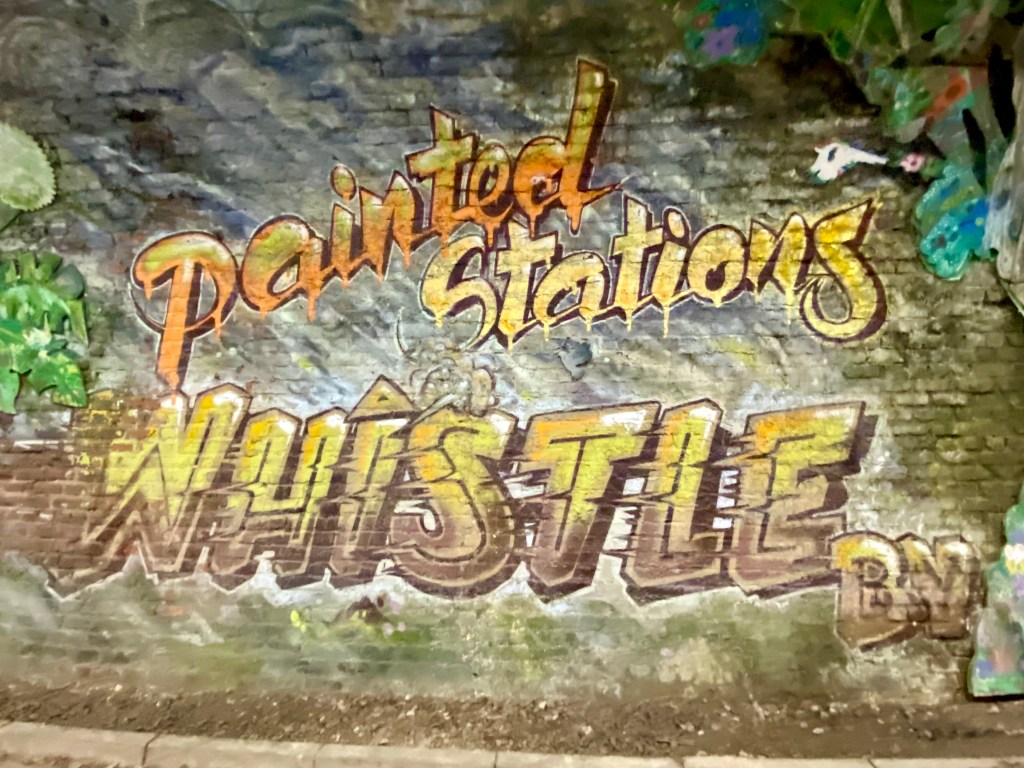
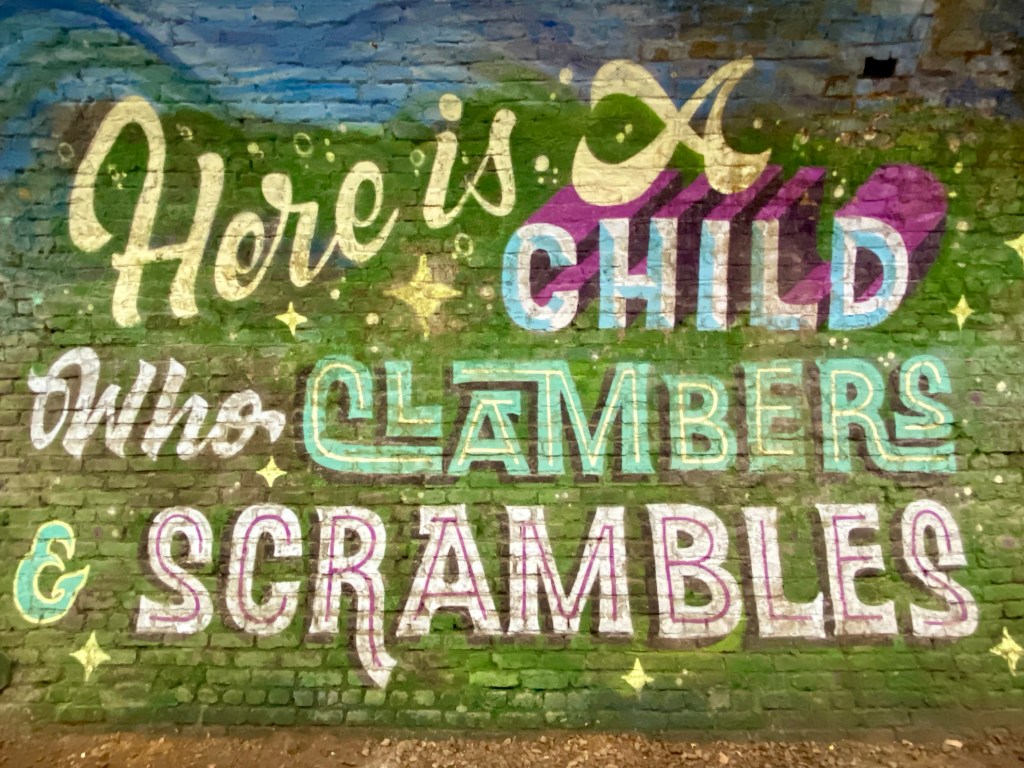
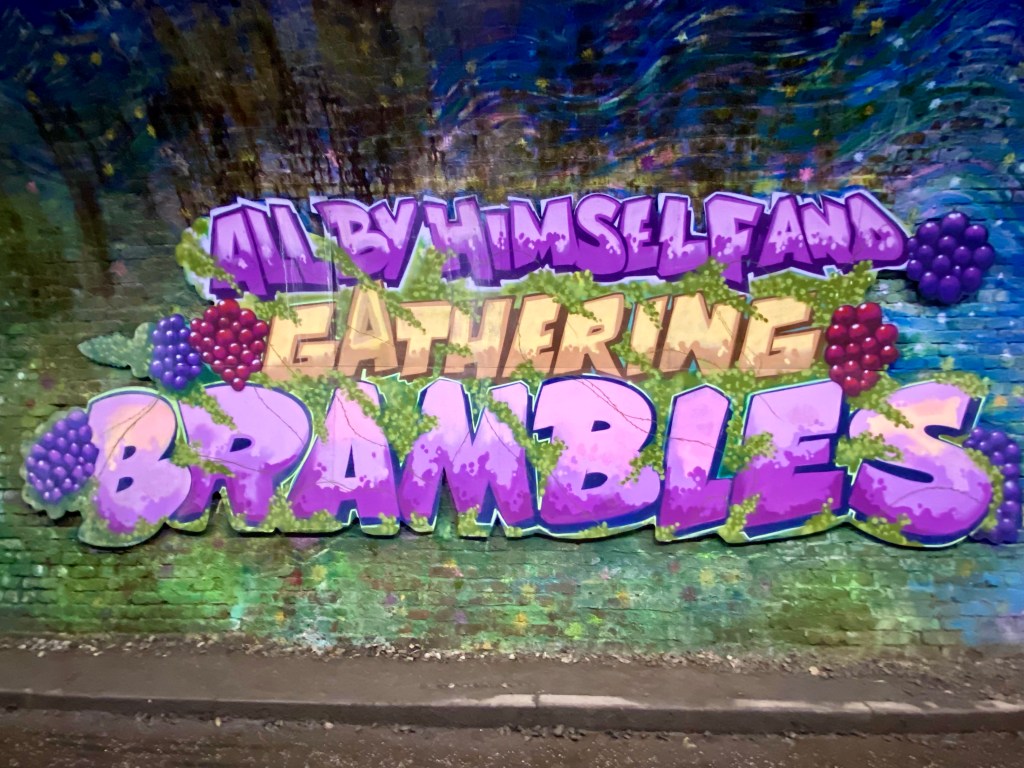
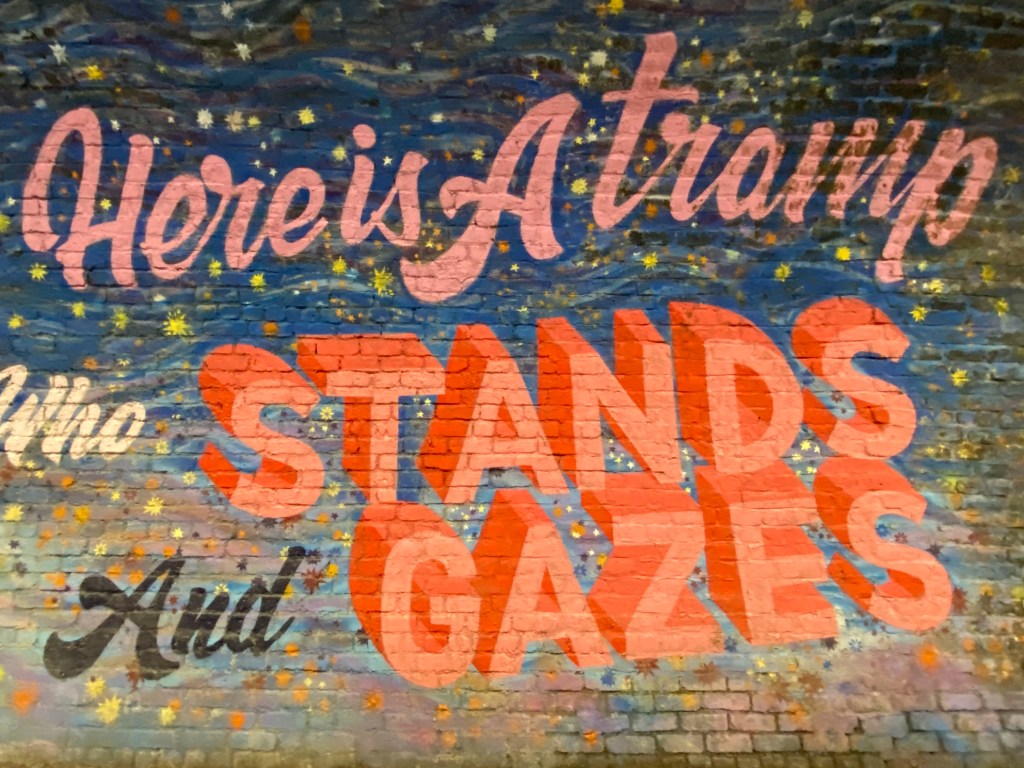
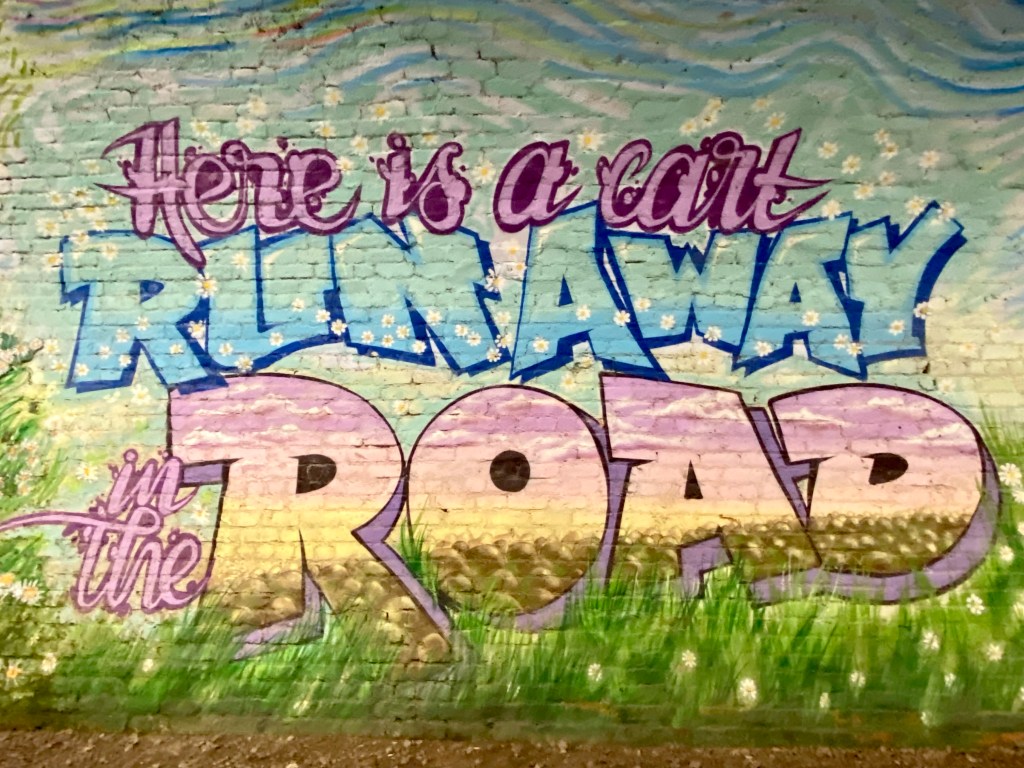
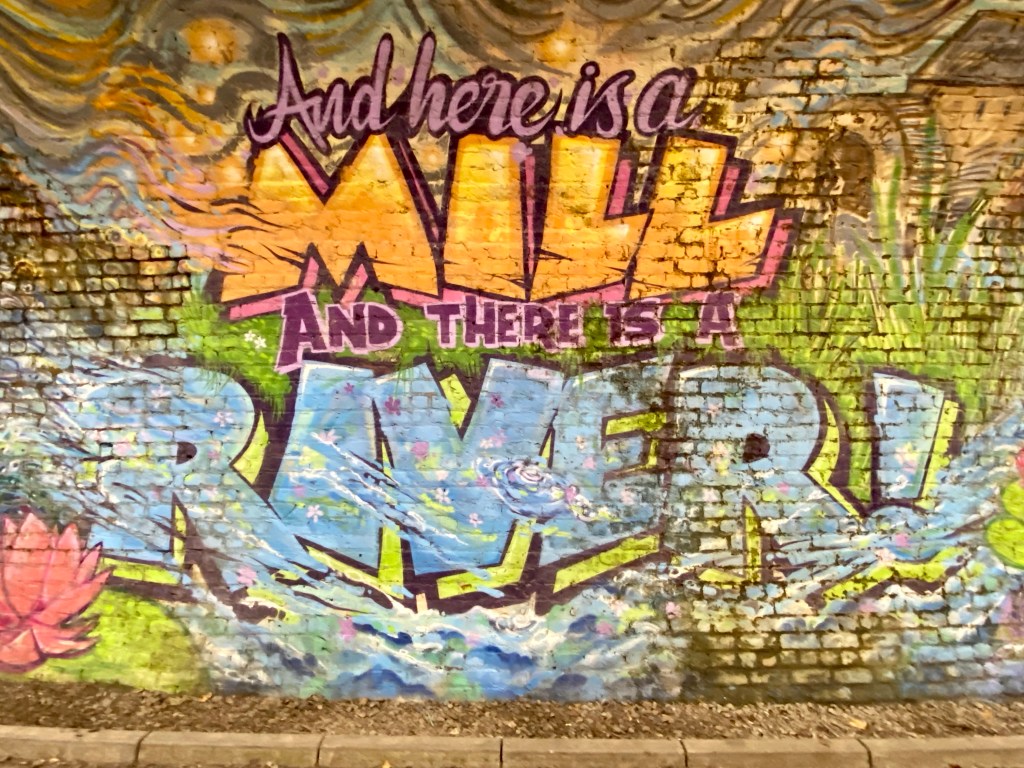
With the expansion of bus and tram services to Colinton, the use of train services to Colinton declined over time and passenger services stopped altogether in 1943 (though freight services continued until 1967). By 2017 Colinton Tunnel had fallen into disrepair and had become a dark and somewhat scary place to walk through. Eventually a number of Colinton residents began to consider what could be done to make the tunnel a more attractive, safer space, one that might encourage visitors to Colinton – and hopefully benefit local shops and businesses in the Village. Lighting was added to the tunnel and it was decided that the entire length of it should be decorated with a mural. A design concept crystallised around Robert Louis Stevenson’s ‘From a Railway Carriage’, one of the wonderful little poems in his volume A Child’s Garden of Verses.

To quote from the Colinton Tunnel website:
‘The final design concept meant that the words of the poem (along one side of the Tunnel) were complemented by the images contained in those words, all drawn from different parts of Colinton and Water of Leith history – rural, artistic, military and industrial.
…
Chris Rutterford led a multi-skilled team of muralists in translating the initial concept into its stunning colourful reality – with resident street artists, Craig Robertson and Duncan Peace responsible for the painting of the Poem itself.’
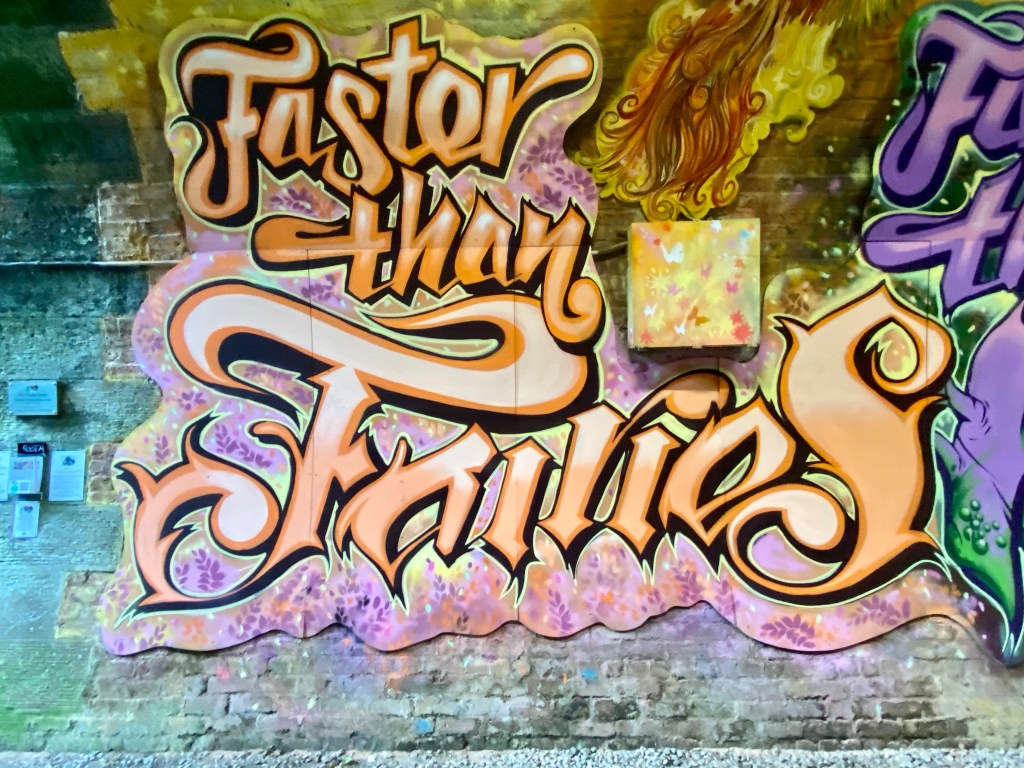
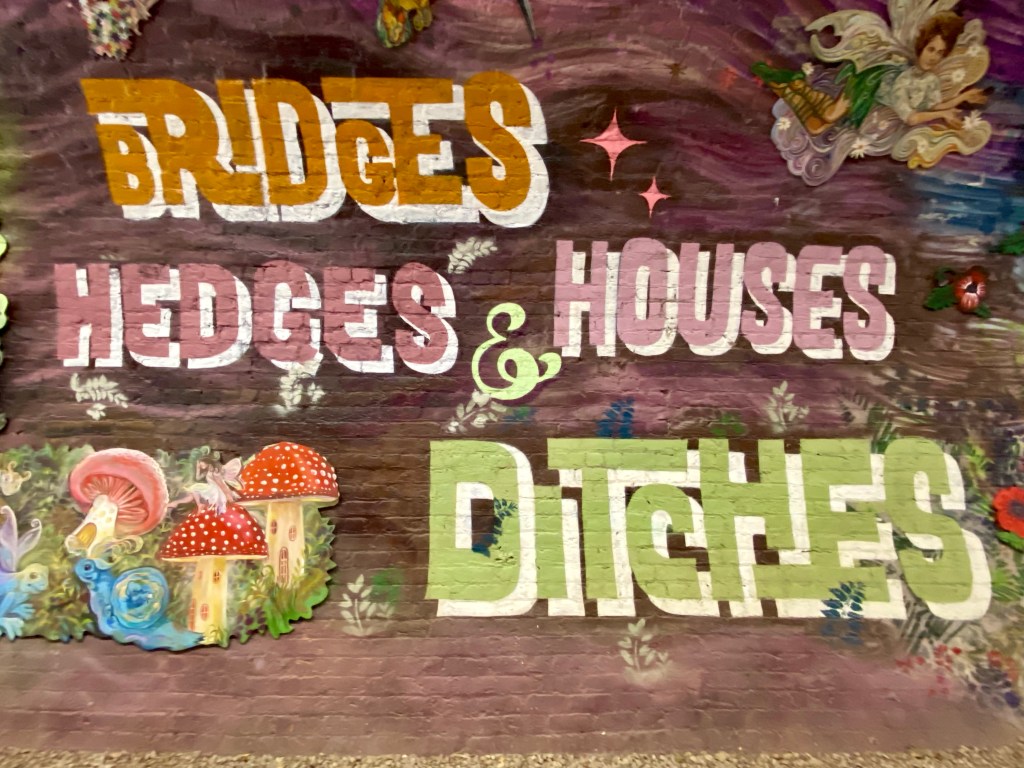
Here are a few photos showing the some of the artwork in the tunnel:







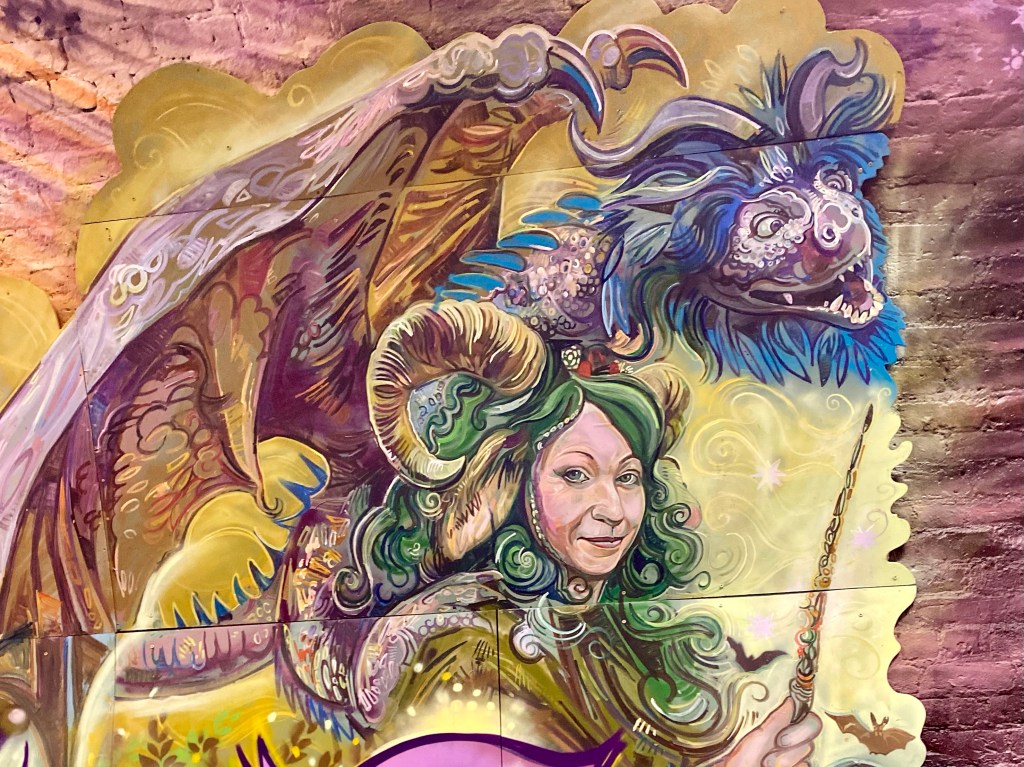
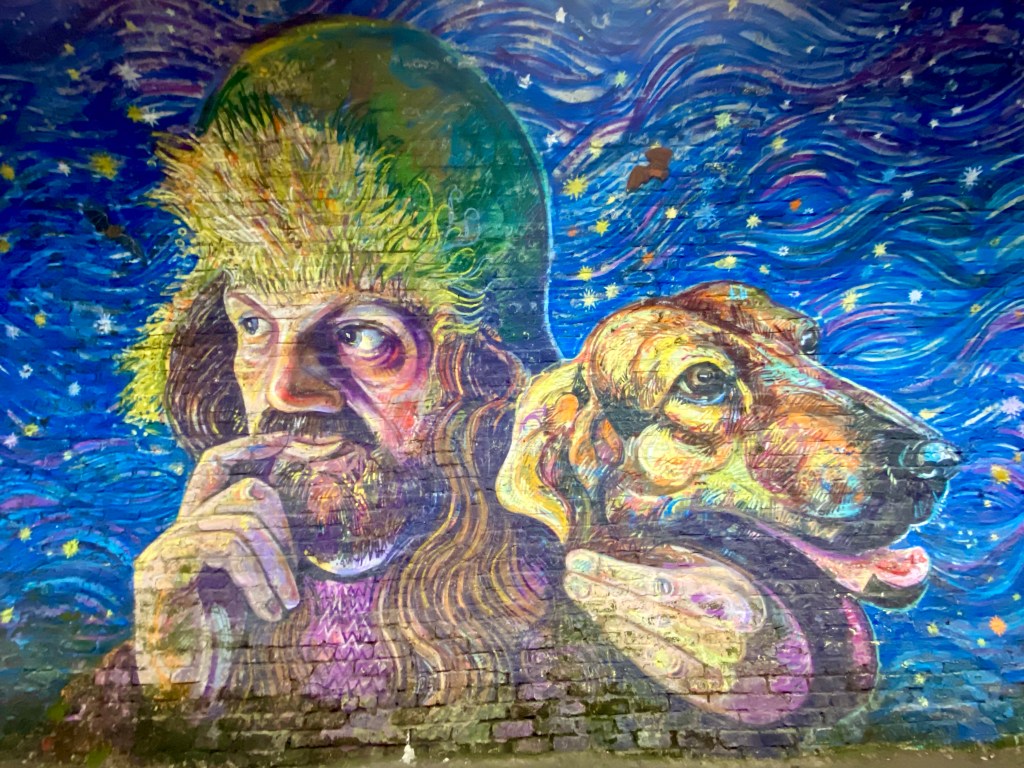
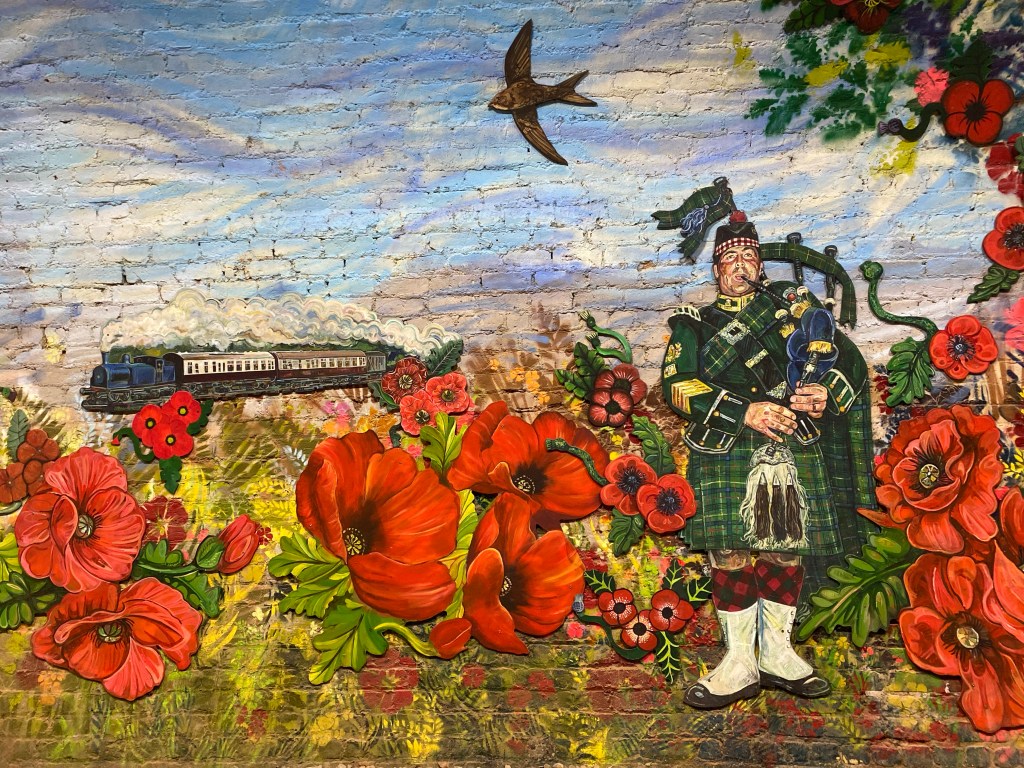
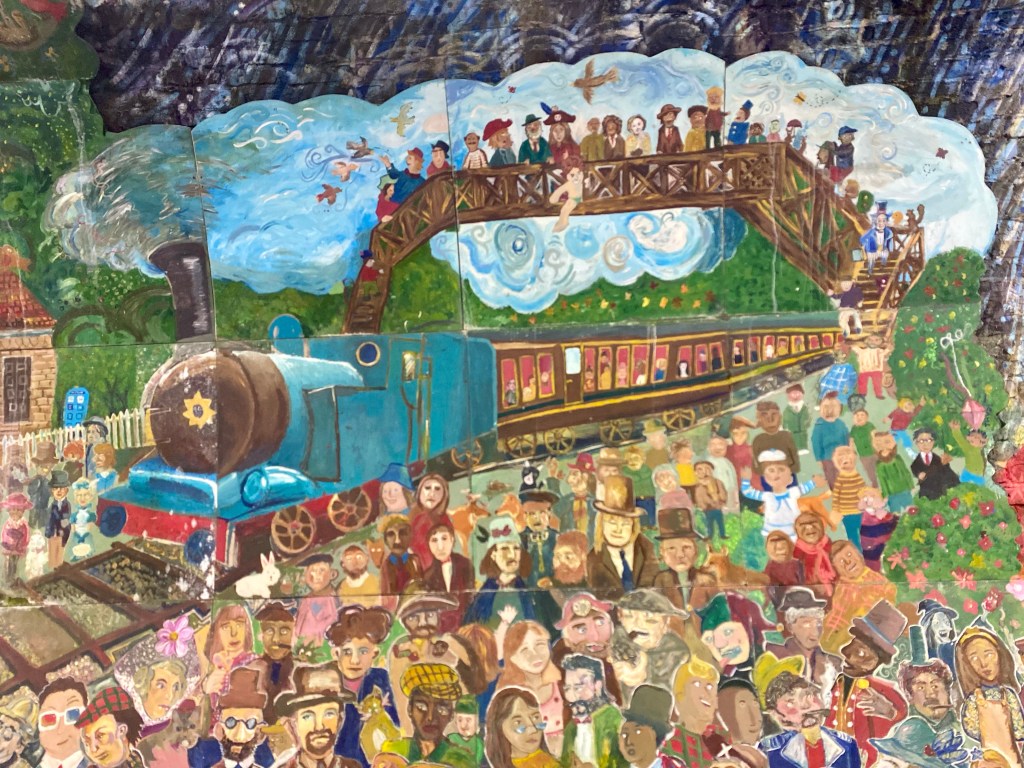
Just inside one end of the tunnel is this wonderful artwork depicting Robert Louis Stevenson in a railway carriage, writing the very poem that inspired the entire mural:
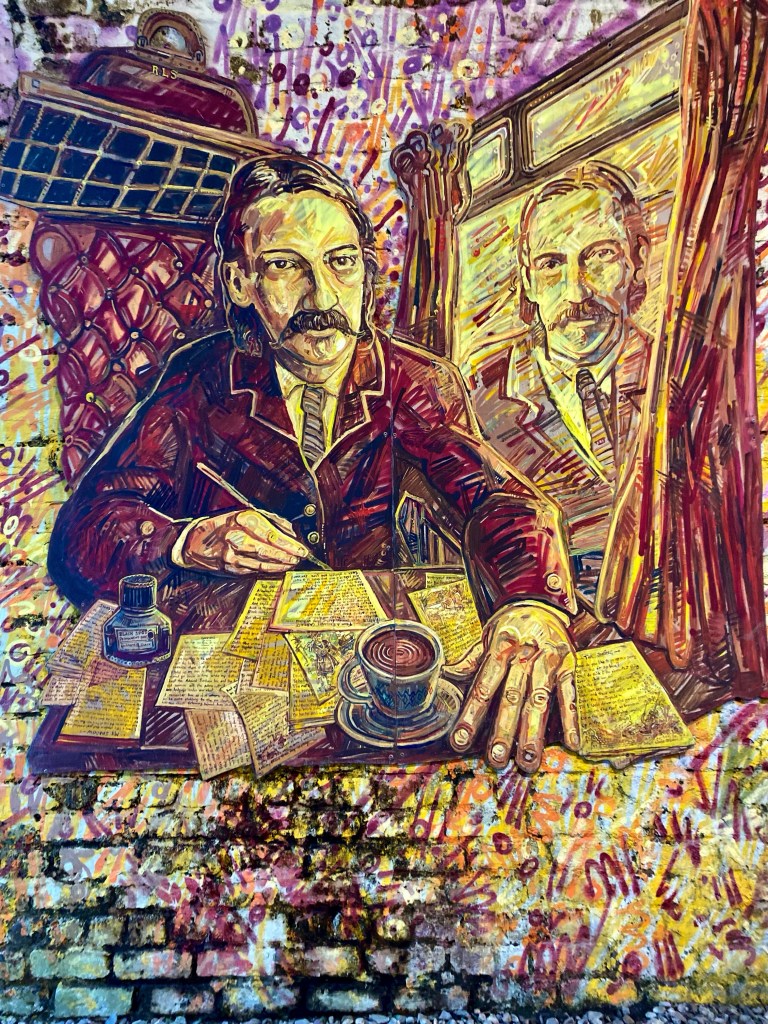

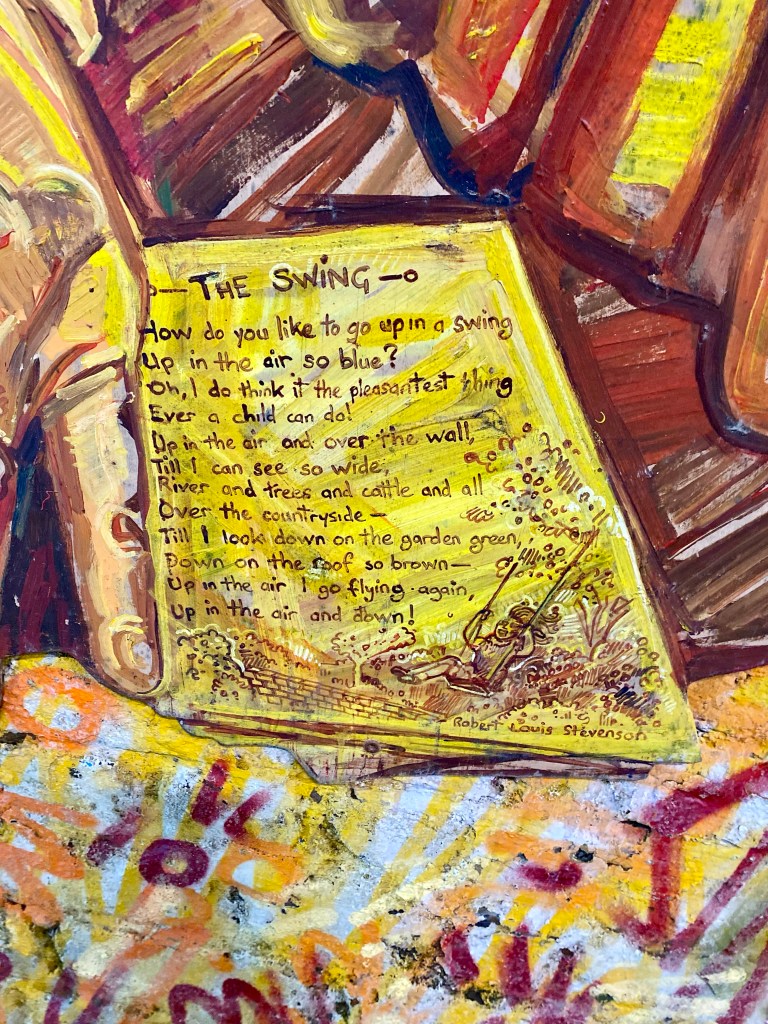
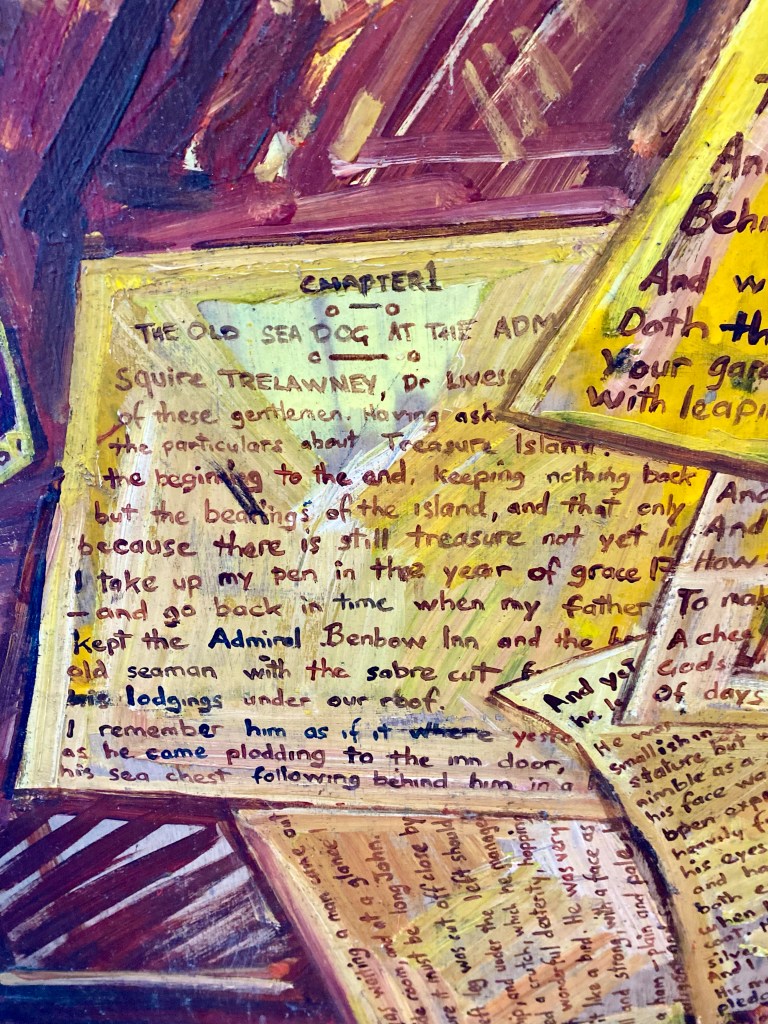
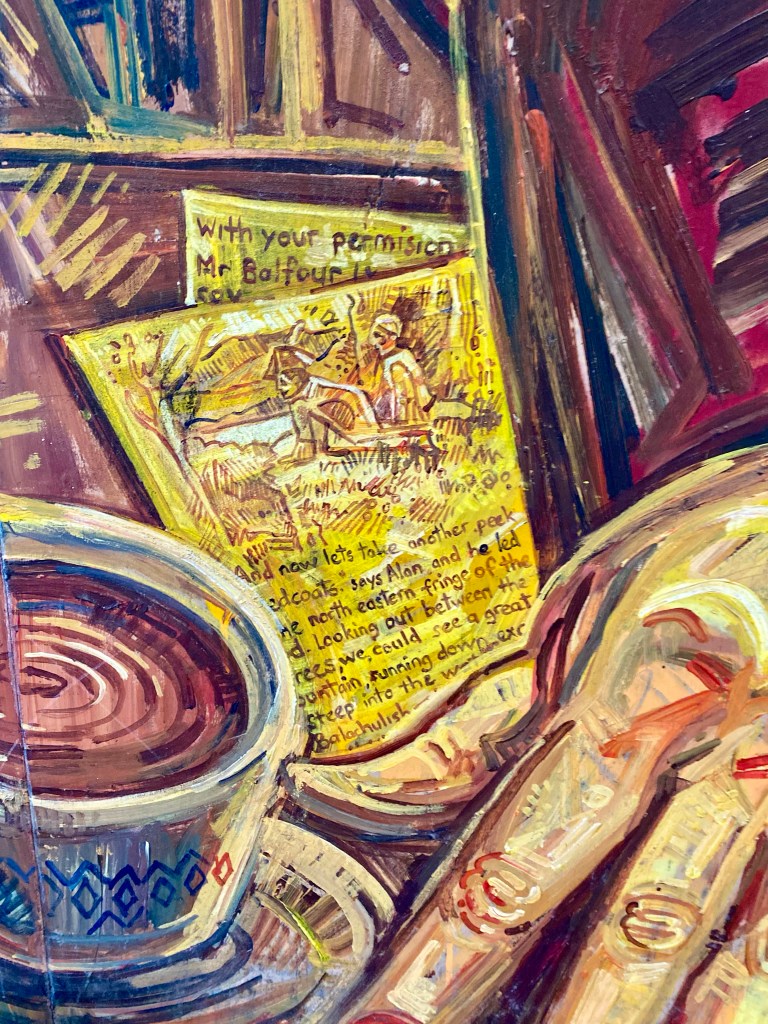
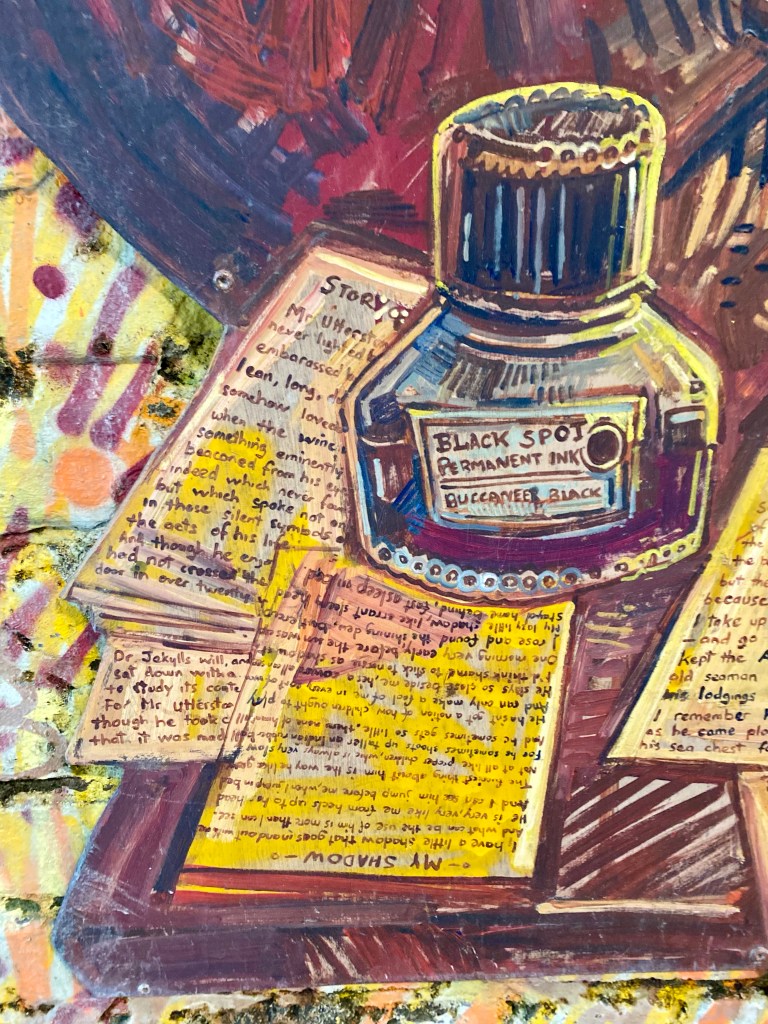
And here’s that delightful little poem that inspired the entire mural:
‘From a Railway Carriage
By Robert Louis Stevenson:
Faster than fairies, faster than witches,
Bridges and houses, hedges and ditches;
And charging along like troops in a battle,
All through the meadows the horses and cattle:
All of the sights of the hill and the plain
Fly as thick as driving rain;
And ever again, in the wink of an eye,
Painted stations whistle by.
Here is a child who clambers and scrambles,
All by himself and gathering brambles;
Here is a tramp who stands and gazes;
And there is the green for stringing the daisies!
Here is a cart run away in the road
Lumping along with man and load;
And here is a mill and there is a river:
Each a glimpse and gone for ever!’

 The Literary Tourist
CONGRATULATIONS: A wonderfully crafted narrative accopanied by high calibre sensitive photography.
LikeLiked by 1 person
Thank you, Rex!
LikeLike