
This is an AI generated podcast based on the contents of this blog. It gives a quick and hopefully entertaining summary of the various places I’ve written about so far. The podcast was created using NotebookLM. The presenters you’ll hear aren’t real people, they’re AI voices, although pretty convincing ones in my opinion. The podcast is meant simply as a piece of entertainment and as an enticement to read the blog posts themselves, which are far more detailed. I hope you’ll enjoy listening to it.
Author: Lorenzo
Celebrating Robert Heinlein: A Day to Remember in Butler, Missouri
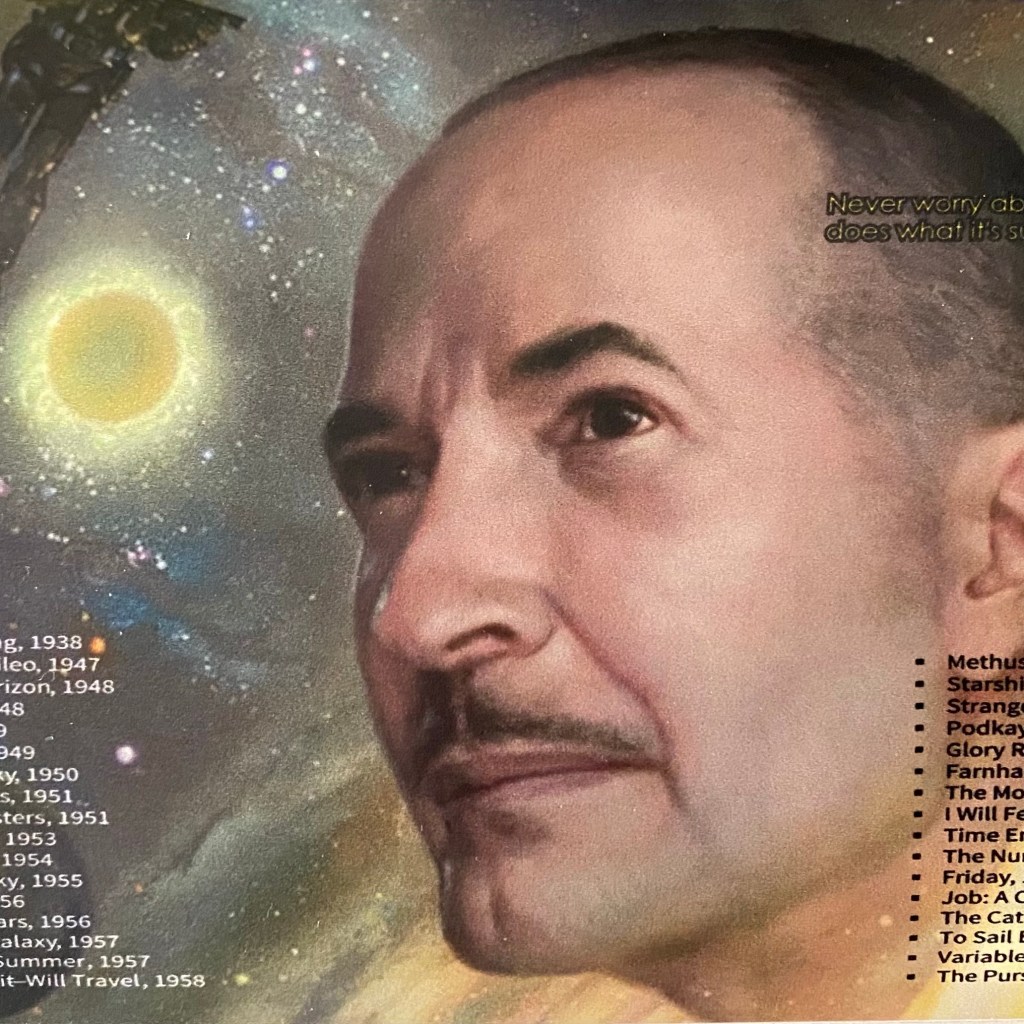
On Saturday, December 28, 2024, I made what will likely be my final visit to Robert Heinlein’s birthplace in Butler, Missouri. During that visit, I discovered a fascinating piece of Heinleinian history that previously I’d been unaware of: in 1980, Heinlein himself had returned to Butler one last time, accepting the town’s invitation to honour its most famous native son.
Robert A. Heinlein has been one of my favourite science-fiction writers ever since I read Starman Jones, one of his juvenile novels, at the age of 12. Stranger in a Strange Land is his best-known work, but he wrote many other popular and thought-provoking science fiction novels such as Starship Troopers and The Moon is a Harsh Mistress. After Starman Jones, I went on to read pretty much everything he ever wrote and enjoyed most of it immensely (except for some of his later novels). Even though I often disagreed with the political or social views expressed in his stories, he was such a wonderful storyteller that I couldn’t help enjoying them, especially his young adult novels such as Have Spacesuit, Will Travel and Citizen of the Galaxy. His later adult novels are much more problematic. But those early novels, his “juveniles”, were a joy to read and, I’m sure, encouraged many young people to pursue careers in science, particularly astronomy and the rapidly developing fields of rocketry and spaceflight.
Gwyneth and I set off for Butler a little after 10:30 on a very foggy morning, with Gwyneth at the wheel and me as her slightly nervous passenger. We had delayed our departure, hoping the fog would lift, but time wasn’t on our side. Butler Public Library, one of the places I was most eager to visit one last time, was closing at 1:30 PM, and we had an hour-long journey ahead of us.
The library boasts a remarkable “Heinlein Room”, a treasure trove for fans of the science fiction writer. Inside is an impressive collection of books by and about Robert Heinlein, as well as some unique memorabilia celebrating his life and legacy.
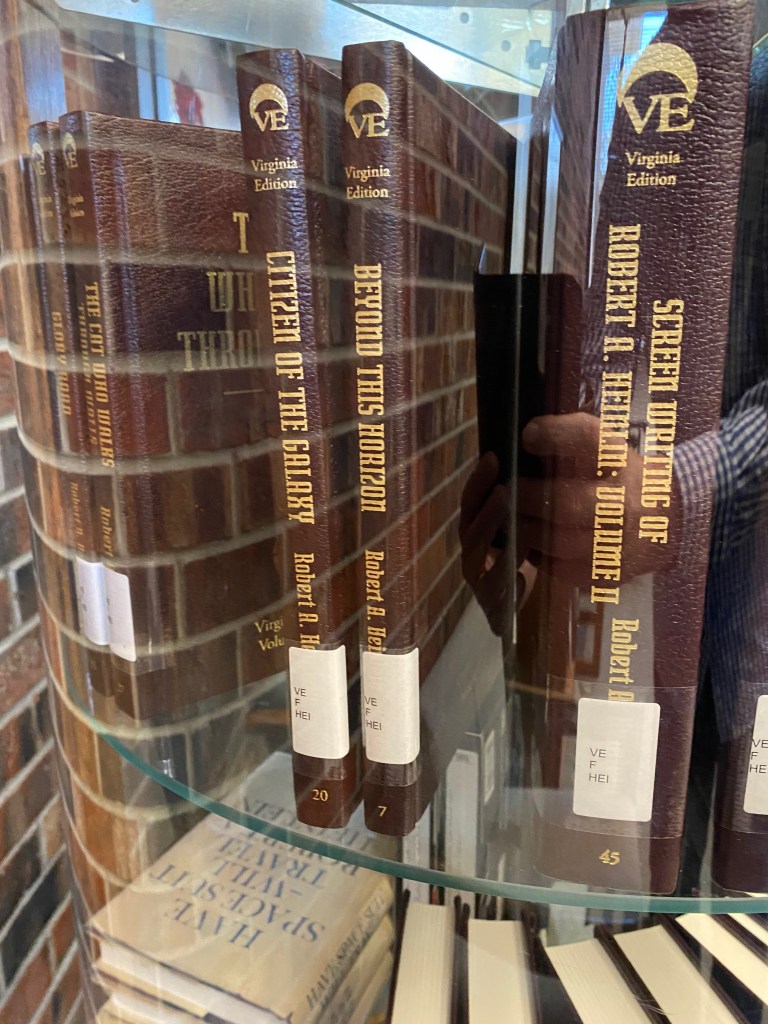
On this visit, I had my sights set on one particular feature: the cylindrical wood-and-glass cabinet that holds a selection of rare collectables. Among its contents is the exquisitely crafted Virginia Edition, a complete collection of Heinlein’s works and selected correspondence—a set as beautiful as it is costly. This time I would ask if the cabinet could be unlocked. I had always regretted not doing so on my previous visit. I wanted to hold some of those extraordinary volumes in my hands, even for just a few moments.
As we drove, the heavy fog gradually gave way to beautiful blue skies, though pockets of mist lingered along the way. Gwyneth, ever the optimist, was hoping for fog in Butler, thinking it might lend itself to some atmospheric photos of Heinlein’s birthplace. I shared her enthusiasm, but by the time we arrived at Heinlein’s birthplace house, the fog had all but vanished.
Not wanting to waste another moment, we headed directly to the library. With midday approaching, I knew I’d have only around 90 minutes to spend there. We could go back to the birthplace house later in the afternoon.
Visiting the Stevenson House in Edinburgh, Scotland
The home of Robert Louis Stevenson from 1857-1880
Note: this is a standalone excerpt from my longer post ‘Robert Louis Stevenson in Edinburgh’.
October 13th 2023
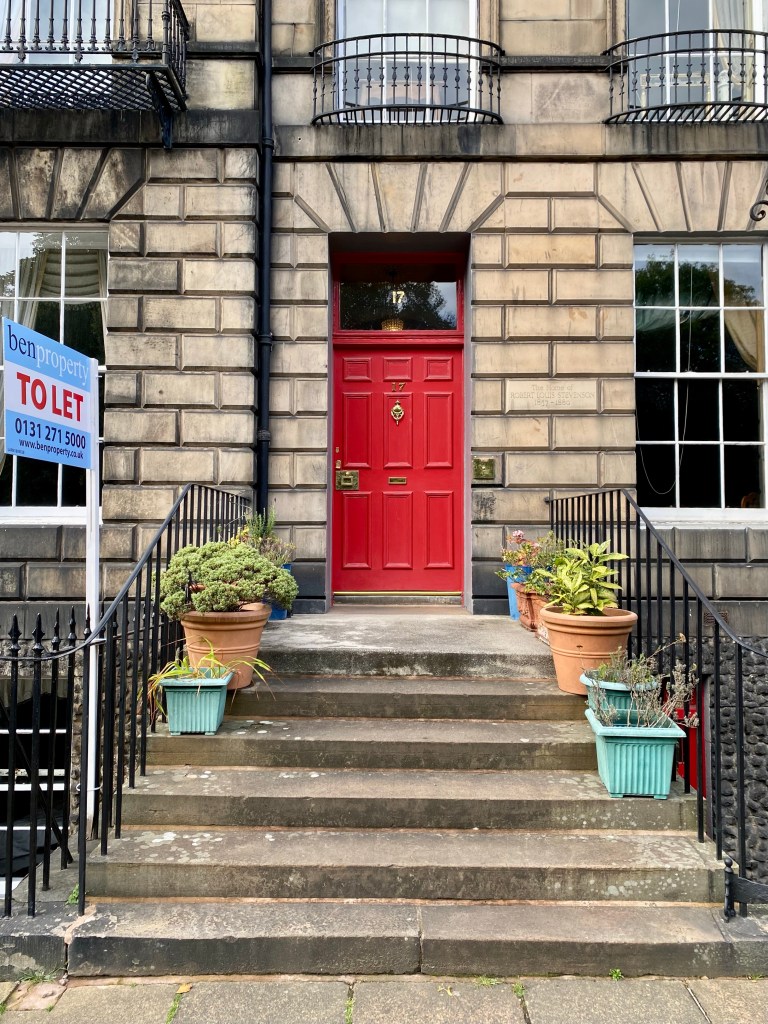
Well, today a little dream of mine came true. As a lover of Robert Louis Stevenson’s work, I’ve always wanted to see inside the house at 17 Heriot Row in Edinburgh where Stevenson grew up. And today, thanks to the kindness and hospitality of the current owner, John Macfie, I was finally able to realise that little dream.
Robert Louis Stevenson, of course, was the author of Treasure Island, Kidnapped, and The Strange Case of Dr Jekyll and Mr Hyde. He was born in Edinburgh on 13th November 1850. Ever since I picked up a copy of Treasure Island as a boy, he’s been one of my favourite authors.
A couple of weeks ago, when I was visiting the Writers Museum in Edinburgh, I got chatting to one of the volunteers in the museum and mentioned that I’d love to visit Stevenson’s former home on Heriot Row. The volunteer said that he believed the owner was quite amenable to visitors, and so that evening when I got home I emailed John Macfie. I told him about the conversation at the Writers Museum, that I was an admirer of Stevenson, and simply asked if it would be possible to visit the house.
I got a lovely, friendly email back from him saying he was always delighted to meet those interested in RLS, and asking me to phone to arrange a date and time for a visit. That date and time was today at 1 pm.
I had also asked if I could bring along my friend, Fiona, who was also keen to see the place. John was fine with that. Fiona is a friend of many years, who knows Edinburgh well and who is a voracious reader, although her tastes incline more towards mysteries. Nonetheless, she has read some of Stevenson’s work and I had previously shown her all of the places in Edinburgh where he had lived.
So at 1 o’clock exactly, Fiona and I turned up at the front door of 17 Heriot Row, the house where Robert Louis Stevenson had lived from the age of six until he was a grown man.
I pressed the buzzer and moments later John Macfie opened the door, greeted us warmly and invited us in. So on a bright, windy, autumnal afternoon, I got to step inside the Stevenson House and see for myself the beautiful interior of the home where RLS had once lived. Indeed, he lived longer in this house than in any other throughout his life.
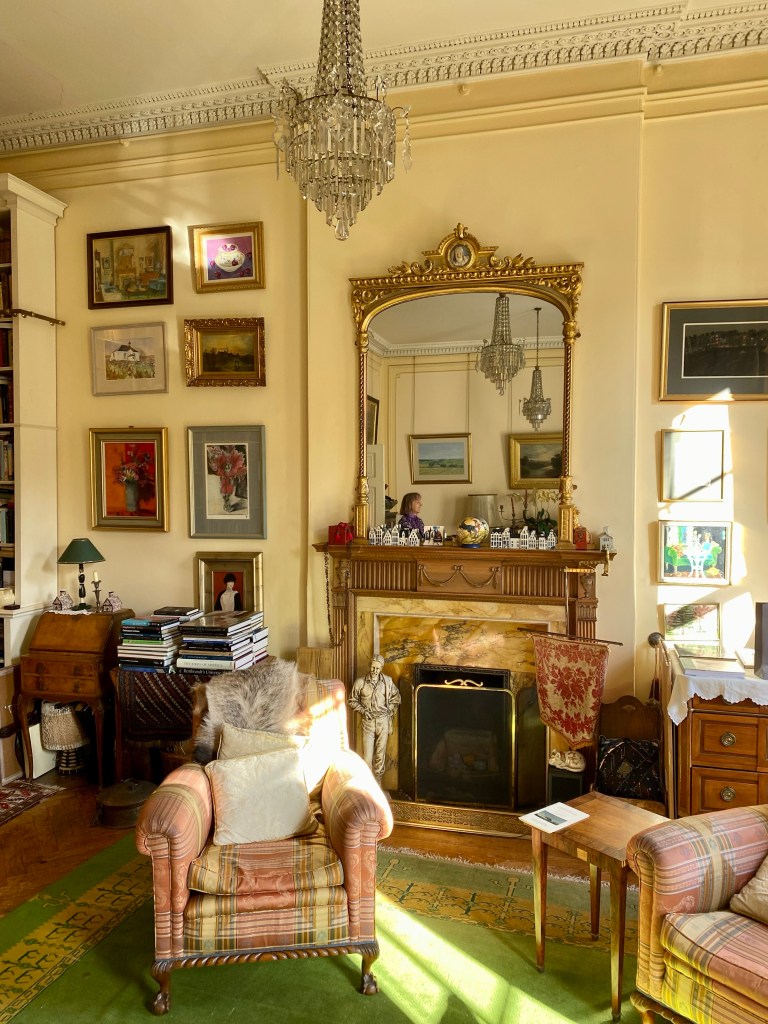
John led us upstairs to a beautiful room on the first floor and invited us to sit down on comfortable little armchairs. He couldn’t have been a more gracious and interesting host, and in that lovely room he talked to us about Robert Louis Stevenson and the house we were in for the next hour and a half. John’s an engaging and immensely knowledgeable speaker on the subject of Stevenson and it was fascinating listening to him.
As I mentioned in my longer post on him, Robert Louis Stevenson was called ‘Lewis’ or ‘Louis’ by all who knew him, and this was how John referred to him throughout our meeting. I liked that, it seemed particularly appropriate in the house where RLS had grown up. John also pronounced ‘Jekyll and Hyde’ as ‘Jee-kill and Hyde’, just as RLS himself pronounced it. Little details but an indication of how well John knows his subject.
The house itself is a gorgeous place, decorated (to my untrained eyes) in period style, full of books and pictures, with lots of nods to its famous former resident. Unlike many childhood homes of famous people, it’s not a museum, but a fully lived-in, well-loved house. It’s a house that previously belonged to John’s mother, but it’s now the family home for John and his wife, Felicitas, and their family. Felicitas trained as a hotel manager in Switzerland and saw the potential to use the house as a venue for hosting dinners, receptions and conferences. In addition, two of the bedrooms in the house are available on a bed-and-breakfast basis. Edinburgh has many great places where you can stay for a few nights – or for a few weeks – but I can’t imagine anywhere better than the Stevenson House. I might be slightly biased, of course, as it was the home of one of my favourite writers …
This is the beautiful room in which the three of us sat, lost in conversation about the house’s most famous resident:
At one point, John went over to this lovely library and read to us from one of the books in it, and showed a little book about one of the lighthouses built by the Stevensons.
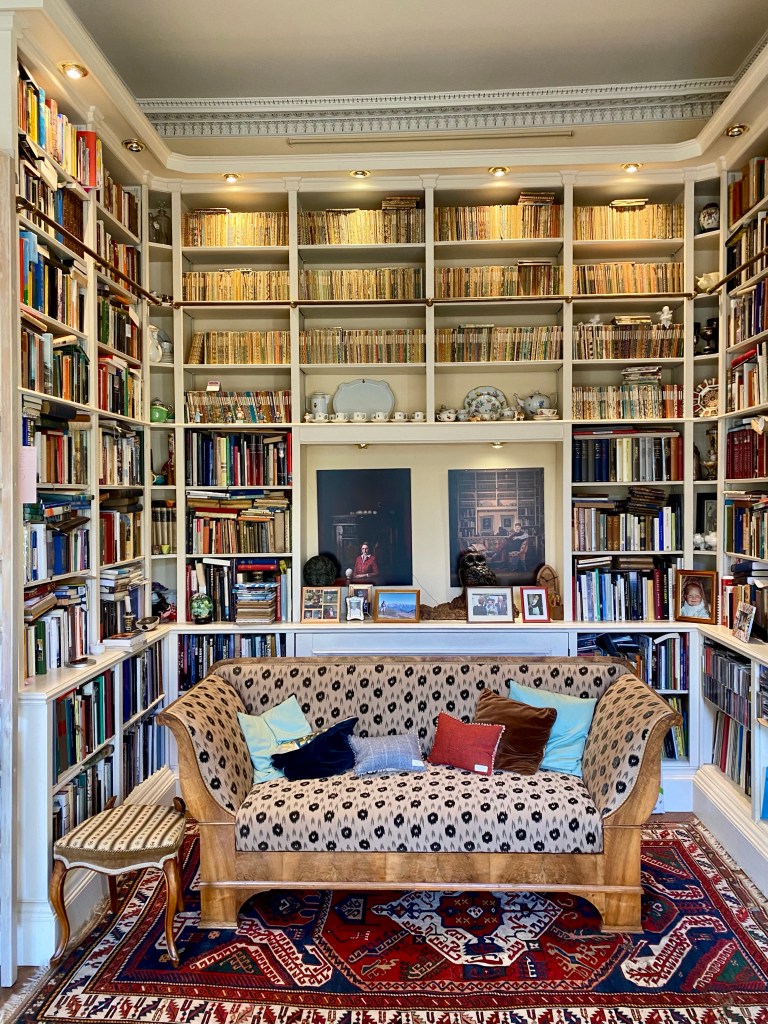
This is the chair on which I sat, and the little booklet on the table is the one John showed us – if I remember correctly, it was about the Bell Rock Lighthouse. As you can see through the window, it was a beautiful day outside, with the sunshine nicely illuminating the lovely room we were in. This particular room overlooks Queen Street Gardens, where Robert Louis Stevenson would have played, as a boy.
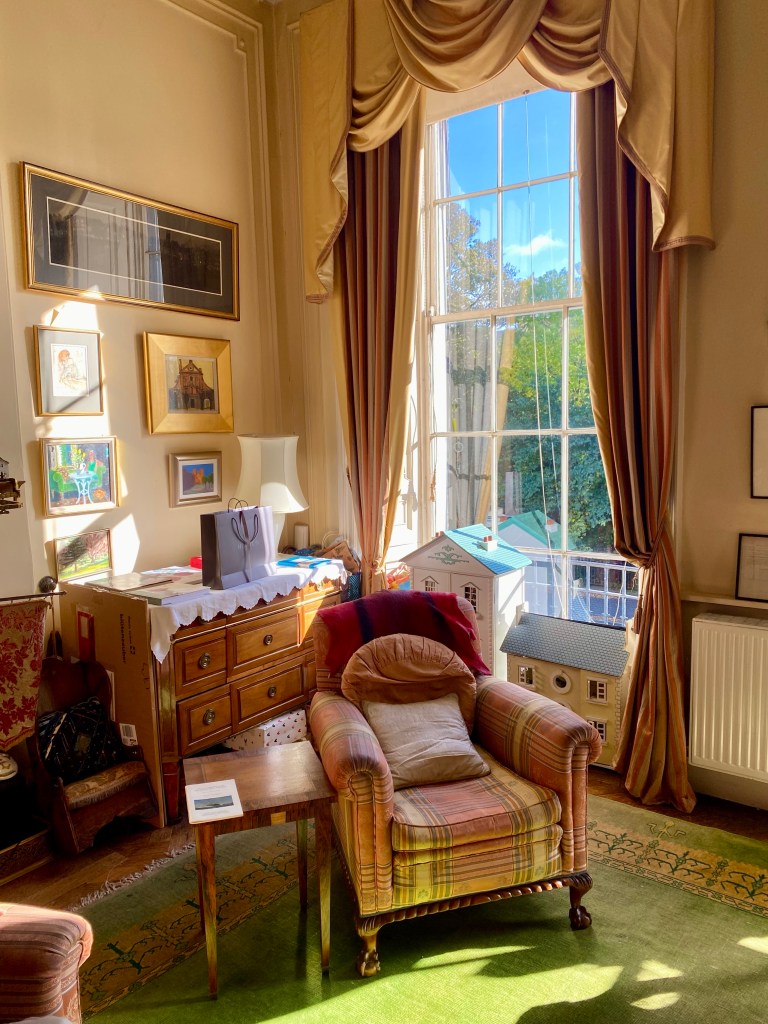
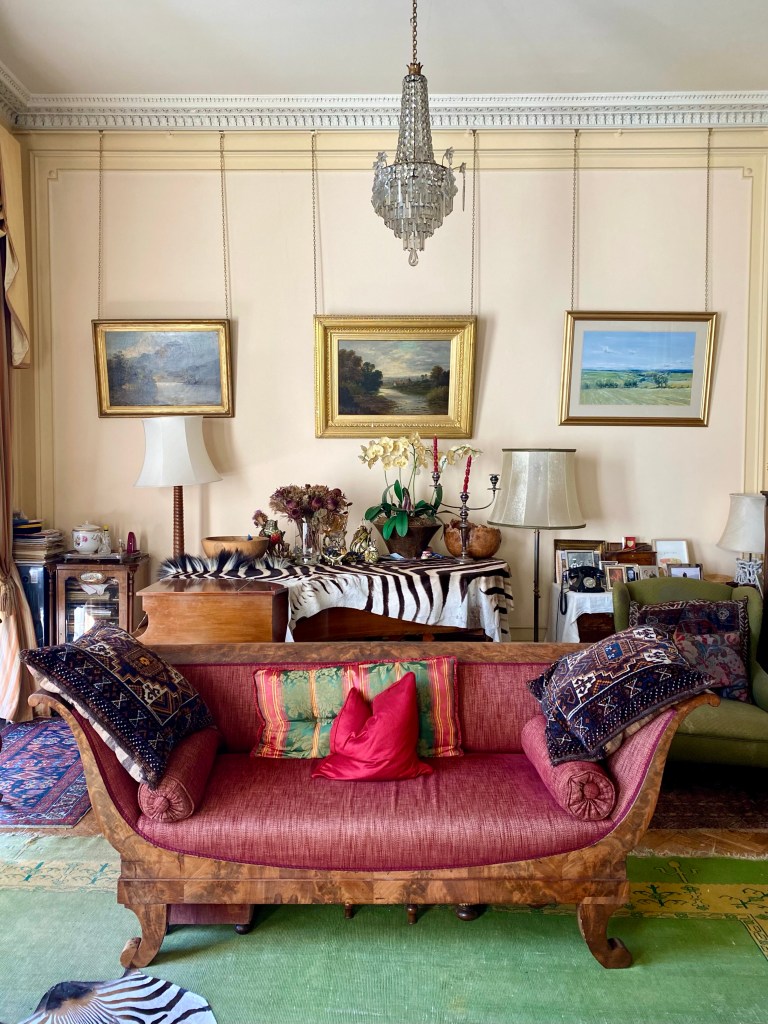
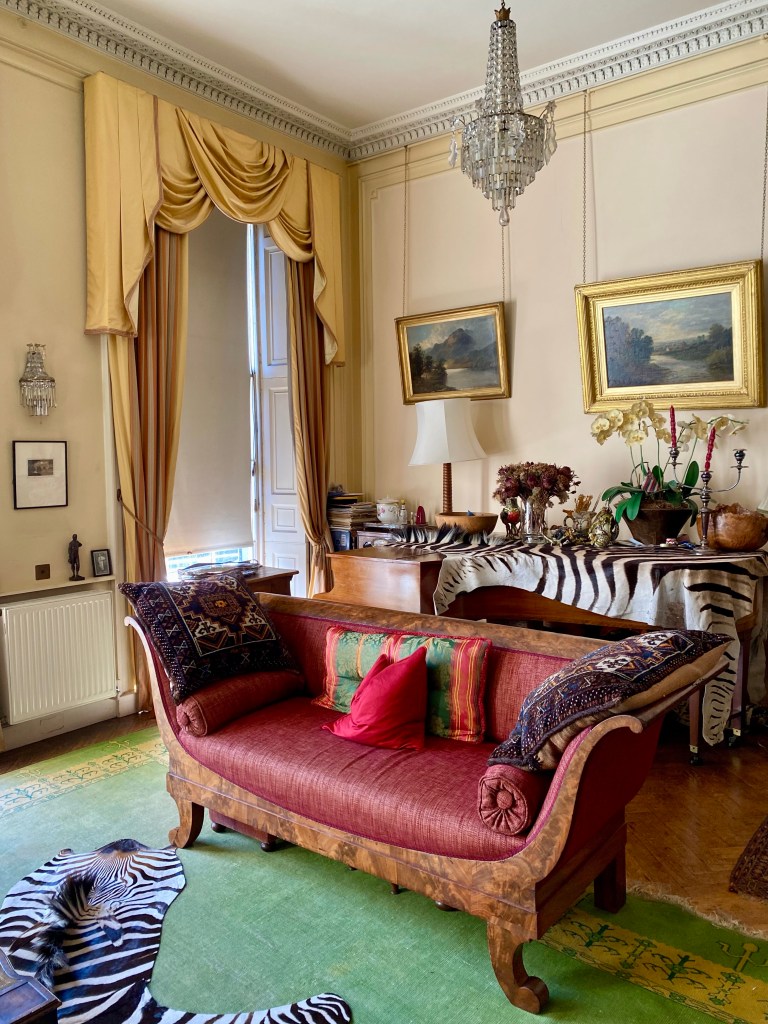
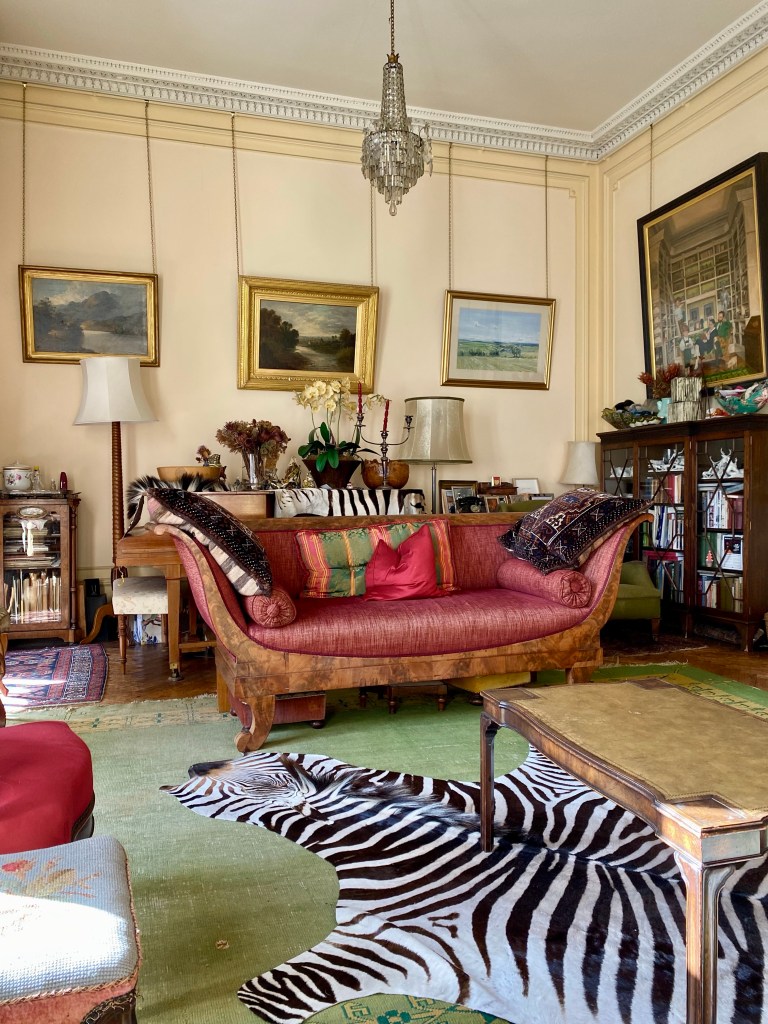
For Fiona and me, the hour and a half went by very quickly. As I mentioned, John is an engaging, knowledgeable speaker, clearly enthusiastic about his subject, and Fiona and I thought he could easily give public talks on RLS if the opportunity ever arose.
Towards the end of our visit, I asked if it would be possible to get a glimpse of some of the other rooms in the house and John kindly showed us one of the bedrooms, the one used by Robert Louis Stevenson’s parents, Thomas and Margaret. Here are some photos I took of that stunning room, which I’d only previously seen on the Stevenson House website. Notice the beautiful William Morris pattern wallpaper and the lovely family pictures. The bedroom also has an impressive four-poster bed.
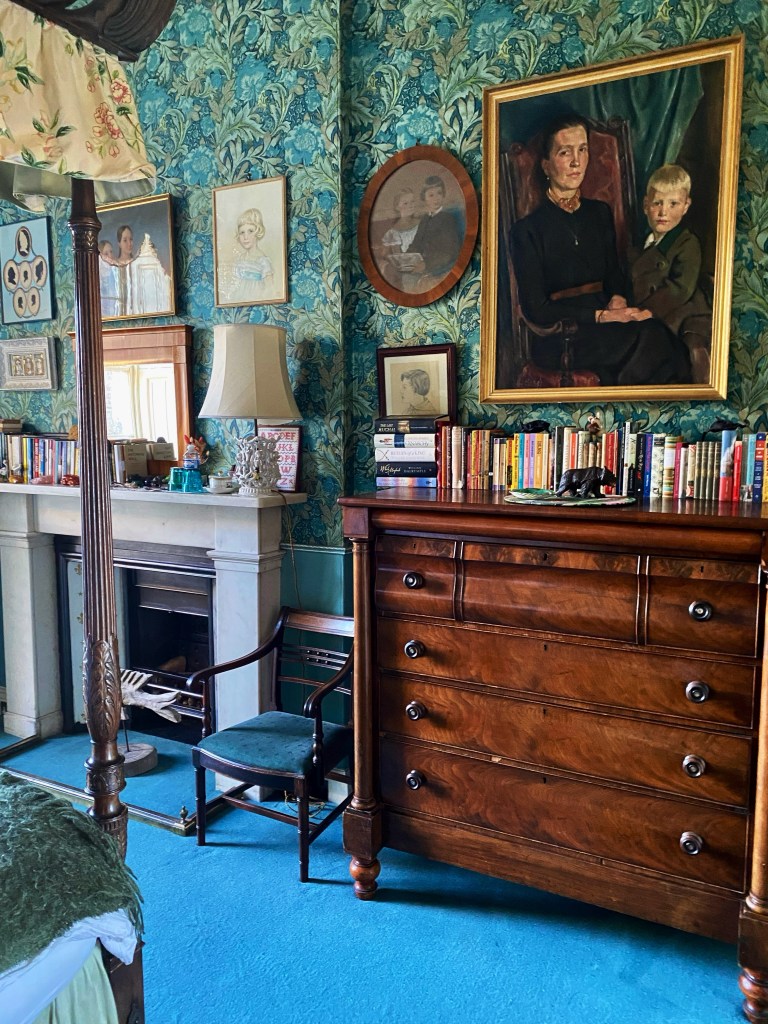
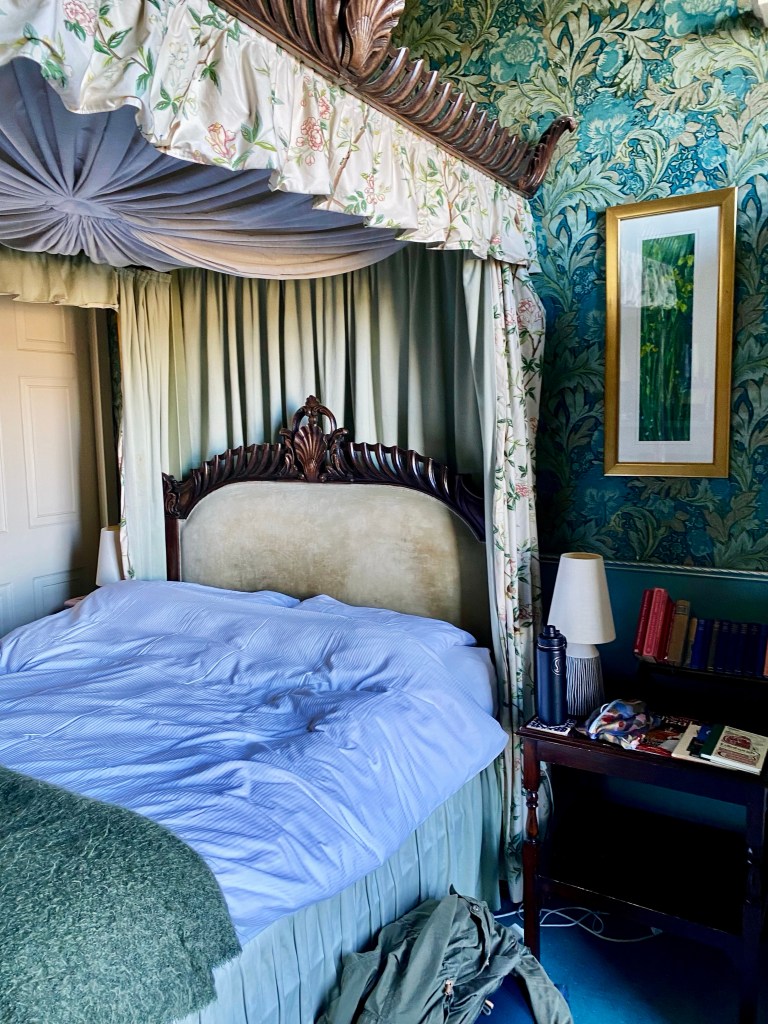
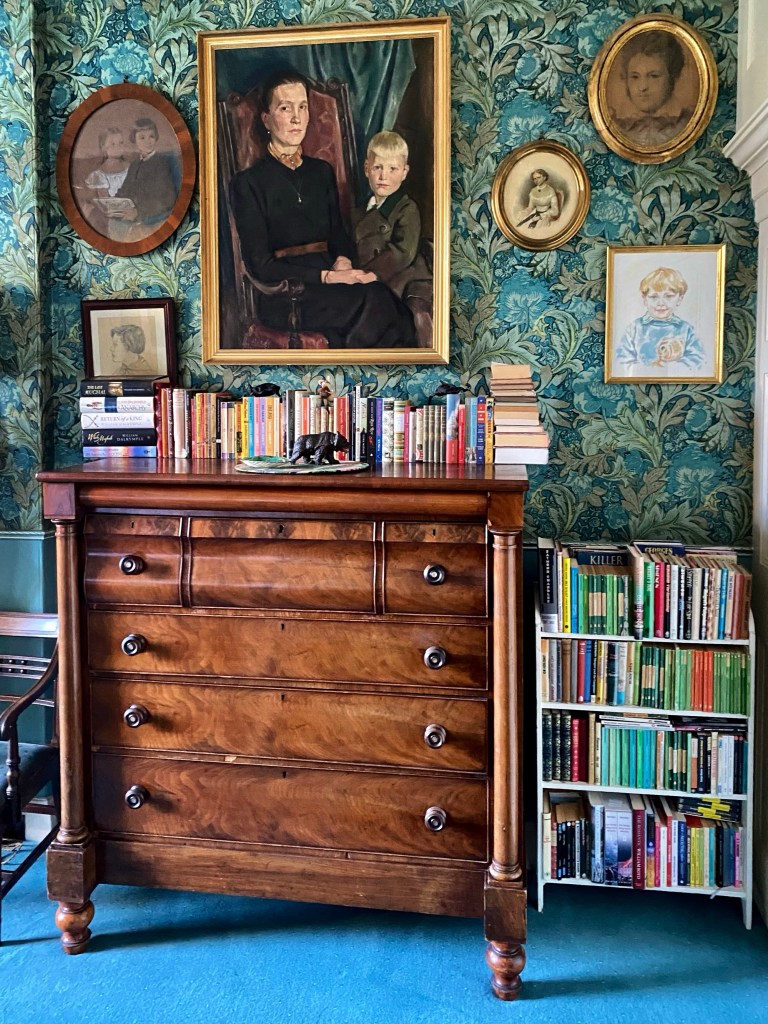
This bedroom is one of two at the Stevenson House that can be stayed in on a bed-and-breakfast basis. I can only imagine it would be a wonderful experience, not only because it’s a gorgeous room and house but also because of the hospitality of the hosts. If you were a lover of Robert Louis Stevenson’s work, then the place would clearly have an added significance but even if you were only looking for a quiet family home in Edinburgh’s New Town, this unique house would be a perfect place to stay.
Next, John led us downstairs to see the dining room. The grand spiral staircase we descended is the one that RLS would ascend late at night as a student, grateful that the steps were made of stone so he could pass his parents’ bedroom without disturbing them. Oddly enough, as I went down them, this was the one moment when I felt the presence of RLS.
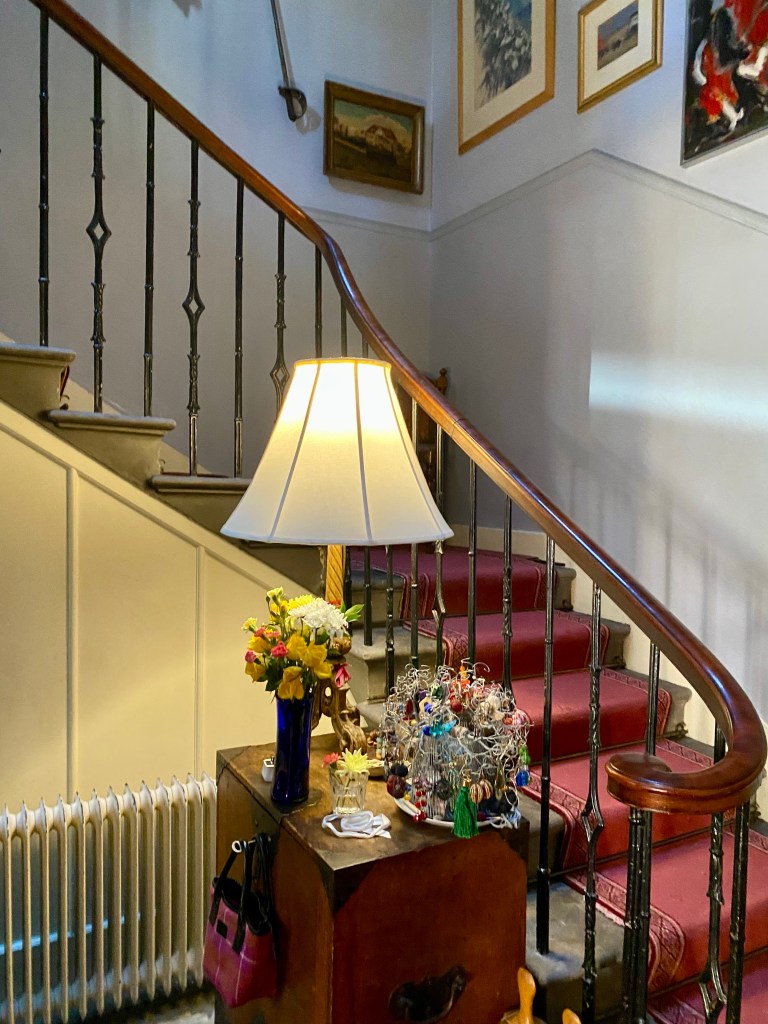
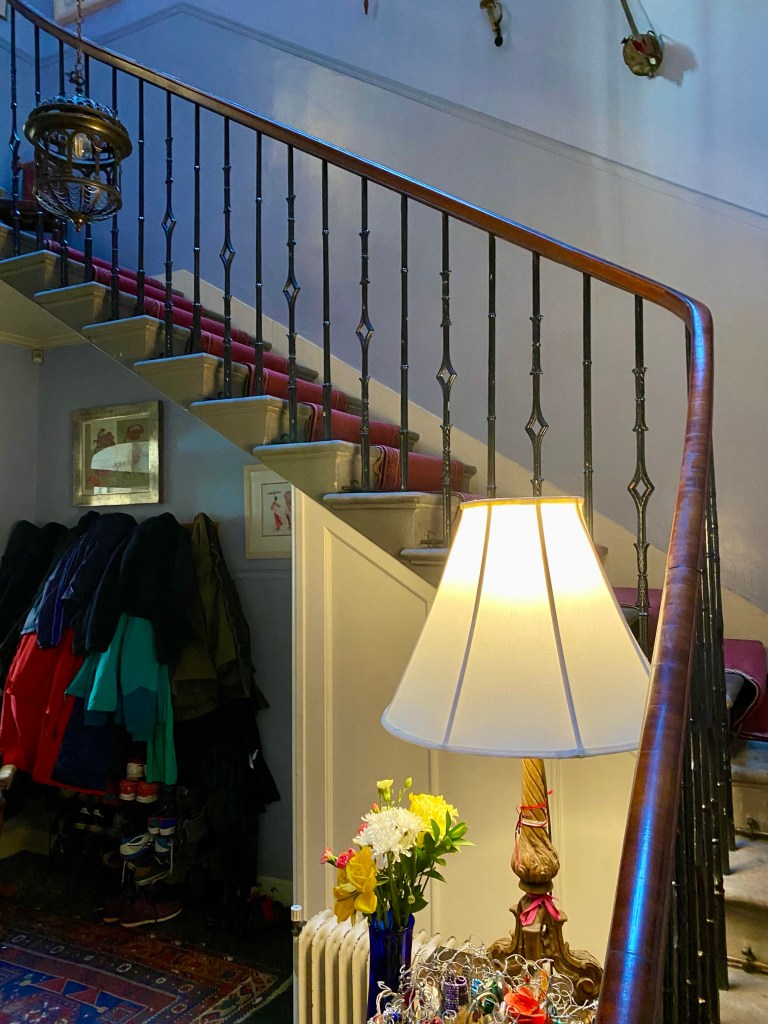
John did mention that the house is haunted – I suggested possibly by Cummy, Robert Louis Stevenson’s nanny, as somehow I can easily imagine her indispensable presence in this house, taking care of the children of successive families – just as she took care of RLS at one time. But there have been many owners of the Stevenson House since Thomas Stevenson bought it in 1857 – I think the number John mentioned was eleven – so, if it’s haunted, it could be by any one of a large number of people.
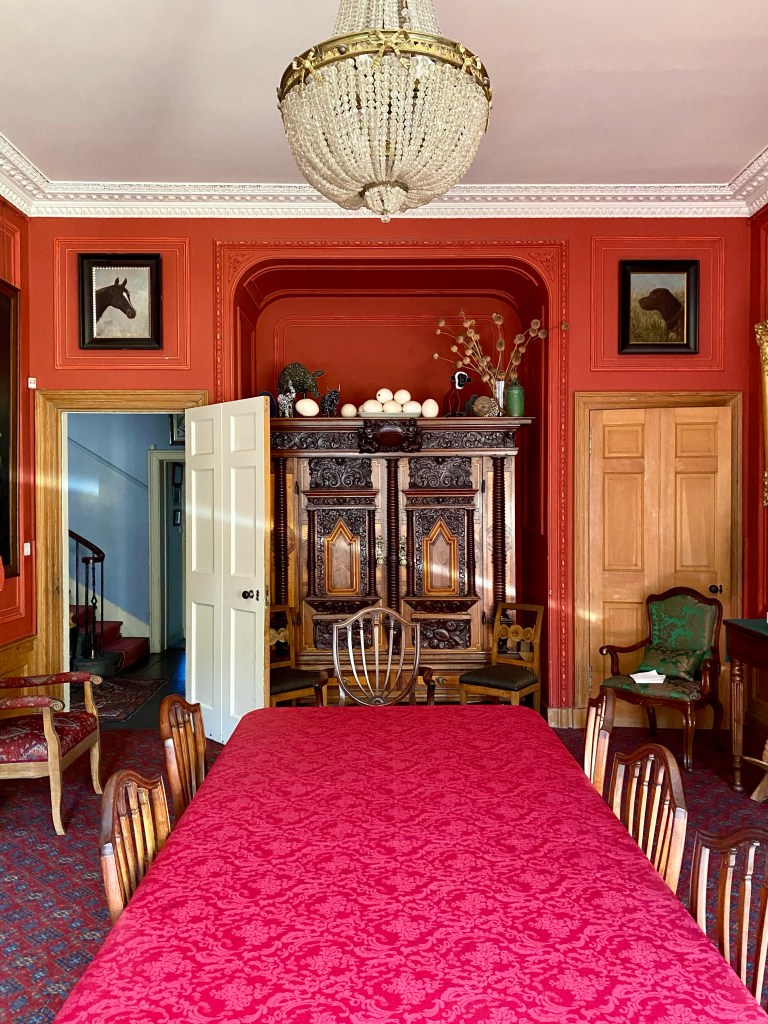
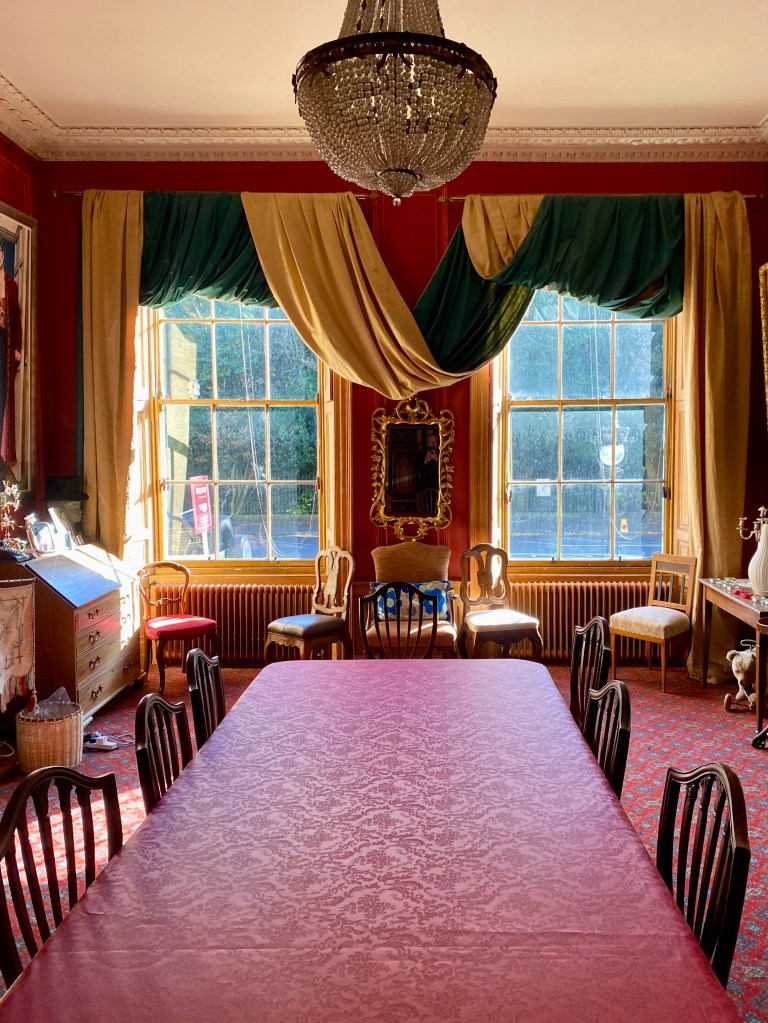
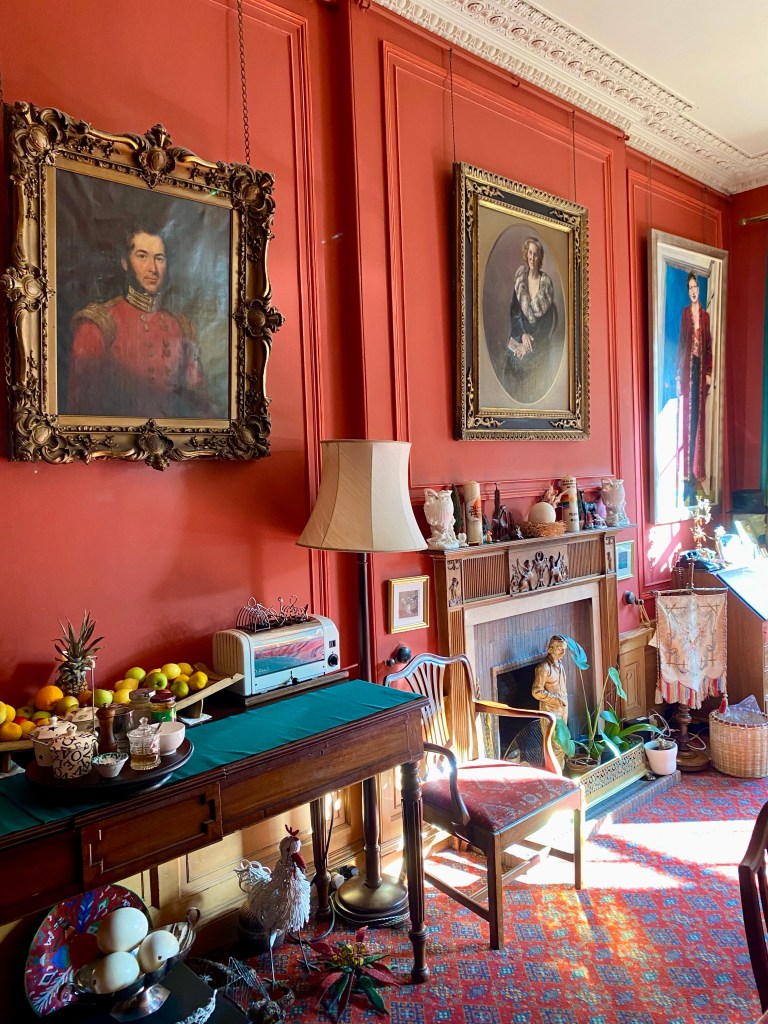
This is the dining room at 17 Heriot Row. Again, it’s a beautiful room, full of interesting pieces of furniture and with many gilt-framed paintings adorning the walls. I wish I’d asked who the subjects were. Perhaps former residents of the house? In this photo, you can see the long dining table with its crimson tablecloth, the lovely chandelier above the table, and a glimpse of that carpeted stone staircase through the doorway.
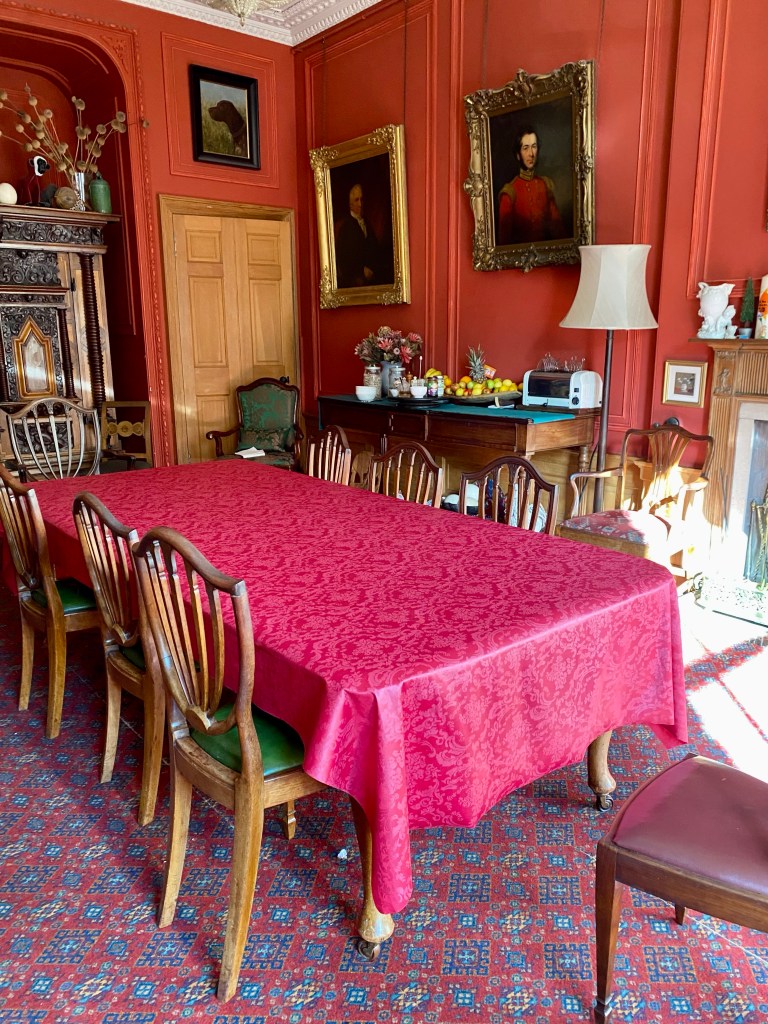
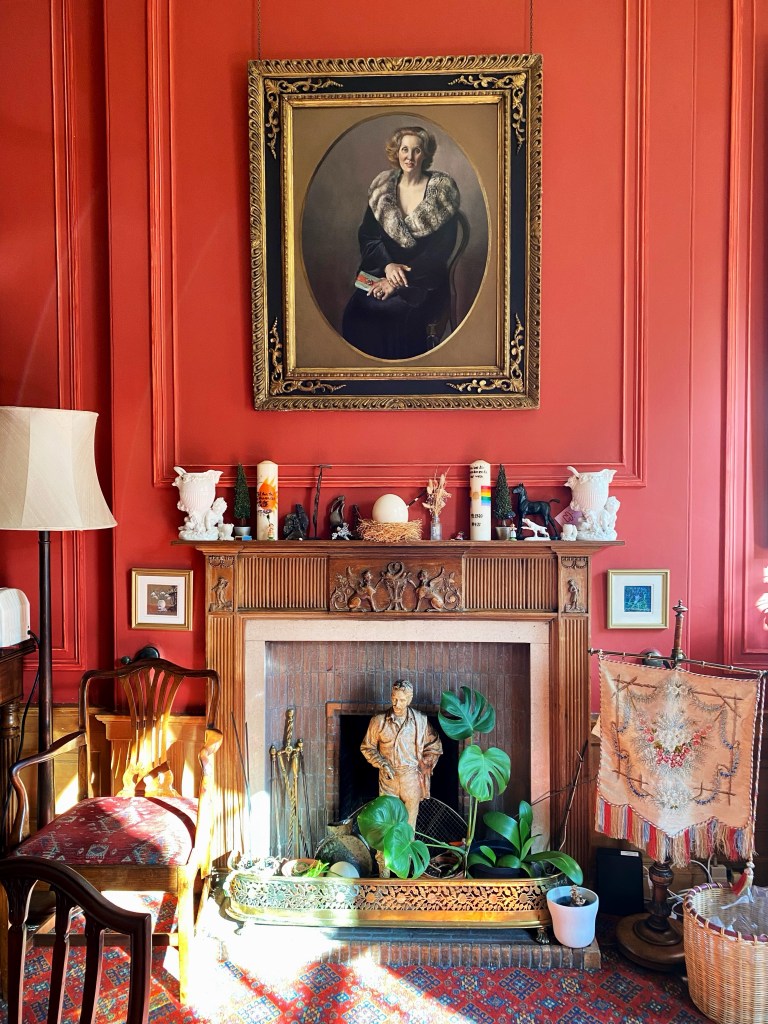
In the following photo, you can see a little statue of Robert Louis Stevenson in the dining room’s fireplace. This was the second statue of him I saw in the house, the first being in the fireplace of the room upstairs, where Fiona and I had sat, chatting with John. I wonder if there were any more in any of the other rooms. Curiously, there’s a similarly small sculpture of the author in a fireplace in the Writers Museum in Edinburgh. RLS always did like warm places!
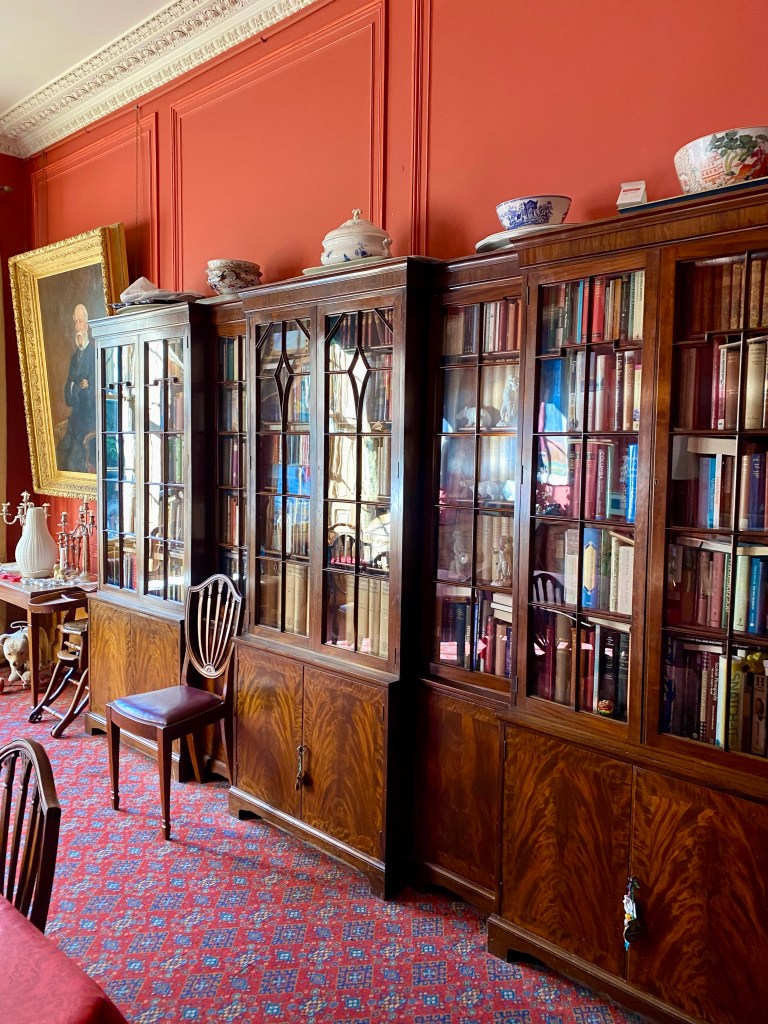
I was delighted to see that there were plenty of books in all of the rooms we saw in the Stevenson House. If ever a house deserved to be full of books, it’s this one. Here are some in the dining room.
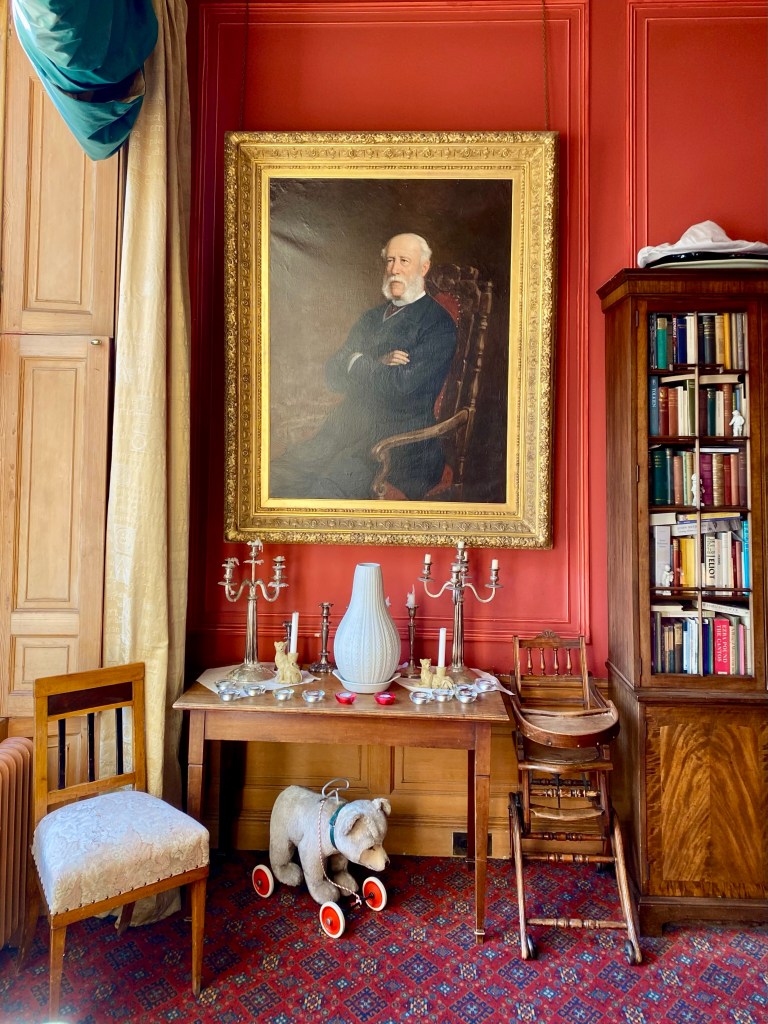
And so it came time to say goodbye and thank John for his great kindness in showing us around the house and for sharing his great knowledge of its most famous residents – Robert Louis Stevenson may be why the house is remembered today but his father, Thomas Stevenson, was also a significant figure in his time, and he was mentioned in our conversation too.
I loved the entire experience – loved chatting to and listening to John, and loved – finally! – getting to look around the home where one of my favourite authors once lived. And, of course, I’m enormously grateful to John Macfie for inviting me to visit his home and for sharing his impressive knowledge of Robert Louis Stevenson with us.
More information about the Stevenson House and what it offers can be found here:
Robert Louis Stevenson in Edinburgh
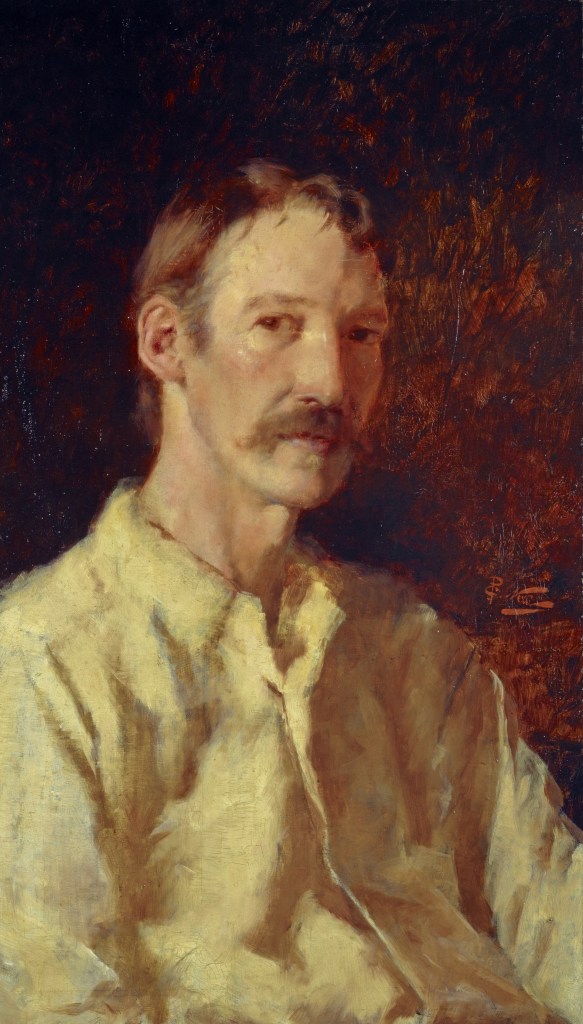
I love Edinburgh, the capital city of Scotland, for a variety of reasons and one of them is that it’s where Robert Louis Stevenson, one of my favourite writers, was born and grew up.
Luckily, I live close to Edinburgh and can visit as often as I like. Edinburgh is extremely popular with tourists, especially in the summer months and particularly in August when the Edinburgh festivals are on. These are both a blessing and a curse for the people of Edinburgh. The tourist dollars are certainly a welcome source of revenue for local businesses but the sheer number of visitors can present problems for those who live and work in the city. But summertime is when Edinburgh truly comes alive. That’s when the streets are full of entertainers, and when all the varied and wonderful shows at the Fringe take place. That’s when the attractions, such as the Castle and the Holyrood Palace, are teeming with curious visitors from all over the world. It’s not only the various festivals and attractions that draw people to Edinburgh, of course. Perhaps more important is the history of the place. Walking around Edinburgh’s Old Town is an experience few visitors will ever forget. Full of mediaeval streets and Reformation-era buildings, the Old Town has been home to many famous figures such as John Knox, the leader of the Scottish Reformation; Sir Walter Scott, the great historical novelist; and David Hume, the Scottish Enlightenment philosopher.
The Royal Mile in the heart of the Old Town is a remarkable series of streets that run from Edinburgh Castle at the top down to the Palace of Holyroodhouse at the bottom. Both the Castle and the Palace have been homes to Kings and Queens such as Mary, Queen of Scots and King Charles I. Today the Castle is both a tourist attraction and the Regimental Headquarters of the Royal Regiment of Scotland. Holyrood Palace is both a tourist attraction and the official residence of the British monarch in Scotland.
It was in this historic Scottish city that Robert Louis Stevenson, the author of Treasure Island, Kidnapped, and The Strange Case of Dr Jekyll and Mr Hyde, was born on 13th November 1850. Stevenson was born at 8 Howard Place to Thomas and Margaret Isabella Stevenson. Thomas Stevenson was a leading civil engineer who designed over 30 lighthouses in and around Scotland. The couple christened their son Robert Lewis Balfour Stevenson but everyone called him Lewis. When he was around the age of eighteen, RLS changed the spelling of “Lewis” to “Louis”. When he was around twenty-three, he dropped the “Balfour” altogether. As he’s known to the wider world as Robert Louis Stevenson, I’ll use that name or variations on it for the purposes of this post.
In addition to the homes listed in the rest of this post, Robert Louis Stevenson spent many of his boyhood summers at his grandfather’s house in Colinton, a quiet village in the southwest of Edinburgh. Lewis Balfour, his grandfather, was a minister with the Church of Scotland and his Manse had a large garden, which Stevenson loved playing in with his cousins. Sadly, his grandfather died when Stevenson was nine years old. In 1867, Stevenson’s parents leased a large, beautiful cottage in Swanston for summer use and retained the lease for 14 years. This cottage became as important to Stevenson as his grandfather’s Manse had been in earlier years.
Robert Heinlein’s Birthplace in Butler, Missouri
When I discovered that Robert Heinlein, author of Stranger in a Strange Land, The Moon is a Harsh Mistress and Starship Troopers, was born only 60 miles away, I had to go.
As I was pretty much a stranger in a strange land myself, a visitor to America from Scotland, and one that didn’t drive, I was grateful that my lovely Gwyneth would drive us there. It was only about an hour from Overland Park in Kansas and we set out on a beautifully sunny December morning in 2021.
Heinlein was one of those writers I read in my youth and one who I still have a soft spot for, even though I have serious reservations about his later work. But his juveniles, his young adult novels, which I read when I was a teenager – I loved those and still love them. Some of his later stuff is glorious but some of it is painful to read, presumably because he became too commercially successful to be edited or to have stuff rejected. But those early novels, when he did have an editor and wasn’t too famous, when he was writing for a younger audience, those were marvellous and full of the excitement of space exploration. His juveniles were intelligent, well written and utterly thrilling to those who read them at the time. For the longest time, he was the biggest name in the field. It’s said that he felt his greatest achievement was encouraging generations of young people to get involved in science and technology. I’m rather sad that I never got to see him in person at any of the science fiction conventions at which he was Guest of Honour. I would love to have seen him at MidAmeriCon, the world science fiction convention in Kansas City in 1976 but that was long before I ever set foot in America.
It took us only about an hour to get to Butler.
Like most of the small towns I’ve been to in America, Butler seemed surprisingly quiet. The town square was utterly deserted, aside from Gwyneth and I, who went to look at the County Courthouse. Almost everywhere I’ve ever been in Scotland has more people in the streets than I’ve seen in these small towns. I’m still not entirely sure why.
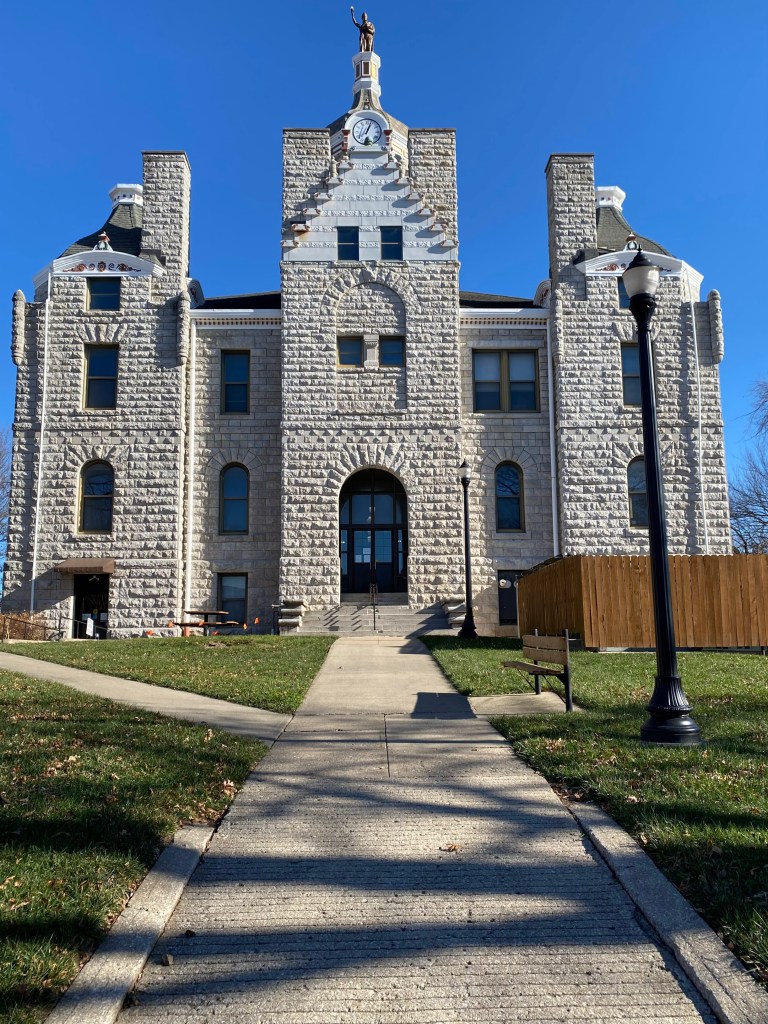
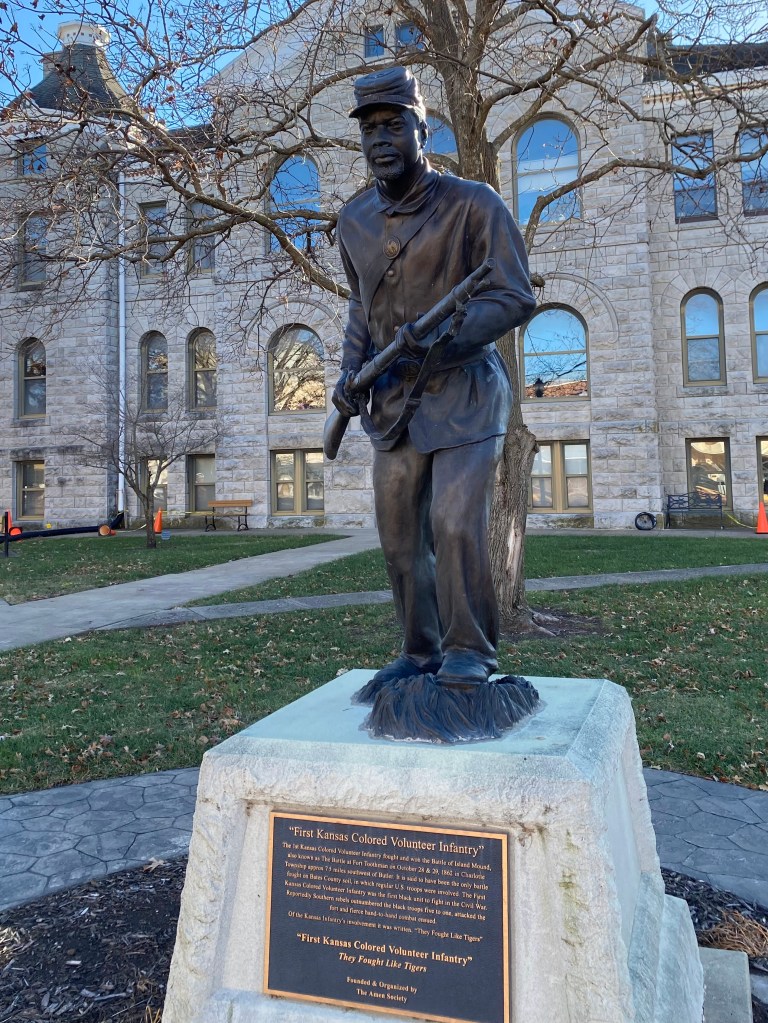
The Bates County Courthouse was quite impressive, as many of these courthouses are, and brought to mind some courtroom scenes from Heinlein’s novels. Outside the Courthouse was a statue honouring the “First Kansas Colored Volunteer Infantry”, the first black unit to fight in the Civil War. Of their involvement it was written, ‘They Fought Like Tigers’. Nearby there were two other Memorials to veterans. America shows immense respect for its military.
But going to Bates County Courthouse and the town square was one of the last things we did that day. The first thing we did was go to Butler Public Library, which has a Heinlein room or to give it its full title, ‘The Robert A. & Virginia Heinlein Addition’. After he died in 1988, Robert Heinlein’s wife, Virginia, informed the library of her husband’s wish to expand his hometown library. Funds from the Robert A. and Virginia Heinlein Foundation led to the library being renovated, and to the construction of a new wing, the ‘Heinlein Addition’.
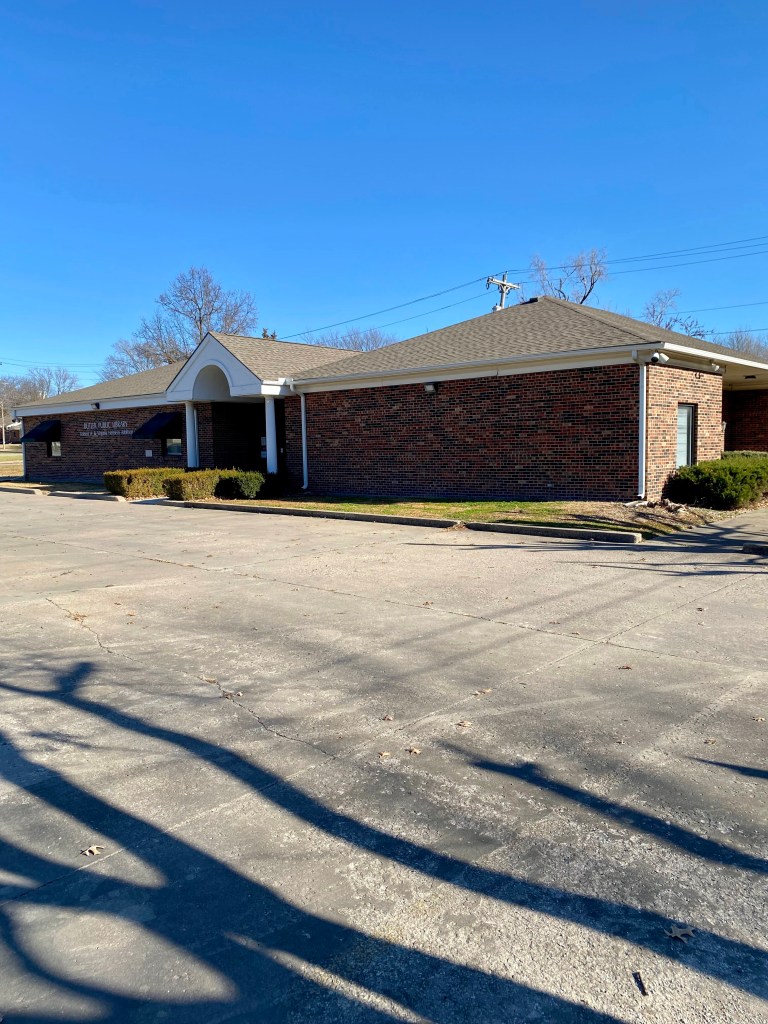
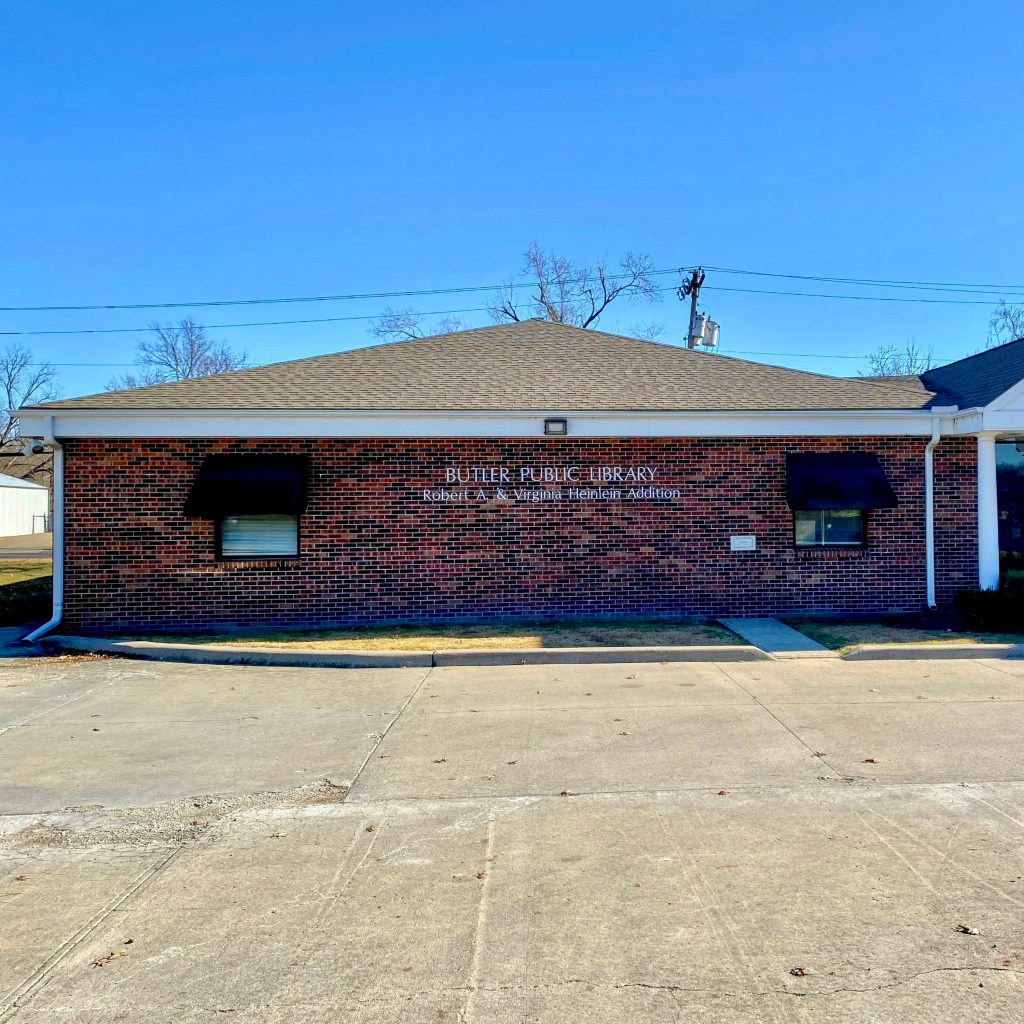
I was keen to see this library and the Heinlein room in particular. After taking some photos of the building, we went inside to a lovely little library. Almost as soon as we asked the librarian at the desk where the Heinlein room was, we spotted it – in truth, it was hard to miss.
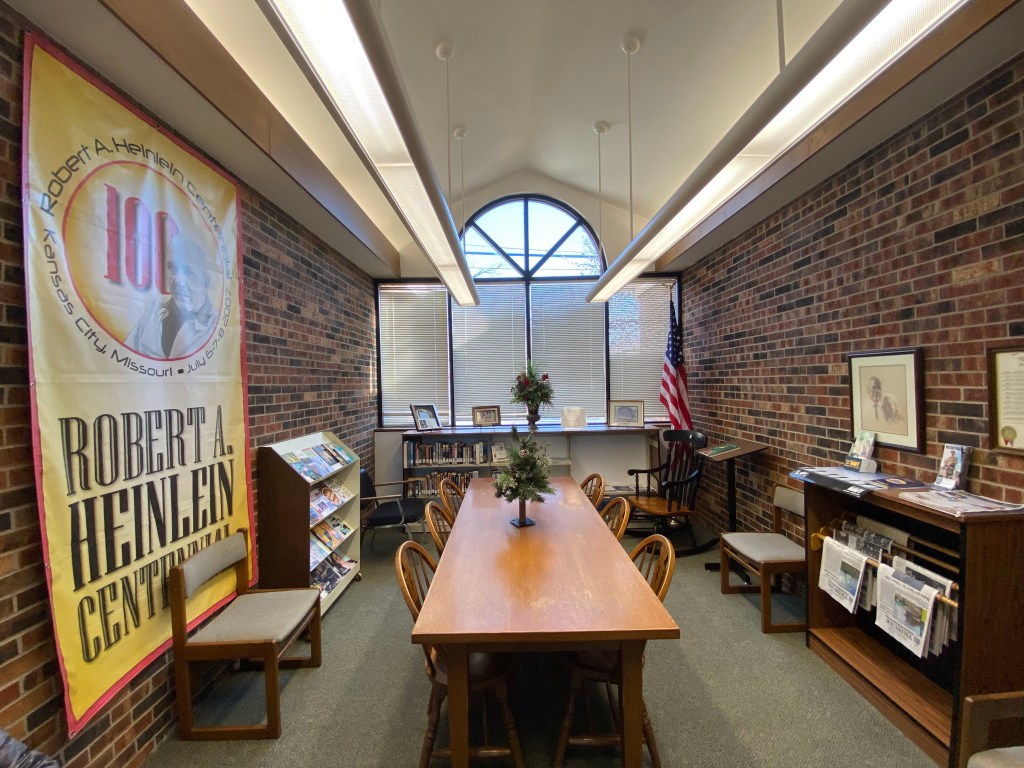
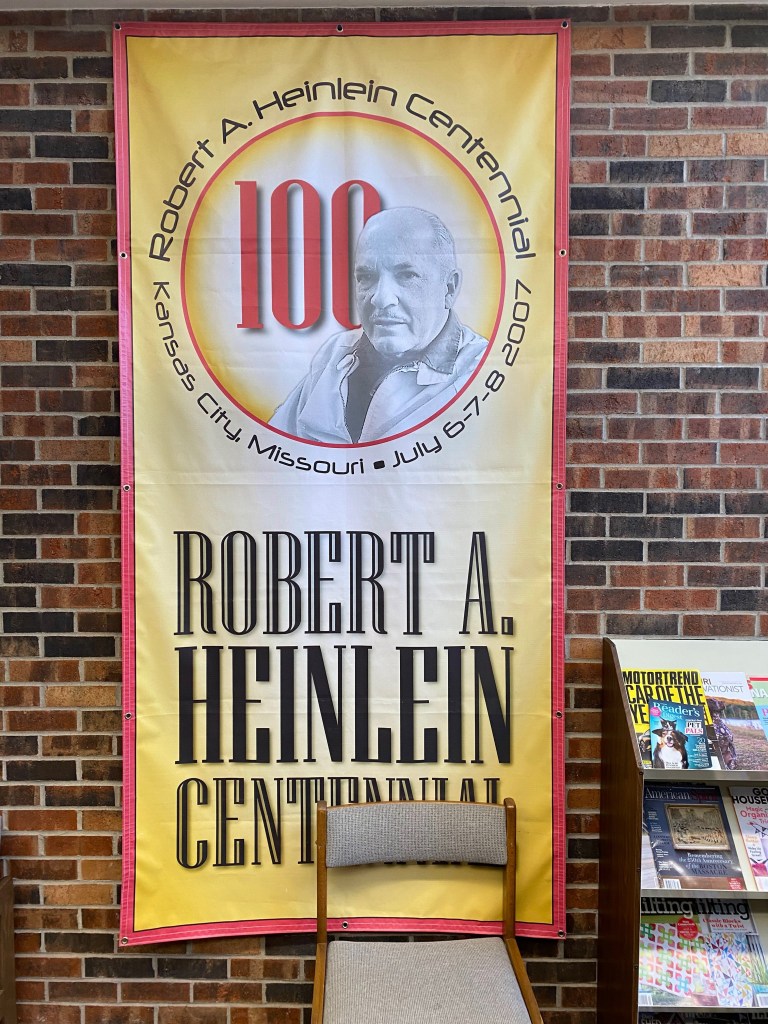
I suppose the first two things we saw when we entered were the large banner with a picture of Heinlein on the wall to our left, marking the Centennial of his birth. The Heinlein Centennial Convention had been held in Kansas City in July 2007. The Guests of Honor had been Robert and Virginia Heinlein, in absentia and deceased. Many notable science fiction authors attended, along with Administrator of NASA, Michael D. Griffin and others involved in the spaceflight industry. Another Heinlein-related event in Kansas City I would love to have attended. The banner was donated as soon as the convention was over and brought to the library by Heinlein fans and at least one of the convention organisers.
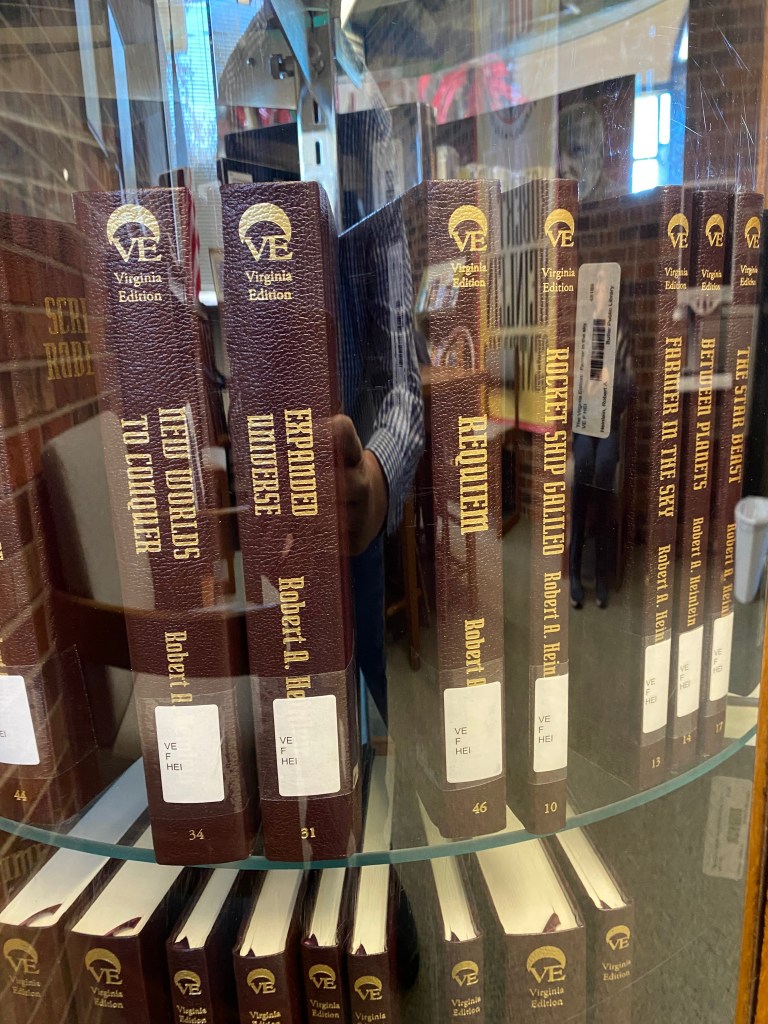
In one corner of the library was a wood and glass cabinet containing a full set of the Virginia Edition of the Complete Works of Robert Heinlein. Only 2000 sets were produced. Each of the 46 volumes is bound in leather and looks beautiful. Virginia Heinlein herself oversaw their publication and they contain all of Heinlein’s published fiction and nonfiction, along with 450,000 words of correspondence, most never published before. At $1500 a set, it’s unlikely I’ll ever own one. The case the books were displayed in appeared to be locked and I regret that I didn’t simply ask the librarian if it was possible to handle them and browse through them. It simply didn’t occur to me, I thought they were for display only, and perhaps they are. But if Gwyneth and I ever go back, I’ll ask. It can’t do any harm. I believe the set was donated to the Library by a couple of Heinlein fans, Deb Houdek Rule and Geo Rule, who are on the Board of the Heinlein Society, a charitable organisation dedicated to Heinlein’s principle of “Pay It Forward.”
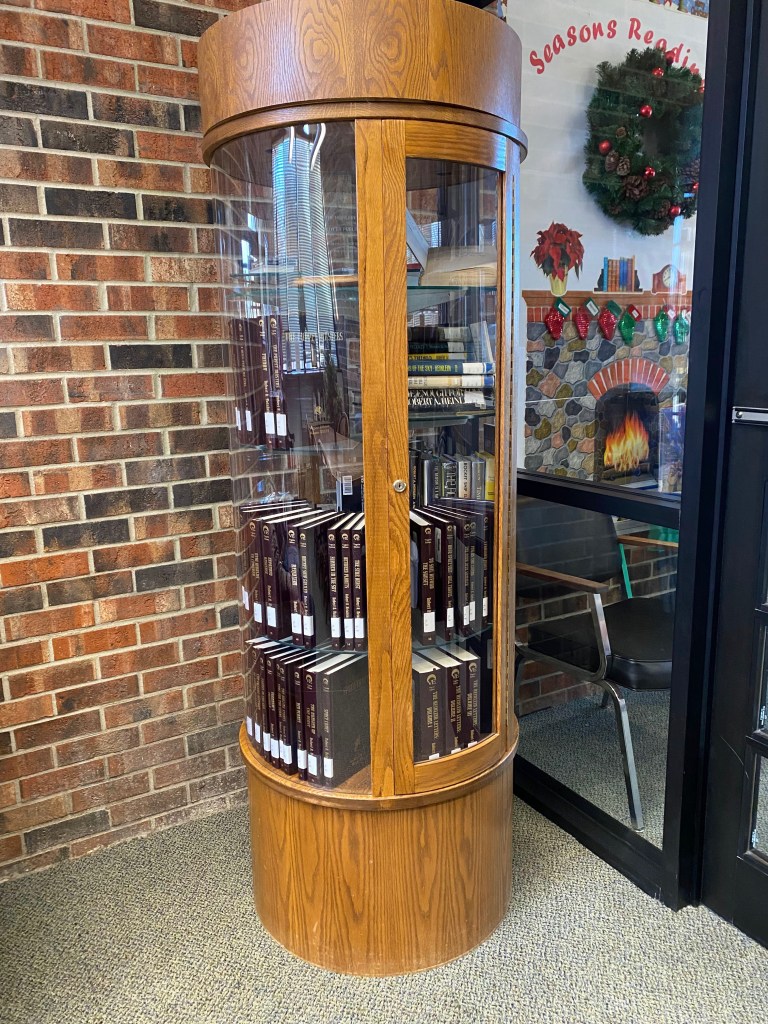
But the Virginia Edition wasn’t all that was in the cabinet. I also saw a signed first edition of Heinlein’s short stories, a copy of the 44 page Robert A. Heinlein Souvenir Book that was published for attendees of the Centennial Convention in Kansas City in 2007, an illustrated edition of the Notebooks of Lazarus Long (one of Heinlein’s most popular characters), an interview with Virginia Heinlein on cassette, and so on. I would love to hear that interview. Virginia Heinlein was married to Robert Heinlein from 1948 until his death 40 years later and would have known him better than anyone else in the world. Virginia, or ‘Ginny’ as she was known, was both a chemist and a rocket engineer and had held a higher rank in the Navy than Heinlein. Many of the female characters in his books are clearly modelled on her.
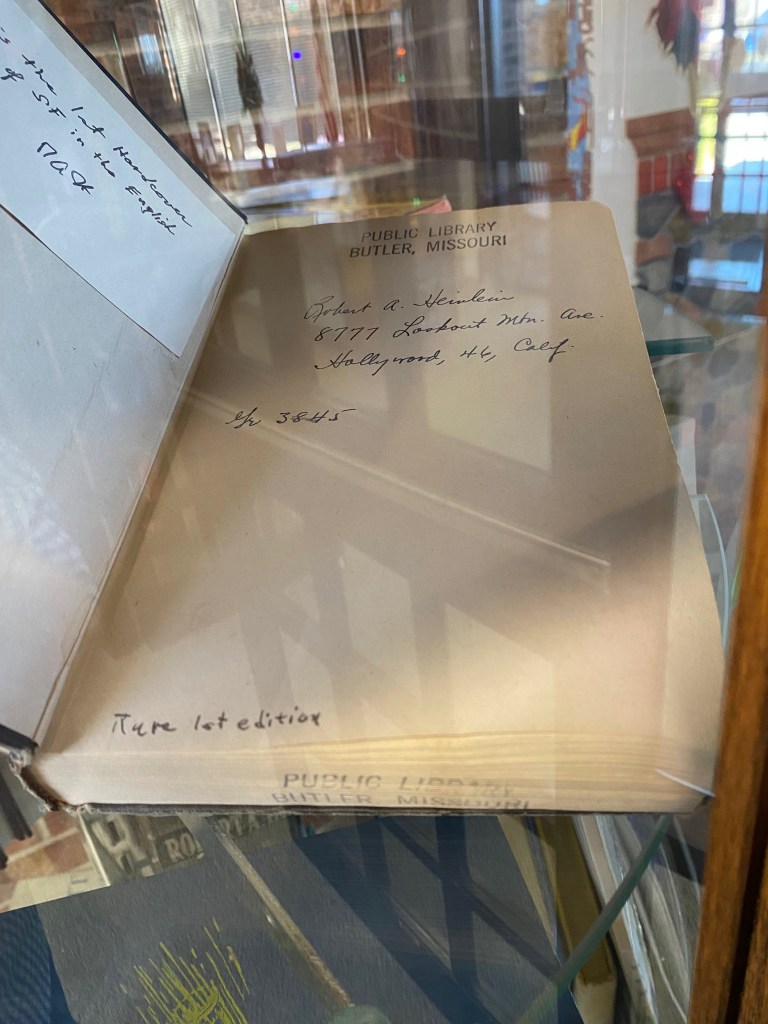
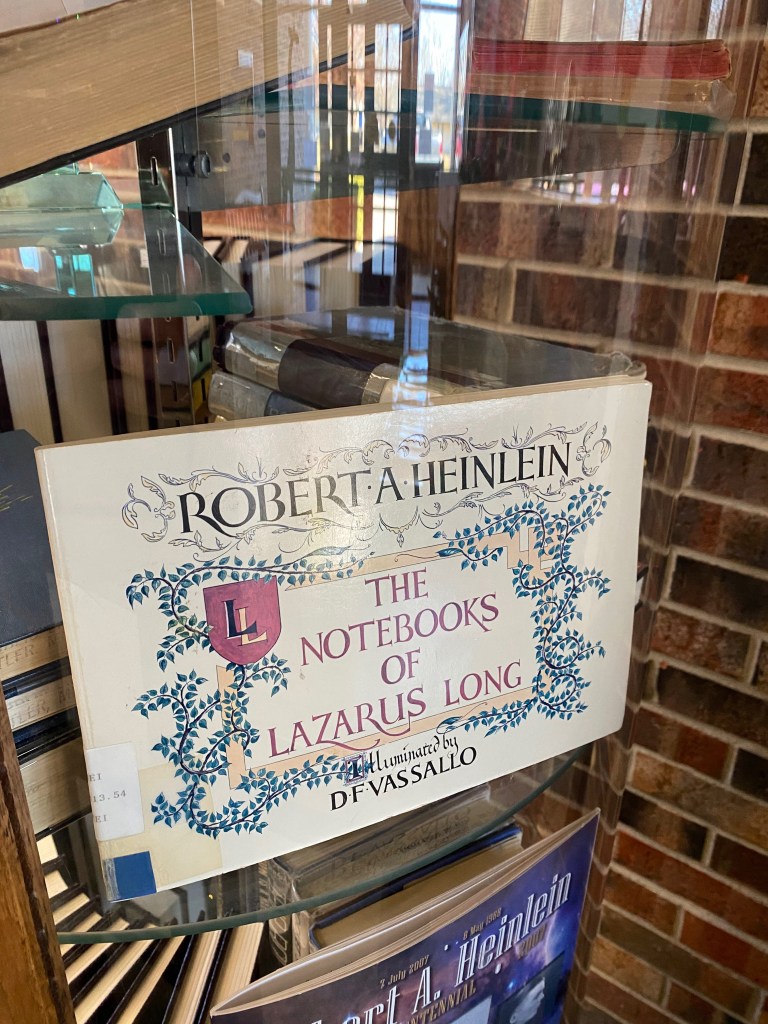
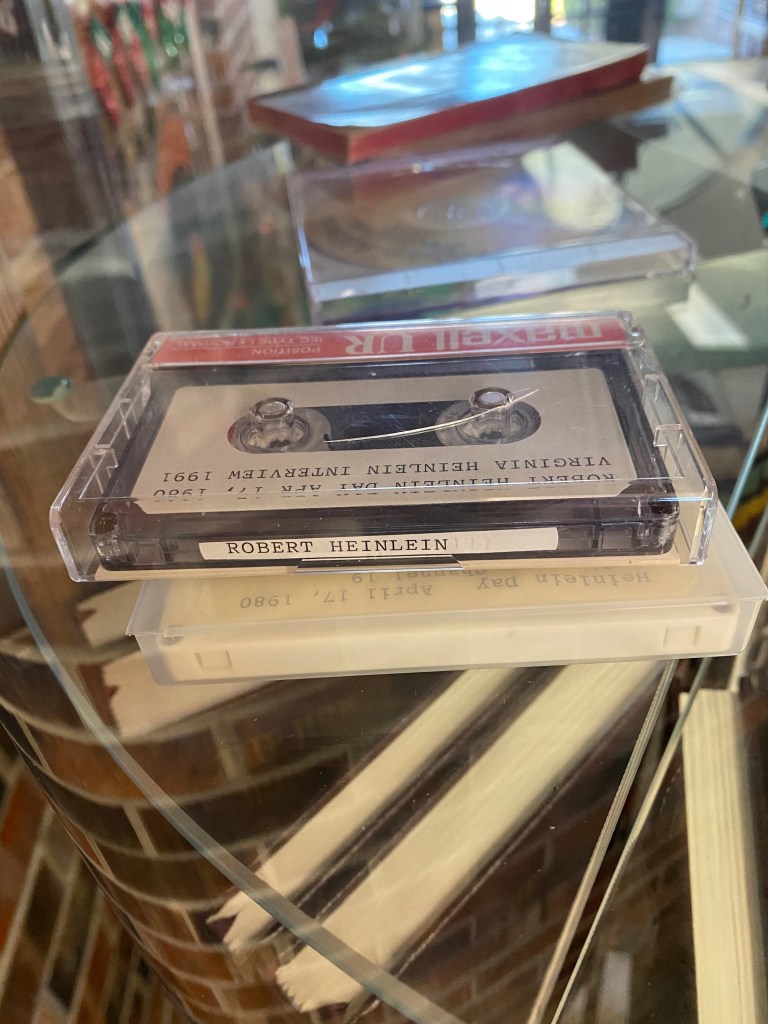
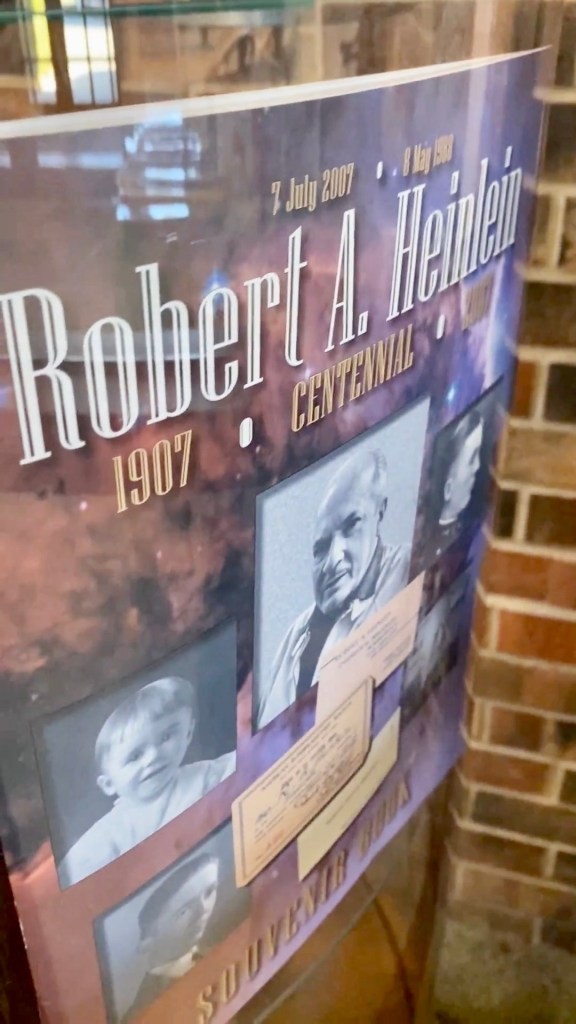
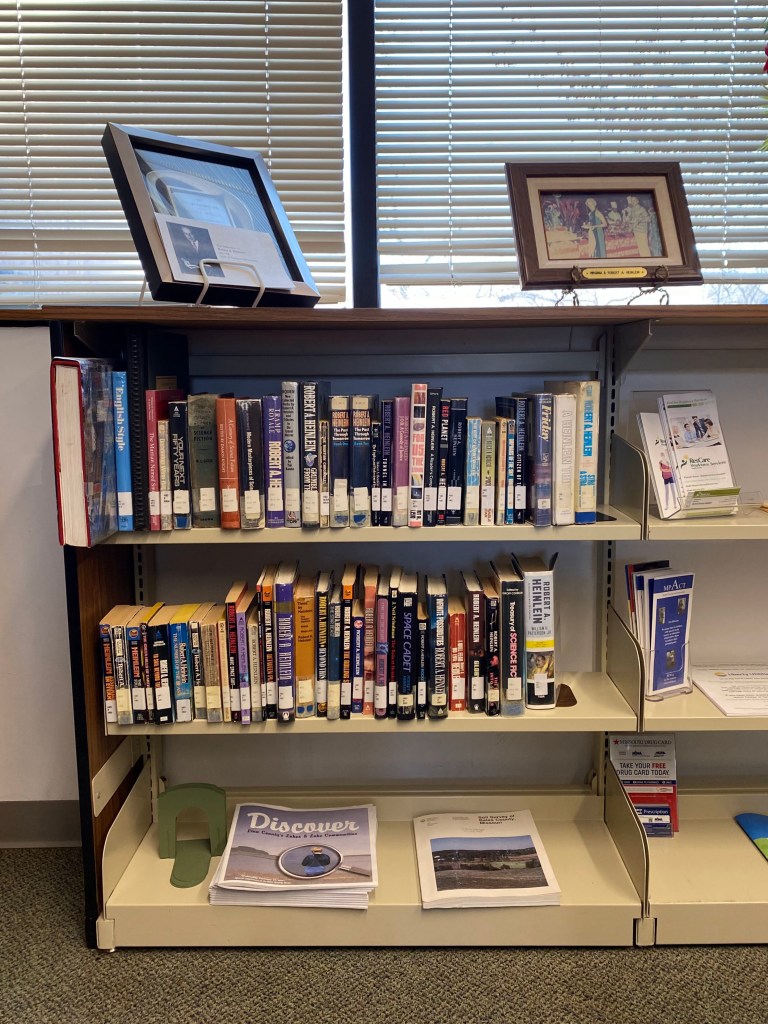
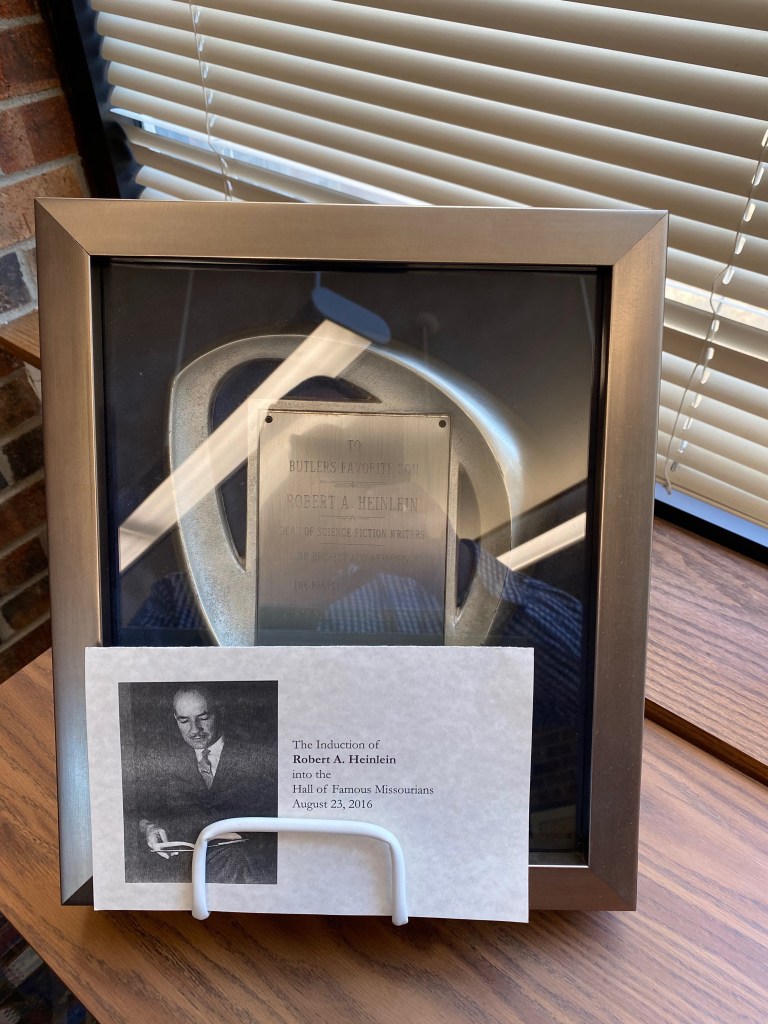
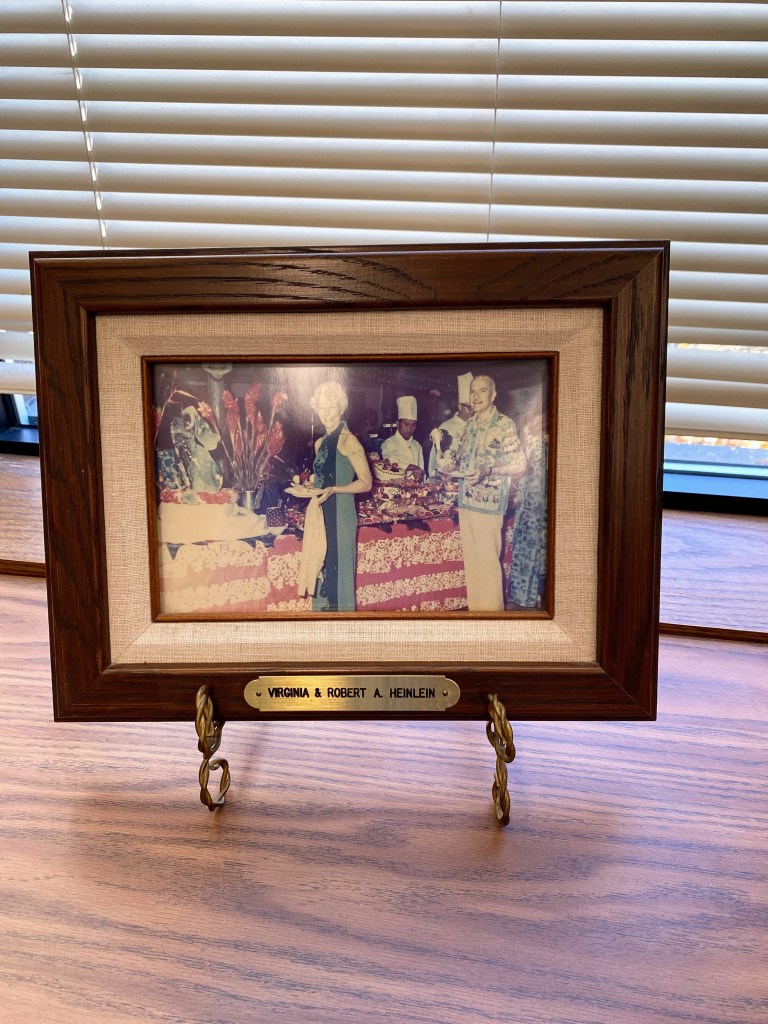
Against the back wall of the room, beneath the window, were two shelves full of books by and about Heinlein, including William H. Patterson’s monumental two-volume biography of him. I’m working my way through that at the moment. It’s clearly been meticulously researched and makes for fascinating reading if you’re a Heinlein enthusiast. On the top shelf was a photograph of Robert and Virginia, apparently taken while they were on a cruise. On the left was a framed metal plaque relating to Heinlein’s induction into the Hall of Famous Missourians on August 23 2016. Inscribed on it were the words:
‘To Butler’s Favorite Son, Robert A. Heinlein, Dean of Science Fiction Writers, With Respect and Affection, From the People of Butler, MO’
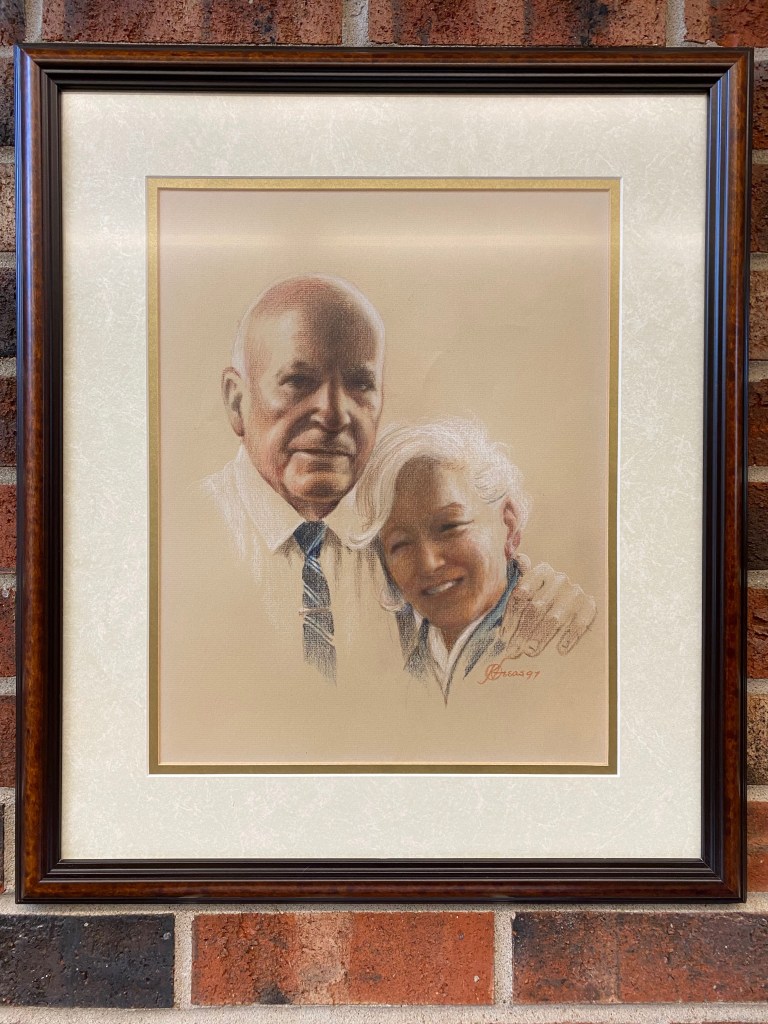
On one of the walls of the room was a wonderful sketch of Robert and Virginia Heinlein by Kelly Freas, a well-known science fiction artist. You can see it at the start of this blog entry. The WiFi password for the library was an amusing touch:
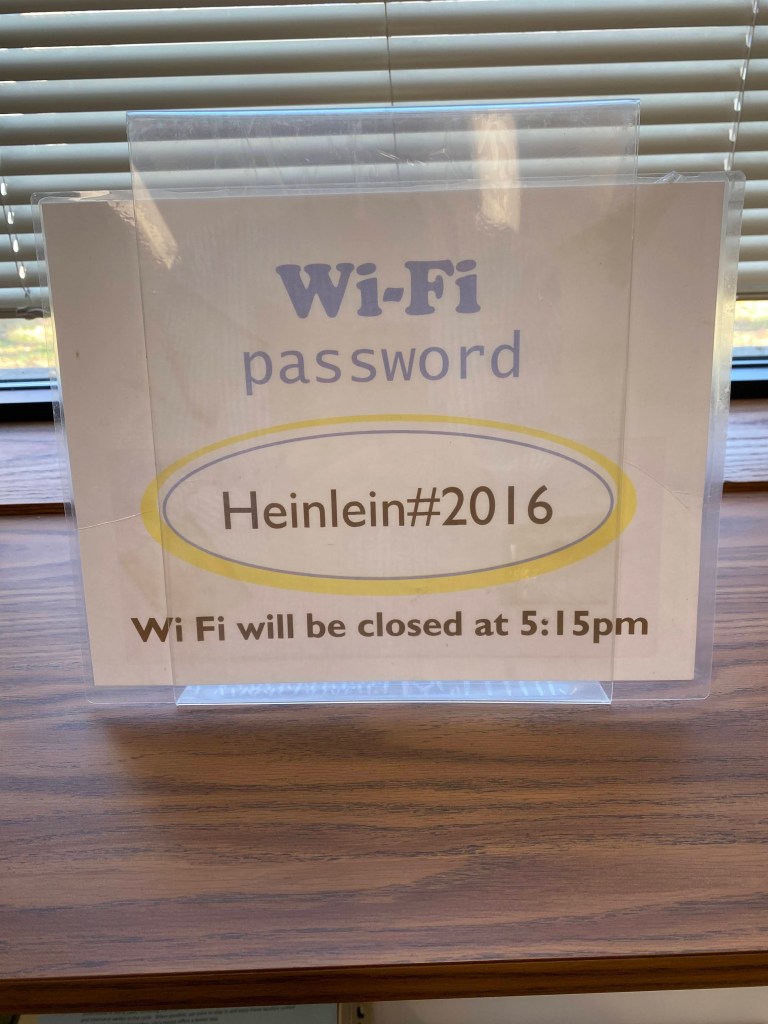
In an online Heinlein group, I had read that anyone could get a library card from Butler Public Library, even if they didn’t live there. The cost was only $5. Of course, I had to get one, even though I never had any intention of borrowing anything from the library, ever. It would just be a nice little memento of my visit to the place. So we went out front and a few minutes later I had a card from the library in Heinlein’s birthplace to take home with me. A little thing, but I was delighted.
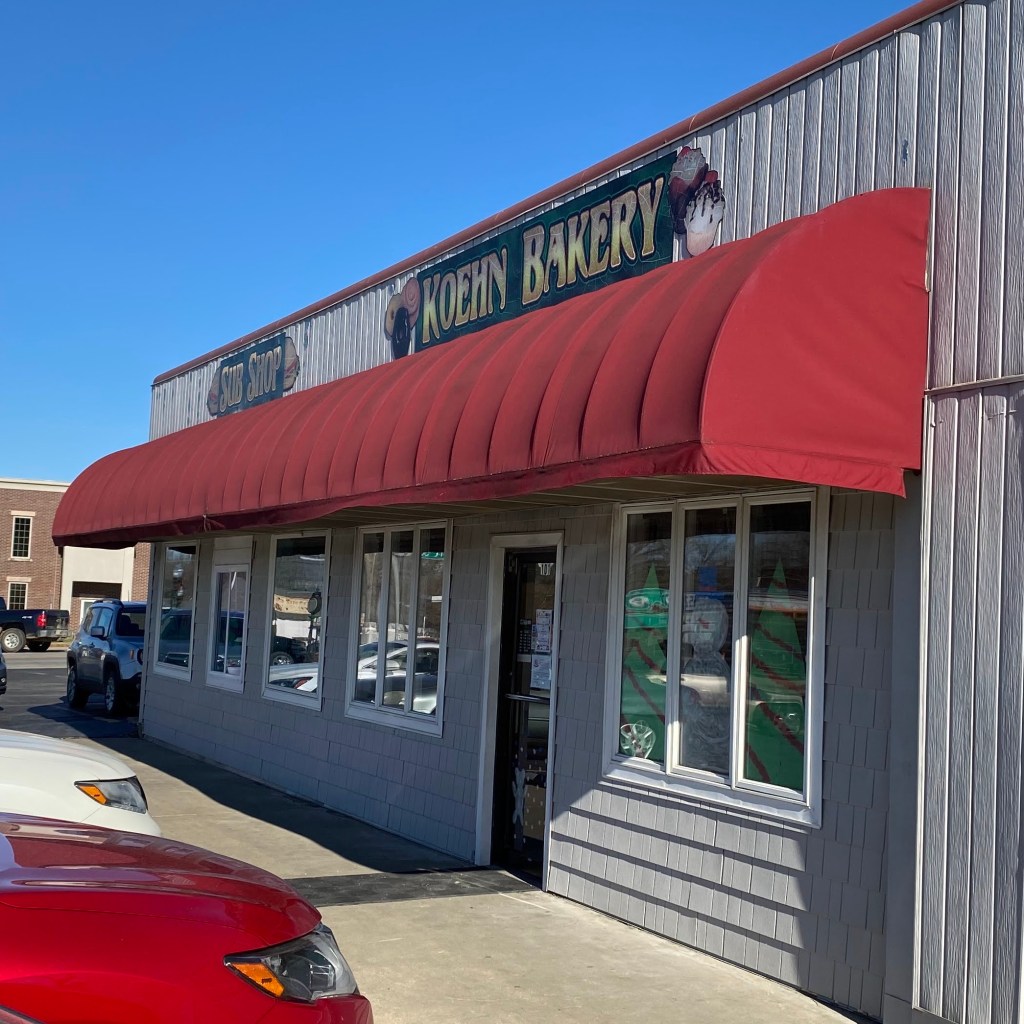
Gwyneth and I decided it was time for something to eat so we went to a nice little family-owned and operated bakery, called Koehn Bakery on Orange Street. Gwyneth and I shared a roast beef sandwich with horseradish sauce – and that’s where we went wrong. Not the sharing, that was sensible as it was a large sandwich. To understate it, the interior of the Sun is cooler than that horseradish sauce. It was far and away the hottest we’d ever tasted, and brought tears to our eyes. We couldn’t help laughing. I’m sure the sandwich would have been fine if we hadn’t opted for the sauce. And the truth is it was a lovely little place, and as we left we bought some bread from it to take home.
But it was time to find the house where Heinlein had been born. After all, that was the point of the visit.
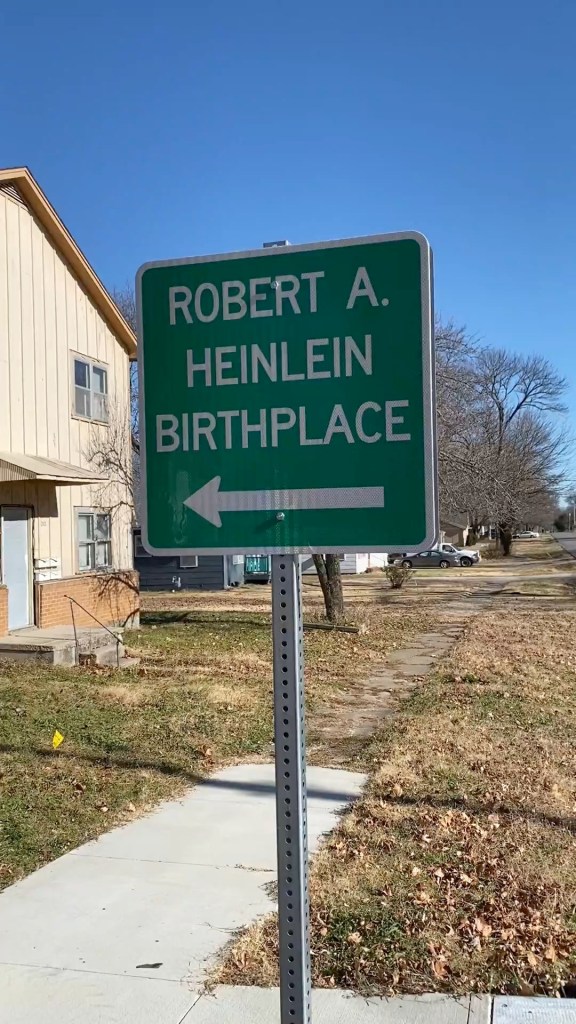
Somewhere online I had found the name of the street where the Heinlein house (as I thought of it) was located. Looking at the street view on Google Maps, I could see a house with a sign outside it saying ‘ROBERT A. HEINLEIN BIRTHPLACE’, with an arrow apparently pointing to the first house in the street. So I knew it would be easy enough to find and indeed it was.
This is that house and sign:
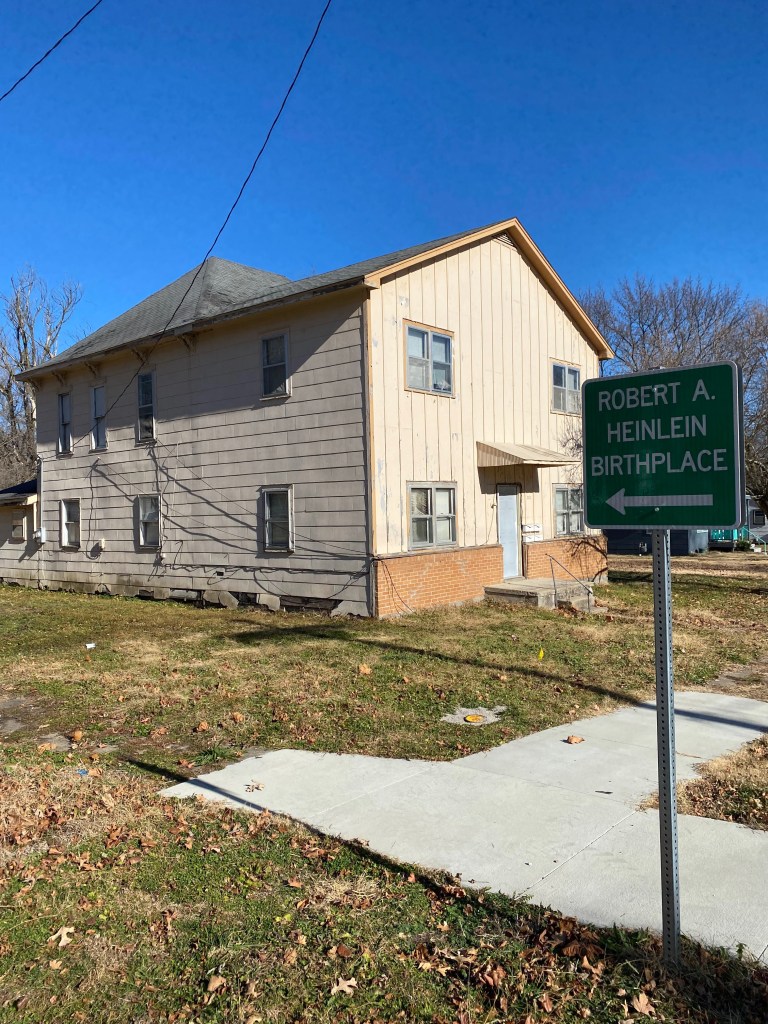
Of course, I was excited to find the house and took many photos of it, noting that it appeared to be unoccupied. Gwyneth questioned whether this was really the birthplace house as the sign appeared to be pointing farther up the street but I was convinced this was it.
Late that night, after we’d returned home, some real doubt crept into my mind. In the morning I did some more research online.
I should have listened to Gwyneth. We’d gone to the wrong house.
Ernest Hemingway in Kansas City
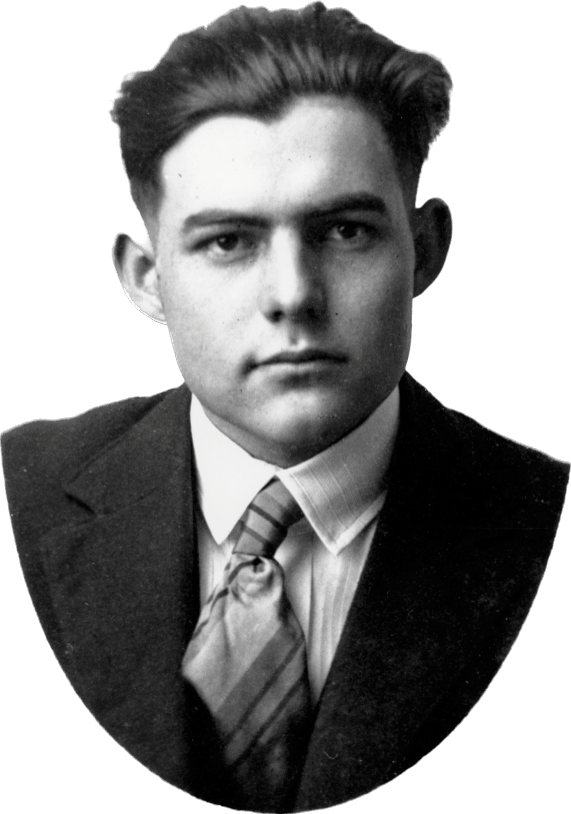
“A strange and wonderful place” is how Ernest Hemingway once described Kansas City, according to a 1999 article by Steve Paul in the Kansas City Star, the newspaper that drew the young Hemingway to the city in 1917.
Ernest Hemingway was only 18 years old when he stepped off the train in Kansas City’s Union Station on October 15th, 1917. On a visit to Hemingway’s parents in Chicago a few months earlier, his Uncle Tyler had told them he could get the young Hemingway a job on the Kansas City Star and that Ernest could live with him at his house on Warwick Boulevard until he was well and truly started. The alternatives to working for a newspaper were either going to college, which didn’t seem all that necessary to Hemingway, or going off to join the war effort in Europe – America had declared war against Germany only 6 months earlier. But Dr Clarence Hemingway, Ernest’s father, had discouraged him from pursuing that idea, insisting he was too young. A job at the highly regarded Star seemed like the best option. It would not only give Hemingway some much-needed independence and freedom from life with his parents, which was very strained at times, but it would also give him some valuable experience of writing professionally. And thanks to the Kansas City Star’s in-house style guidelines, and the editors he worked with, working at the newspaper was to help shape Hemingway’s own, ultimately very influential, literary style.
Relatively little has been written about Hemingway’s time in Kansas City, the notable exception being Steve Paul’s superb and meticulously researched 2017 book, Hemingway at Eighteen. Hemingway himself wrote very little about the city even though he liked the place. His letters to his family during 1917-1918 told of his excitement at being a real reporter on a real newspaper, the Kansas City Star. But the city didn’t make it into much of his fiction – it’s mentioned in only three of his short stories, Soldier’s Home, A Pursuit Race, and God Rest You Merry, Gentlemen. It also gets a few mentions in the novel The Sun Also Rises and in the memoir A Moveable Feast. And the city’s luxurious Muehlebach Hotel, which Hemingway spent some time in, is mentioned by the Colonel in the novel Across the River and into the Trees. But it’s not much, really – you have to search for the references.
Despite this, there’s no doubt that his time in Kansas City helped make Hemingway the writer he became, largely due to the lessons he learned at the Kansas City Star. And in later years, Hemingway chose Kansas City to be the birthplace of two of his children, Patrick and Gregory (later Gloria). In addition, he wrote parts of two books there, A Farewell to Arms and Death in the Afternoon.
As a visitor from Scotland who recently had the opportunity to visit Kansas City, and who also found it a strange and wonderful place in some ways, I was keen to do two things. The most important was to visit any and all locations with a Hemingway connection. For me, literary tourism isn’t a superficial thing. It’s about experiencing a direct personal connection with my favourite authors by visiting the places that shaped them, that meant something to them, that helped shape the stories that have had such a powerful impact on me. Hemingway is a writer who really lends himself to literary tourism as he visited and lived in so many interesting places – Paris, Cuba, Key West, Spain and Africa being perhaps the best known and most visited by those fascinated by his life.
The other thing I hoped to do was get a sense of what made Kansas City such a strange and wonderful place for Hemingway. Of course, that was always going to be a challenge. After all, Kansas City has inevitably changed enormously since Hemingway first visited in 1917, both in terms of what it’s gained and what it’s lost.
For instance, most of Kansas City’s striking downtown skyline simply didn’t exist when Hemingway was a cub reporter for the Kansas City Star. The 29-story City Hall building, the even taller Power and Light building, the spectacular Kauffman Center for the Performing Arts, and the 217 feet tall Liberty Memorial to those who fell in World War I – all of these impressive structures were built years later. However, Hemingway might well have seen a few of these buildings when he returned to Kansas City in later years with his second wife, Pauline Pfeiffer. I’ve included photos of all these buildings at the end of this post, mostly to give an impression of Kansas City today.
Two of the buildings associated with Hemingway are now lost forever, sadly. One is his Uncle Tyler’s house on Warwick Boulevard, due to a fire in 2008. Hemingway only stayed very briefly at this house but as his uncle was the one responsible for him coming to Kansas City in the first place I was sorry I would never have the chance to see it. The second building is Kansas City’s General Hospital – which Hemingway claimed to have been barred from after he spent months investigating it for the Star. It was demolished in 1991-1992, so I was unable to see that either.
But there’s much in present-day Kansas City that the young Hemingway would still recognise.
For instance, the beautiful Union Station, the station he arrived at on a train from Chicago in October 1917, is still around. It’s now far more than a train station but it would have looked much the same in Hemingway’s time as it does now.
The old Kansas City Star building still exists too, although it’s no longer home to the newspaper that drew Hemingway to Kansas City in the first place. But the building itself still stands on Grand Boulevard and, from the outside at least, still looks very much as it would have done on the first day Hemingway walked through its doors to start his job as a cub reporter for the newspaper.
And the building – now called ‘The Hemingway Building’ – that once housed Police Station No. 4 – can still be found only a short distance from the old Kansas City Star building, looking much as it did when Hemingway filed crime stories from it.
Of course, these are only the physical details. The character of the city has also both changed and, in some respects, remained the same. When Hemingway lived there between October 1917 and April 1918, Kansas City was a violent place in the heartland of a country that had just been plunged into a World War. Even though it was a prosperous city of around 300 thousand people, it was one that had its share of problems with drugs, poverty, corruption, and violence, and one that was experiencing outbreaks of smallpox and meningitis while Hemingway was there.
Initially, I must admit I was a little apprehensive about venturing into downtown Kansas City on my own as the reality is that the city has a homicide rate twenty times that of the city I come from. It was a violent place in Hemingway’s time and it’s sometimes a violent place today – one only needs to read the latest editions of the Kansas City Star, which is still going, to see that. There are certainly parts of the city I simply wouldn’t venture into again, and probably shouldn’t have gone into in the first place. However, most of the places listed in this post seemed safe enough to me, especially those near Main Street such as Union Station, those in Warwick Boulevard and those in Mission Hills, Kansas. I’ve found downtown Kansas City surprisingly quiet and peaceful when I’ve been there, and I’ve been deeply impressed by the often beautiful architecture of the city.
I must admit that the first few times I visited any of the locations mentioned in this post I was so preoccupied with finding them and taking photos that I didn’t pause just to reflect on the reality that one of my favourite writers had actually walked these streets more than a century ago, had truly begun his professional writing career here, had years later stayed in these apartments in the Plaza with his wife, Pauline, while they waited for the birth of their first child, and so on. But finally I’d visited this handful of locations often enough that I stopped taking photos and let my mind wander back to the time when the young Ernest Hemingway stepped off the train in the city’s beautiful Union Station to begin his first adult job as a newspaper reporter for the Kansas City Star. I was finally present, but present in the Kansas City of 1917-1918.
Undoubtedly the most significant building in Kansas City associated with Hemingway is the old Kansas City Star building, located at 1729 Grand Boulevard in downtown Kansas City.
Let’s go there.
Visiting the DH Lawrence Ranch in New Mexico

*Note that this article was originally written in April 1998
Saturday Morning: The Paintings
“Personally, I don’t know how that H.G. Lawrence guy ever made any money”, said Robert, our driver, as he dropped Donna and me off at our accommodation in Taos. Donna, the traitor, agreed with him. We were spending a week of our U.S. vacation in New Mexico and, as we were unwilling to drive in America, we had hired Robert and his company to drive us from hotel to hotel and to take us on various tours. One of the tours, the following Sunday, was to include a trip to the D.H. Lawrence Ranch – so long as it didn’t snow, Robert warned, as that might make it impossible to get up to the Ranch. However, it was a lovely warm Friday afternoon in Taos and I couldn’t imagine it snowing.
The following morning, Donna and I went to explore Taos Plaza, which was only a 10 minute walk away from El Pueblo Lodge, the Bed & Breakfast we were staying at. Donna, who had seemed intent on buying up most of the silver jewelry produced by the Native Americans in Santa Fe, where we’d spent a couple of nights, now seemed equally determined to buy up most of Taos. “John, we just HAVE to go into this store,” she said about a dozen times before we finally reached the La Fonda Hotel at the other side of the Plaza.
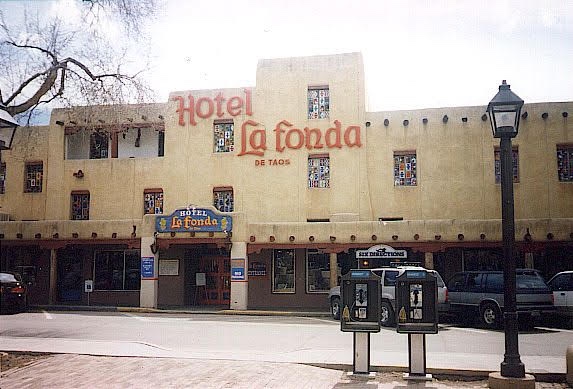
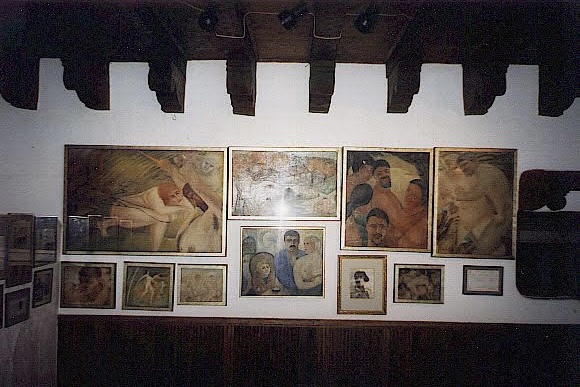
I truly don’t know how I restrained myself – even though I didn’t really think Lawrence was much of a painter, I very much wanted to see the small exhibition of his paintings in the La Fonda. Donna, who hates, loathes and despises Lawrence, didn’t want to see them and continued shopping nearby, as I went into the hotel alone, paid my $2.00 admission fee, and was shown into the room where the paintings were hung. I stayed there for about 25 minutes, having the place all to myself, and was won over a little bit by some of the paintings, especially by ‘A Holy Family’. Altogether, there are nine paintings by Lawrence on exhibition, all signed ‘Lorenzo’, along with a small, telling portrait of him by Knud Merrild. There are also a number of framed documents and newspaper articles relating to the paintings, which make fascinating reading. I’m glad I saw the paintings; I came away liking them a bit more than I had done previously.
Sunday morning: The Mabel Dodge Luhan house
Came Sunday morning, and so did the snow; actually, it had come overnight and it was still snowing heavily. Robert phoned at 9 a.m. – our tour was cancelled as part of the route might well be impassable. I could have wept. We would only be in Taos for one more day, and if we couldn’t get to see the Lawrence Ranch then, I might never get the chance to see it again. Lawrence is the writer who has made the deepest impression on me of all those I’ve read, and it meant a great deal to me go to the place where he had lived and written some of his most powerful stories. Monday would be my last opportunity.
Despite the snow, Donna and I decided to walk to the Mabel Dodge Luhan house, which was only about 25 minutes away. It was, of course, Mabel Dodge Luhan who gave Frieda Lawrence the Kiowa ranch; in return for which she was later given the manuscript of Sons and Lovers. A very friendly black dog followed us along the road to house, which is now run as bed & breakfast accommodation. At first, we thought we wouldn’t be allowed in as there was a notice on the door saying that a wedding party was in progress and so no-one could enter – but fortunately, the last of the wedding guests were just leaving as we arrived.

When we entered, we were welcomed by a very friendly and chatty woman who was in charge. She herself was planning to get married in the Mabel Dodge Luhan house in a few months time. To my disappointment, she told us that they didn’t show the bathroom windows that Lawrence painted anymore. But as I was a Lawrence fan, she relented after a few minutes and led us upstairs to see them. The bathroom itelf is quite small. Some of the paintings on the windows are currently being restored; the rest of them have already been restored and are bright and colourful. I thought they were wonderful, and I felt priviliged and delighted to see them.
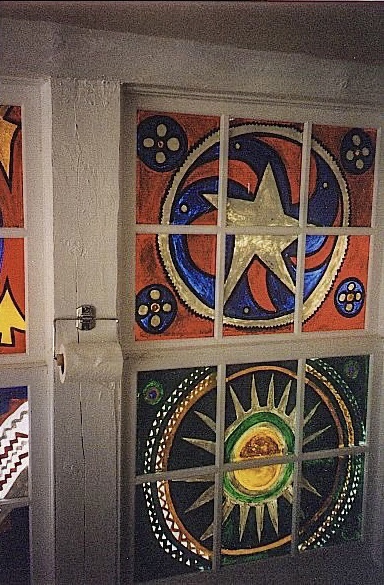
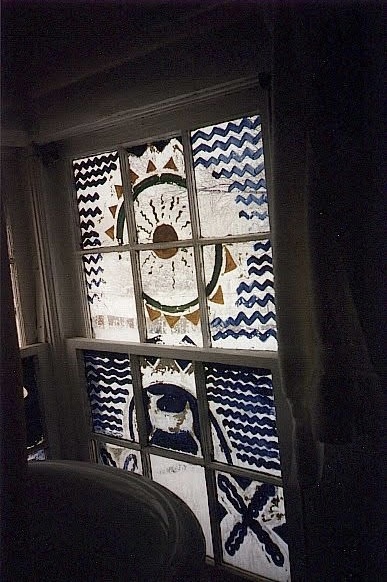

After a little while, we came back downstairs and wandered through the various rooms that are open to the public. Donna thought it was a lovely place, despite it’s DHL connection. I, too, thought it was very nice. It’s certainly a beautiful place in which to have a wedding.
Deciding to brave the snow again, we thanked the woman in charge for her kindness in showing us the bathroom windows and for letting us look around. She told us that outside and to the right was the house that Lawrence himself had stayed in, but that it was now private property.

On the way back, we stopped in at the Taos Bookstore, which boasts a very friendly cat and a very good selection of Lawrence related books. As the cat jumped up onto Donna’s shoulders, I bought a book on the three versions of Lady Chatterley’s Lover. My ‘best buy’ had actually been a few days earlier in Santa Fe, where I’d picked up a lovely 3 volume set of Edward Nehls’ ‘D.H. Lawrence: A Composite Biography’.
Monday morning: The Shrine
On Monday morning Robert phoned. The tour was on. We were going to the Rio Grande Gorge, the Lawrence Ranch and to drive along the ‘Enchanted Circle’ route. Whether or not we actually made it to the ranch still depended on how snowy the road was that led up to it. Shortly afterwards, Kyle, one of Robert’s drivers, showed up. Kyle turned out to be a psychic/healer in addition to being a driver. We also discovered that this would be the first time he’d ever taken anyone on a tour. We really liked Kyle: he was a great guy -very friendly and easy to get on with.
After a brief stop at the Rio Grande Gorge bridge, we headed for the ranch. To my relief, the roads were free of snow but the ranch was at a higher altitude and the unsurfaced road that led up to it might well have snow on it. For the most part, though, it didn’t – except near the top, as we approached our destination. Our little bus skidded a bit in the snow and the wheels spun uselessly occasionally but, thanks to Kyle, we made it – and just in time, for they were apparently about to close the road.
As Kyle parked, we saw a woman walking towards us with a dog. She seemed to be in charge of the place. Kyle jumped out and went to have a word with her. When he returned, he suggested that we’d better not wait too long, so, as he turned the bus, Donna and I walked up through the snow to the Lawrence shrine. On either side of us stood immense snow covered pine trees. The snow lent the place an air of extraordinary beauty. The shrine, which may or may not contain Lawrence’s ashes, is a small white building. As Lawrence Brown says in his account of his own visit to the ranch, it is reminiscent of a little roadside chapel.
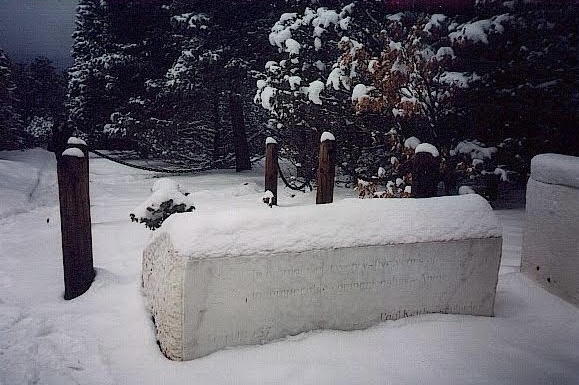
Frieda’s tombstone is just outside the building, to the left of the entrance. Inscribed on it are the words: “In memory of twenty five years of incomparable companionship – Angie”.
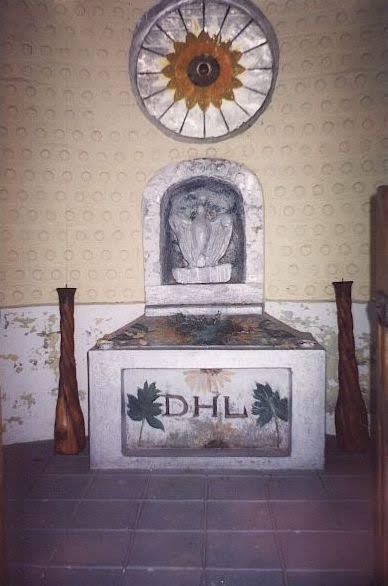
We entered the shrine (or ‘shed’ as Donna insisted on calling it) and saw the memorial block at the back, which has some yellow flowers and green leaves painted on it, and has the initials ‘DHL’ carved on the front. Feeling a little bit rushed, I snapped some photos as Donna went outside to take some more pictures of the breathtaking scenery.
Monday Morning: The cabin
I was delighted to see the shrine, but more than anything I wanted to see the house where Lawrence and Frieda had actually lived. So I descended the slope and joined Donna, Kyle and the woman we’d seen. She offered to answer any questions I might have, so I asked where the ranch building was that Lawrence had stayed in. ‘There is no ranch,’ she said. ‘He just called it that to make himself feel big.’ She also called it a ‘freebie’. ‘Well, which building did he stay in while he lived here?’ I persisted. She indicated a building farther up, on the right. Somewhat surprised at the way in which she’d spoken, I walked up to see the house.
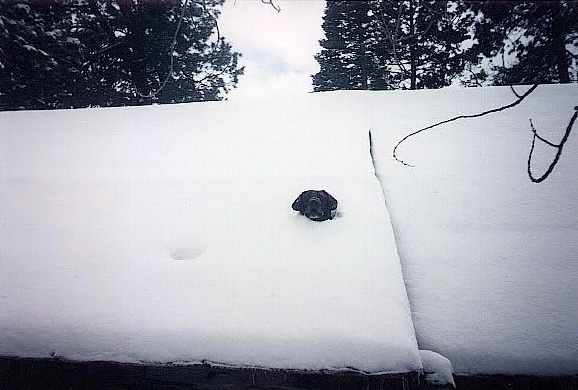
All the time, a large black dog named Montana barked ferociously in the compound next to us. As I walked past one of the buildings, Montana’s head suddenly poked through the snow-covered roof and he barked wildly at me. Needless to say, I almost collapsed as everyone behind me laughed their merry little heads off. Luckily, the dog couldn’t get out.
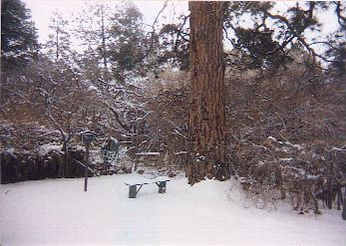
And so at last I stood next to the immense pine tree that Georgia O’Keeffe had painted, in front of the house that Lawrence and Frieda had lived in, at the ranch in exchange for which Mabel Dodge Luhan had been given the manuscript of one of the greatest novels of the 20th Century. It was a wonderful feeling. When I’d seen ‘Priest of Love’ many years ago – the movie version of Harry T. Moore’s fascinating biography, which was partly filmed at the ranch – I’d never dreamed that one day I would really see the place for myself. I sat on the snow-covered bench next to the tree for a few moments, amazed that I was actually there. Feeling that perhaps I’d better not wait too long, I got up and photographed the tree and the house, and looked through the windows. Then, after lingering for a few more moments, I turned reluctantly away and went down to join Donna and the others.

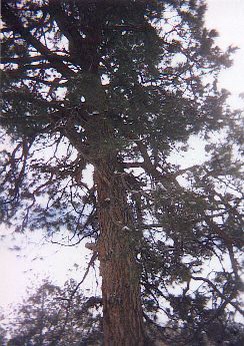
Later, I asked Donna what she and the woman had been talking about. ‘I told her that I don’t like Lawrence,’ she said. ‘She doesn’t like him either.’
As we drove away, I felt that my visit to the Lawrence ranch hadn’t exactly been welcomed, and that spoiled the experience for me a little – but only a little. Overall, the experience was immensely satisfying.
Donna and I are still together, incidentally. Despite her treachery, she’s pretty wonderful really. Italy next year, Donna?
Update: Just to add, this was written in 1998 and Donna and I are no longer together – we broke up a few years later. I’m now with a lovely lady called Gwyneth and we’ve already been on some wonderful literary adventures, with many more to come.
Notes:
1. The DH Lawrence Ranch was bequeathed to the University of New Mexico by Frieda following her death in 1956. For further information about it, see the University’s DH Lawrence Ranch Initiatives website at:
https://dhlawrenceranch.unm.edu/d.h.-lawrence-ranch/index.html
2. The Mabel Dodge Luhan house is now an Historic Inn and retreat style Conference Centre with a number of rooms that can be stayed in on a bed and breakfast basis. For further information see the house’s website at:
https://www.mabeldodgeluhan.com/
3. For a fascinating account of DH Lawrence’s time in Taos, New Mexico see the memoir ‘Lorenzo in Taos’ by Mabel Dodge Luhan herself.
4. For a history of the Mabel Dodge Luhan house, see ‘Utopian Vistas: The Mabel Dodge Luhan House and the American Counterculture’ by Lois Palken Rudnick.
5. Lois Rudnick has also written a biography of Mabel Dodge Luhan called ‘Mabel Dodge Luhan: New Woman, New Worlds’
6. DH Lawrence wrote a marvellous book of essays about his experiences in New Mexico called ‘Mornings in New Mexico’
7. For further information about Georgia O’Keeffe’s painting of The Lawrence Tree see this entry in Wikipedia:
 The Literary Tourist